Best-Of Guide

The Best Math Products for Kids Ages 8-12

Your kid decides 'I'm not a math person' somewhere between 8 and 12. Here's how to rewrite that story.

By Mike Overell · Updated April 2026 · 14 min read · 8 picks from 41 scored

No ads. No affiliate links. How I research →

Disclosure: I work at ClassDojo, which makes Dojo Tutor. I'm confident recommending it to friends, but you should know the connection. More about me →

I was a math kid in school. My wife didn't see herself as one. She's smart, successful, and will tell you math wasn't her thing. Two different stories about the same subject, formed before either of us turned twelve.

But when I tried to help our 3rd grader with basic multiplication, I couldn't. It's taught differently now in many schools. Number lines, breaking apart multiplication. I had to learn the new way before I could help. That moment humbled me.

The 8-12 age range is when math stops being simple, and when kids decide whether they're "a math person" or not. That belief, once formed, is remarkably durable (Eccles and Wigfield). By middle school, kids who've decided they're not math people stop trying, and the gap compounds from there (Musu-Gillette et al.). "Not a math person" isn't a personality trait. It's a story that gets written between ages 8 and 12, and it's very hard to rewrite later.

I've tried more than a dozen math apps with our kids over the years. They loved Prodigy for a year, but after digging in I realized they were collecting pets and battling monsters, not doing math.

Most math products are the same trick at scale: drill facts, earn points. Far fewer build the things that actually matter: understanding why math works, and knowing whether an answer even makes sense. My kids didn't have endless patience to keep trying new apps, so it felt important to get the next choice right. After months of research and conversations with ten families, I landed on Beast Academy. Here's my full guide to the eight products worth your time.

My top picks

For challenge seekers: Beast Academy

For everyone else, start free: Khan Academy Math

Free alternative

Khan Academy Math. Covers K-12, adapts to your child, free. Start here before spending money.

What I left out

Math apps that drill without building understanding. There are many.

What I tell friends

Let your kid take the Khan placement test without helping. Where they get stuck tells you more than any report card.

Apps and Online

My kid needs deeper thinking, not just harder problems Beast Academy · Problem-solving and reasoning, not faster computation
I want something free that actually works Khan Academy Math · Structured, adaptive, covers K-12; the baseline everyone should try first
My kid thinks they hate math DragonBox Algebra · Turns algebra into a game; kids don't realize they're doing math
My kid is ready to move faster than school allows Math Academy · AI-adaptive system that meets kids where they are and accelerates

Screen-free

We need less screen time, not more Prime Climb · Board game where every roll teaches number theory

In-person and Human

My kid needs consistent daily practice Kumon · In-person, structured, builds the daily habit school doesn't
My kid needs a real person, not just an app Thinkster Math · Hybrid AI + human tutor who reviews their actual work
My kid needs a real person, and they're under 10 Dojo Tutor · 1:1 tutoring designed for younger learners (disclosure: ClassDojo)

Before you buy anything, try this.

Change three sentences. Math anxiety is contagious (Maloney et al.). Tonight: replace "I was never good at math" with "let me figure this out with you." Replace "ask your dad" with "show me what you've tried." Replace "this is hard" with "this is supposed to be hard."

Try Khan Academy before spending money. It's free, adapts to your child's level, and covers K-12. Have them take the placement diagnostic without help. Where they get stuck tells you more than any marketing page.

The products below add what these experiences can't: structured progression, adaptive difficulty, and consistent practice without a parent present. They supplement. They don't replace.

If you've tried this and want more structured support, keep reading.

The Question You're Really Asking

My kid doesn't love math, and AI can do it anyway. Why should I care?

Optimists say AI handles computation, and that's most of what school math teaches. Math fluency is going the way of cursive. Focus on creativity and communication instead. Your child doesn't need to factor polynomials when Wolfram Alpha exists.

Skeptics point to the evidence. Early math ability is the strongest predictor of later academic achievement among school-entry skills—ahead of reading or attention (Duncan et al.). Math ability at age 7 predicts income at age 42, even after controlling for IQ and family background (Ritchie and Bates). And financial literacy, which depends on basic numeracy, is strongly linked to better financial decisions, from retirement planning to debt management (Lusardi and Mitchell). Opting out of math at 10 closes doors for decades.

The research is still catching up. Almost no rigorous studies ask whether math competency matters less because AI can compute. My read of the evidence: AI changes how math should be taught, but not whether. The procedural math AI handles is not the math that predicts life outcomes. Reasoning, estimation, and judgment are (Rittle-Johnson et al.).

My Take

My wife is smart, thoughtful, and doesn't think math is as important for our kids as I do. She's not a "math person" and she's done fine. We have this conversation regularly, and I can't prove she's wrong.

I believe good math fundamentals open doors that go well beyond school. Building a business. Understanding compounding. Evaluating a mortgage. Knowing when a number in a headline doesn't pass a smell test. These are reasoning and Judgment abilities, not computation, and I don't see AI replacing the need for the person making the decision to have them.

I'm less confident about deep high-school specialization. Should my kids grind through calculus? Imaginary numbers? I honestly don't know. But I do know that the 8-12 window is where they either build the foundation that makes those choices possible, or close the door without realizing it. I'd rather keep doors open and let them decide later.

Top Picks
Top Pick
Beast Academy logo

Beast Academy

Best for kids who find school math too easy
Mike's List
Cost
~$100-159/yr
Platform
Web, iOS, workbooks
Ages
6-13
Literacies
Persistence
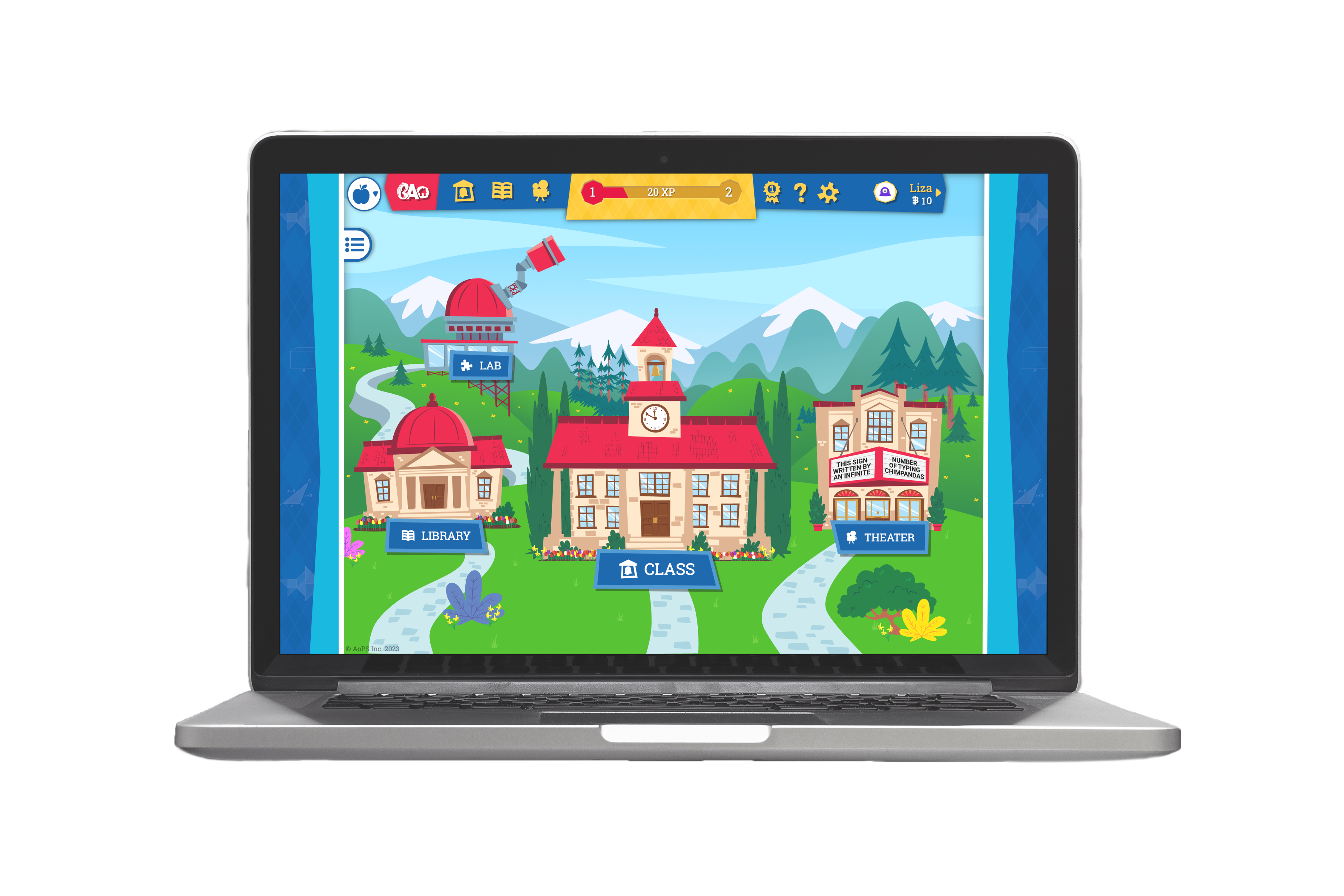
Beast Academy online platform showing the campus interface with Lab, Library, Class, and Theater

Most "advanced math" for kids means the same problems, faster. Accelerated worksheets. Timed drills. The child who finishes first is declared gifted. Beast Academy rejects this entirely. Built by the Art of Problem Solving team (whose advanced courses have trained a disproportionate share of top US competition mathematicians), Beast Academy applies that problem-solving philosophy to younger kids. It presents math as a series of interconnected puzzles wrapped in a comic-book narrative. Characters encounter problems that require creative reasoning, not just recall. A child working through Beast Academy doesn't practice multiplication fifty times. They figure out why multiplication works the way it does.

The format matters as much as the content. Beast Academy exists as both an online platform and a set of physical workbooks with companion comics. My two eldest had different preferences, which surprised me. One preferred workbooks and didn't want a screen. The other loves working through the online challenges and puzzles. As a parent, the online version is substantially easier because it includes assessment, identifies correct and incorrect responses, and gives me visibility into progress. But the workbooks are excellent, and some kids learn better with a pencil.

The problems are hard. Not artificially hard through time pressure, but challenging through mathematical depth. That's where Persistence gets built. Beast Academy is what Art of Problem Solving (the competition-track option, see Also Considering) looks like for younger kids who want challenge without competition pressure. For a child bored by school math, this is the supplement that keeps mathematical thinking alive.

Mike's TakeCurrently using

I bribed my kids to start Beast Academy: a reward for every book completed. They both accepted and do it about three times a week for 20-30 minutes.

Strengths

  • + Problems build mathematical reasoning, not just faster computation
  • + Comic narrative sustains engagement through real difficulty
  • + Available as both online platform and physical workbooks

Limitations

  • - Persistence is the primary pathway; curiosity and creativity are present but not the focus
  • - Assumes the child is already comfortable with grade-level math
  • - Annual cost ($100-159) is significant for a supplement
Skip if

Your child struggles with grade-level math or has lost confidence. Beast Academy assumes comfort with fundamentals. Khan Academy Math builds that foundation, or try DragonBox to rebuild the relationship with math first.

Independent reviews: Kate's Homeschool Math Real parent experience. Her son completed one problem in an entire session, deeply engaged the whole time., Cathy Duffy Reviews

Read the full Beast Academy guide
Khan Academy logo

Khan Academy Math

Best free option

Cost
Free
Platform
Web, iOS, Android
Ages
5-18
Literacies
Persistence · Judgment
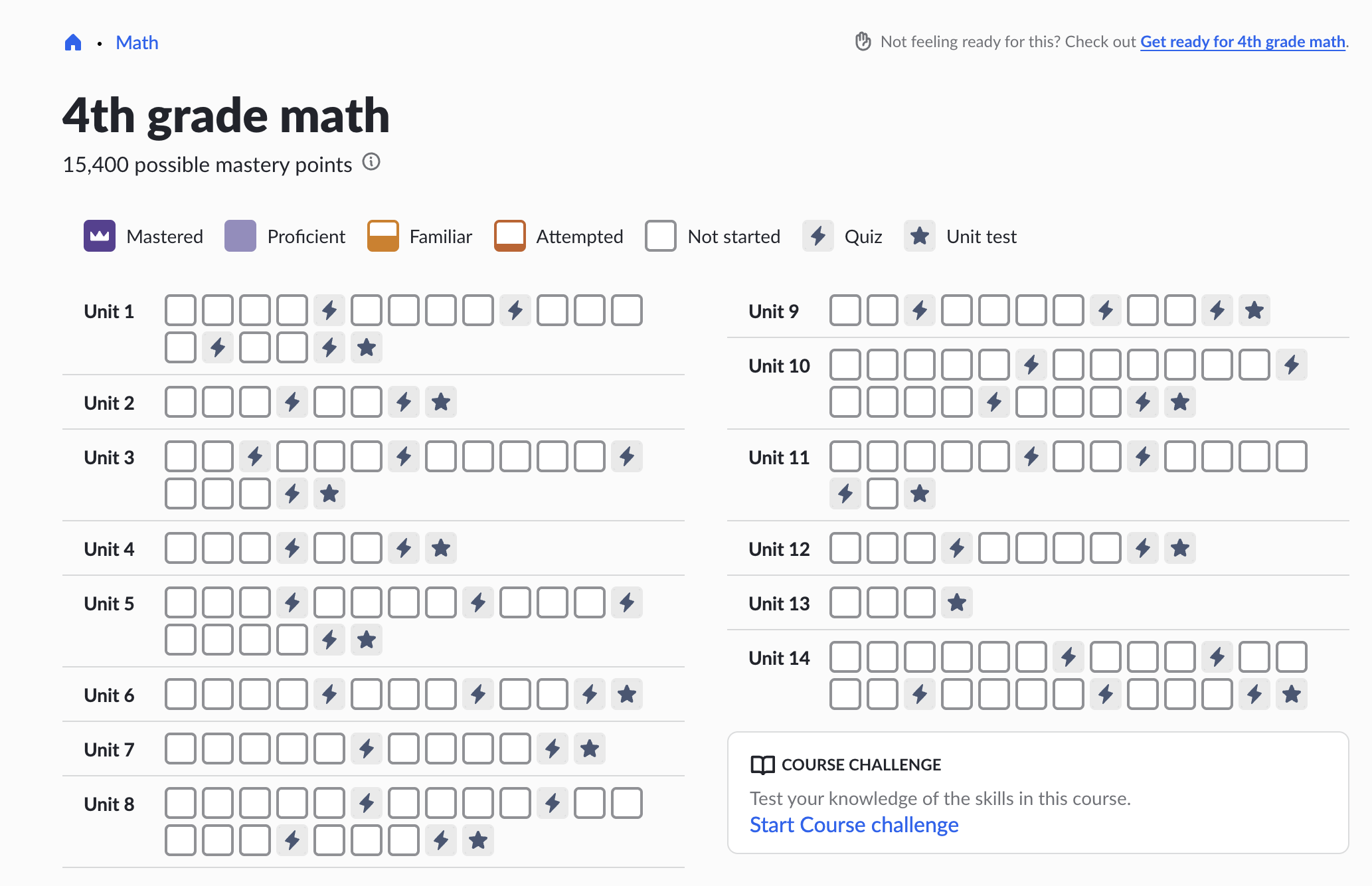
Khan Academy Math 4th grade course showing 14 units with mastery progress tracking

If you're going to try one thing on this list, start here. Khan Academy Math is free, covers every topic from early arithmetic through AP calculus, and adjusts to your child's actual level. The placement diagnostic identifies gaps before your child encounters them.

The mastery system requires understanding before advancement, not just correct answers on a first attempt. Your child can't skip ahead with holes in their knowledge. That builds Persistence. Judgment develops through the feedback loop: attempt, get it wrong, watch the explanation, try a different approach. The child learns to evaluate whether their reasoning makes sense, not just whether their answer matches the key. It's the only free product on this list that I'd recommend without reservation.

The real limitation: Khan Academy is stronger for practice and review than for initial instruction. The video-watch-quiz loop works well for kids who already have some conceptual grounding but need structured repetition. For a child encountering a concept for the first time, the videos alone may not be enough. Khanmigo, the AI tutor add-on ($4/mo or $44/yr), was supposed to fill this gap. It hasn't. Early results have been modest. The recommendation here is the free core platform.

Strengths

  • + Free, covering the full K-12 math progression
  • + Mastery-based system builds both [Persistence](/persistence) and [Judgment](/judgment)
  • + Placement diagnostic gives parents immediate visibility into gaps

Limitations

  • - Better for review and practice than for first-time concept instruction
  • - Creativity isn't the goal. The format is structured by design.
  • - Video explanations can feel passive for kinesthetic learners
Skip if

Your child is bored by school math and needs deeper challenge. Khan Academy covers the same topics with better structure, but Beast Academy offers the intellectual stretch a gifted math student craves.

Independent review: Cathy Duffy Reviews (K-8) Trusted curriculum evaluator. Notes strong content but flags lack of review and practice.

Read the full Khan Academy Math guide
DragonBox Algebra 5+ logo

DragonBox Algebra

Best for kids who think they hate math

Cost
~$3-6/mo (Kahoot! Kids+)
Platform
iOS, Android
Ages
5-12
Literacies
Curiosity · Judgment
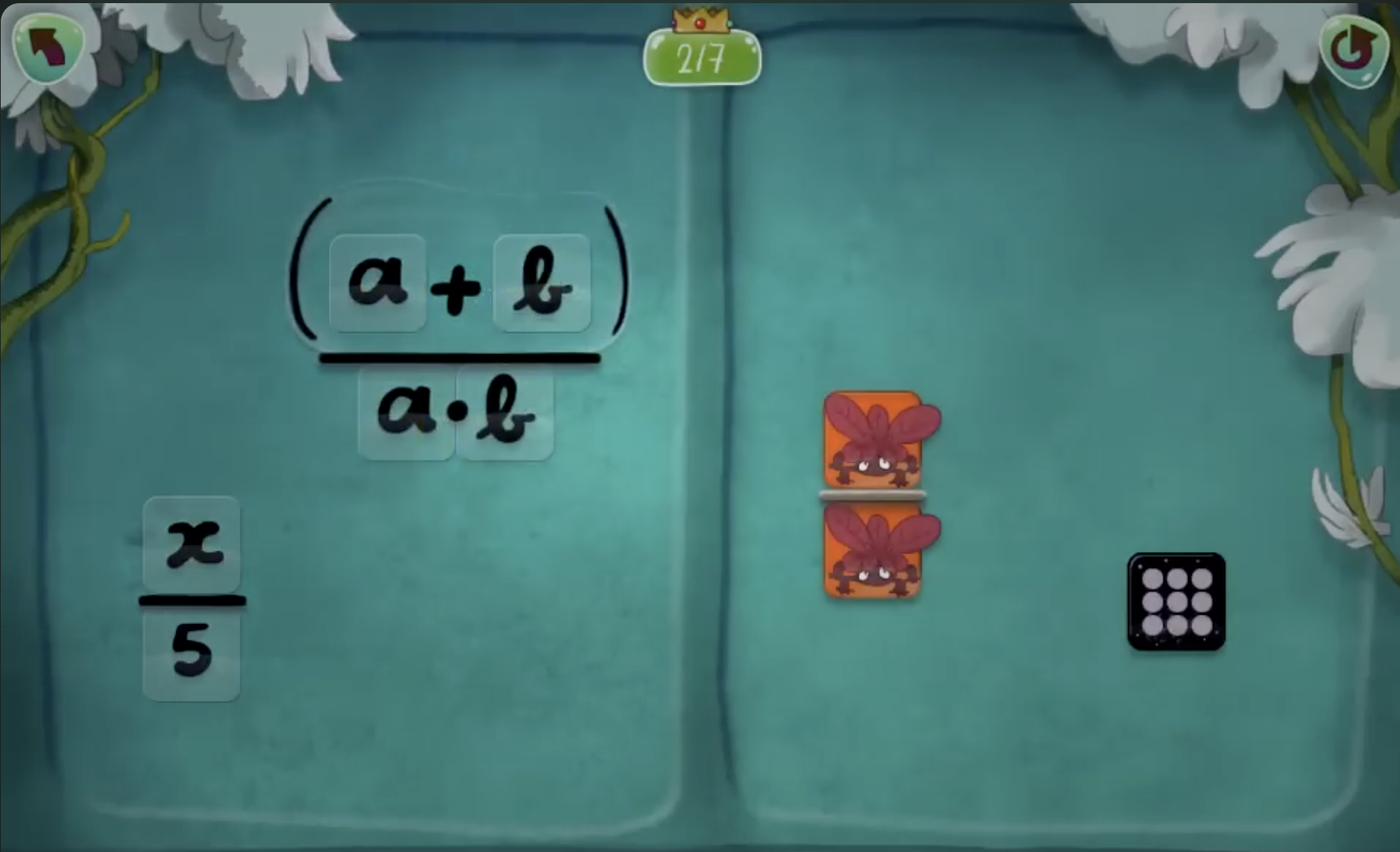
DragonBox Algebra app showing visual puzzle gameplay with creature cards

Algebra anxiety usually begins when kids hit symbolic notation. The equals sign, the x, the parentheses. For a child who already believes "I'm not a math person," those symbols confirm the story. DragonBox bypasses the notation entirely. Equation-solving becomes a visual puzzle where the child manipulates objects to isolate a target. They're doing algebra before they know they're doing algebra.

DragonBox is the most rigorously studied game-based math product available. A randomized controlled trial with 1,850 seventh graders found that students using DragonBox showed significantly higher algebra posttest scores than active controls, with an effect size of d = 0.269 (Decker-Woodrow et al.). A follow-up dose-response analysis confirmed that students who solved more problems showed better outcomes (Chan et al.). Engagement depth matters, not just exposure.

This is one of the few math products that builds real mathematical curiosity. Kids want to see what the next puzzle looks like, not just finish the level. They experiment with different approaches because the game rewards exploration, not speed. That's where Curiosity and Judgment develop. For the child who has decided math isn't for them, DragonBox is a backdoor that bypasses the emotional baggage. Note: the pricing model has changed from a one-time purchase to the Kahoot! Kids+ subscription at roughly $3-6 per month.

Strengths

  • + Most rigorously studied math game product available (RCT with 1,850 students)
  • + Builds curiosity and judgment, not just procedural repetition
  • + Visual approach bypasses notation anxiety entirely

Limitations

  • - Narrow scope: teaches algebraic thinking, not broad math curriculum
  • - Puzzles have defined solutions, so creativity isn't exercised
  • - Now bundled into Kahoot! Kids+ subscription (was one-time purchase)
Skip if

Your child already loves math and wants deeper challenge. DragonBox solves an engagement problem. For a child who wants to be pushed, Beast Academy is the better fit.

Independent reviews: Recess.gg curriculum review , EdSurge research review Carnegie Mellon study found game skills don't automatically transfer to standard algebra tests

Read the full DragonBox Algebra guide
Math for Love logo

Prime Climb

Best screen-free option

Cost
~$25-30 (one-time)
Platform
Physical board game
Ages
8-14
Literacies
Curiosity · Judgment
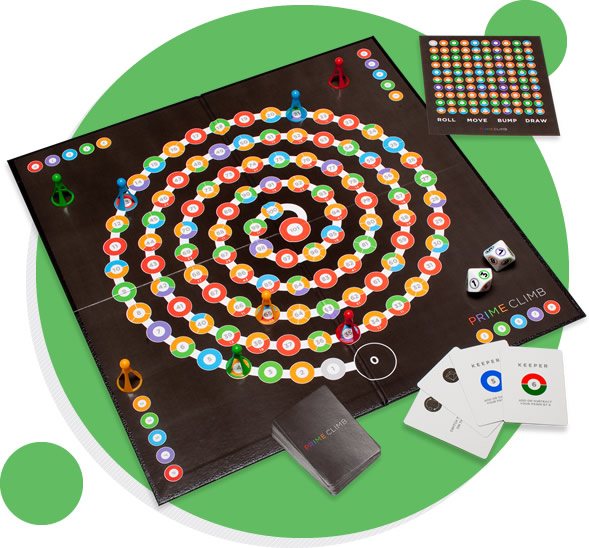
Prime Climb board game showing the colorful number spiral board with pawns, dice, and cards

Every other product on this list requires a screen. Prime Climb requires a kitchen table, two people, and a willingness to lose. Made by Math for Love, it's a board game where players add, subtract, multiply, and divide to race along a number spiral to 101. The color system is the design breakthrough: every prime number has its own color, and composite numbers display the color combinations of their prime factors. A child playing Prime Climb internalizes the structure of multiplication and factoring through play, not memorization.

This is the only physical product on the main list, and it earns its spot by doing something no app on this list does: it creates math conversations between people. When your child rolls a 3 and a 5, they have to decide whether to add, subtract, multiply, or divide, and which pawn to move. The strategic choices require number sense, and the social setting means they're explaining their reasoning out loud. That's where Curiosity and Judgment develop.

At a one-time $25-30 purchase, Prime Climb is the highest-value recommendation on this list. Because the game requires real people in the room, Connection gets built too. For family game night, it's an investment that pays off every time you play it. No subscription. No screen. No login.

Mike's TakeJust bought it

Bought this after doing the research for this guide. Haven't played it yet. Will update when we do.

Strengths

  • + Color-coded number theory teaches factoring through play
  • + Creates real math conversations between players
  • + One-time $25-30 purchase; highest value on the list

Limitations

  • - Requires at least two players; not a solo practice tool
  • - No adaptive difficulty or structured progression
  • - Defined optimal strategies limit creative exploration
Skip if

Your child needs structured, independent daily practice. Prime Climb is a weekly game night tool, not a daily routine. Khan Academy Math or Math Academy provide the daily structure.

Read the full Prime Climb guide
Math Academy logo

Math Academy

Best for kids ready to move faster than school allows

Cost
$49/mo
Platform
Web
Ages
8+
Literacies
Persistence
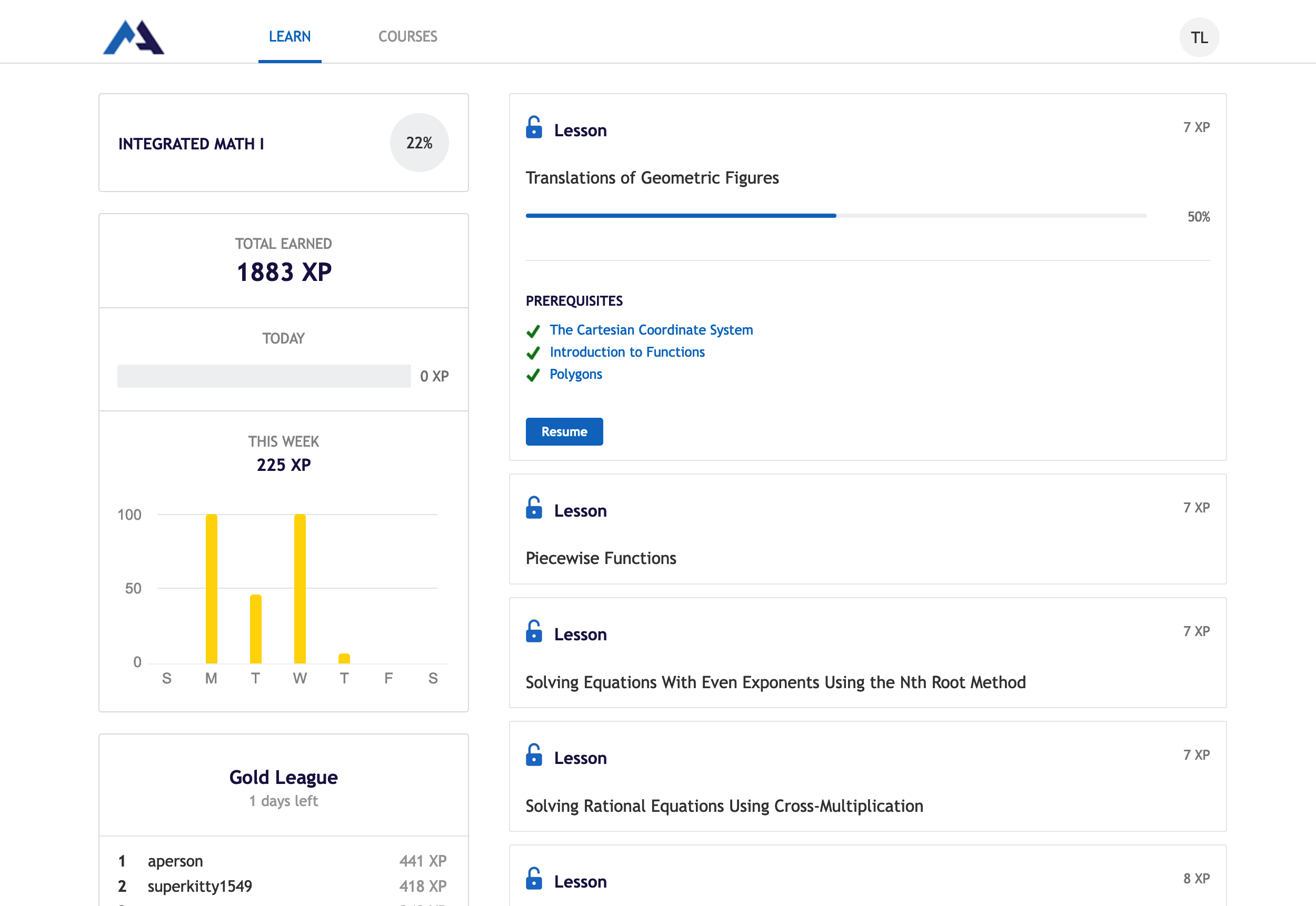
Math Academy dashboard showing XP tracking, lesson progression, and prerequisites

Some children don't need a different way to learn math. They need more math, faster, with intellectual challenge that matches. Math Academy is built for that profile. The platform uses a knowledge graph and spaced repetition to map what a student knows, identify gaps, and advance them at their own pace. A motivated 10-year-old working through Math Academy can cover in months what school spreads across years.

The fit question matters here. Math Academy's primary user base skews adult and older teen. The interface is plain: no characters, no rewards, no color. It looks like a college platform, because it was built as one. It rewards discipline and tolerates frustration. For a mature, motivated 10-12 year old who can work independently, it's exceptional. For most 8-year-olds, the demands are too high. OzWrites, a parent-reviewer on Substack, published a detailed balanced review that captures both the potential and the friction. Worth reading before committing.

One design choice that generates strong opinions: Math Academy penalizes incorrect answers by subtracting experience points. A colleague's daughter was doing well through the 5th grade curriculum when she was hit with a large negative XP penalty twice on material she didn't understand. As he put it: "I don't think this UX is helpful for child or parent." Negative feedback in learning products is a live design debate. Some children respond to stakes; others internalize the penalty as confirmation that they're failing. At $49/mo ($588/yr), the commitment is significant. Make sure the fit is right before subscribing.

External ReviewIndependent perspective

My friend Oz wrote a detailed, balanced review covering both the strengths and friction points of Math Academy for younger learners.

Read the review →

Strengths

  • + Genuine AI-adaptive acceleration for gifted math students
  • + Knowledge graph and spaced repetition create efficient progression
  • + Covers content far beyond grade level for kids who need the stretch

Limitations

  • - Demands high independence; too rigid for most kids under 10
  • - The format is practice-driven, not exploration-driven
  • - $49/mo is a premium price for a supplement
Skip if

Your child needs encouragement more than acceleration. Math Academy rewards self-motivation. If your child struggles with confidence, DragonBox rebuilds the relationship with math, and Khan Academy Math offers a gentler adaptive experience for free.

Independent review: OzWrites on Substack Balanced review covering strengths and friction for younger learners

Read the full Math Academy guide
Kumon logo

Kumon

Best for building daily discipline

Cost
$140-200/mo
Platform
In-person (25,000+ centers)
Ages
3-17
Literacies
Persistence
Kumon Connect tablet app showing a child using Apple Pencil on a worksheet exercise

Kumon is unlike anything else on this list. It's not an app. It's not adaptive. There's no AI, no gamification, no animated characters. It's a worksheet-based, in-center program where children show up, complete assignments, and progress through a structured sequence. Twice a week in person, daily practice at home. The pedagogy hasn't changed meaningfully in decades.

The case for Kumon is the daily habit. For a child who needs structured, consistent practice and whose family can't reliably provide it at home, Kumon delivers that. Persistence is the whole point, and Kumon earns it the old-fashioned way: sheer repetition and discipline. Friends who use it tell me the same story. The first few months are a grind. The child resists. Then something shifts. The routine becomes automatic, and the child stops arguing about doing math because math is just something they do every day. That consistency matters.

The case against is equally strong. Don't expect curiosity or creativity here. The "drill and kill" reputation is not unfair. At $140-200 per month ($1,680-2,400 per year) plus registration fees, families are paying a premium for structure, not innovation. Kumon has not been independently studied at scale, which is itself a notable finding for a program this widespread. Meta-analyses of tutoring interventions show average effects of 0.37 standard deviations (Nickow et al.), far below the inflated claims tutoring companies sometimes make. If your child is already self-motivated, Khan Academy Math provides a similar progression for free.

From FriendsSecondhand

Several friends use Kumon. They all say the same thing: driving to the center twice a week is a pain, but the daily rhythm works. Their kids stopped arguing about math because it's just something they do now. That tracks with everything I've read.

Strengths

  • + Builds daily math discipline through structured routine
  • + In-person accountability that apps can't replicate
  • + 25,000+ centers globally; widely accessible

Limitations

  • - Pure drill. Don't expect curiosity or creativity.
  • - $140-200/mo is among the highest costs on this list
  • - No independent research at scale on Kumon's effectiveness
Skip if

Your child's problem is engagement, not discipline. Kumon's worksheet approach can make math feel more punishing for a child who already dislikes it. Try DragonBox or Prime Climb to change the experience of math first.

Independent reviews: Maths Insider (former instructor) Written by someone who ran a Kumon centre for 3 years, Parent comparison (Kumon vs Mathnasium)

Read the full Kumon guide
Thinkster Math logo

Thinkster Math

Best for personalized human coaching

Cost
$45-295/mo
Platform
iOS, Android, Web
Ages
All ages
Literacies
Persistence
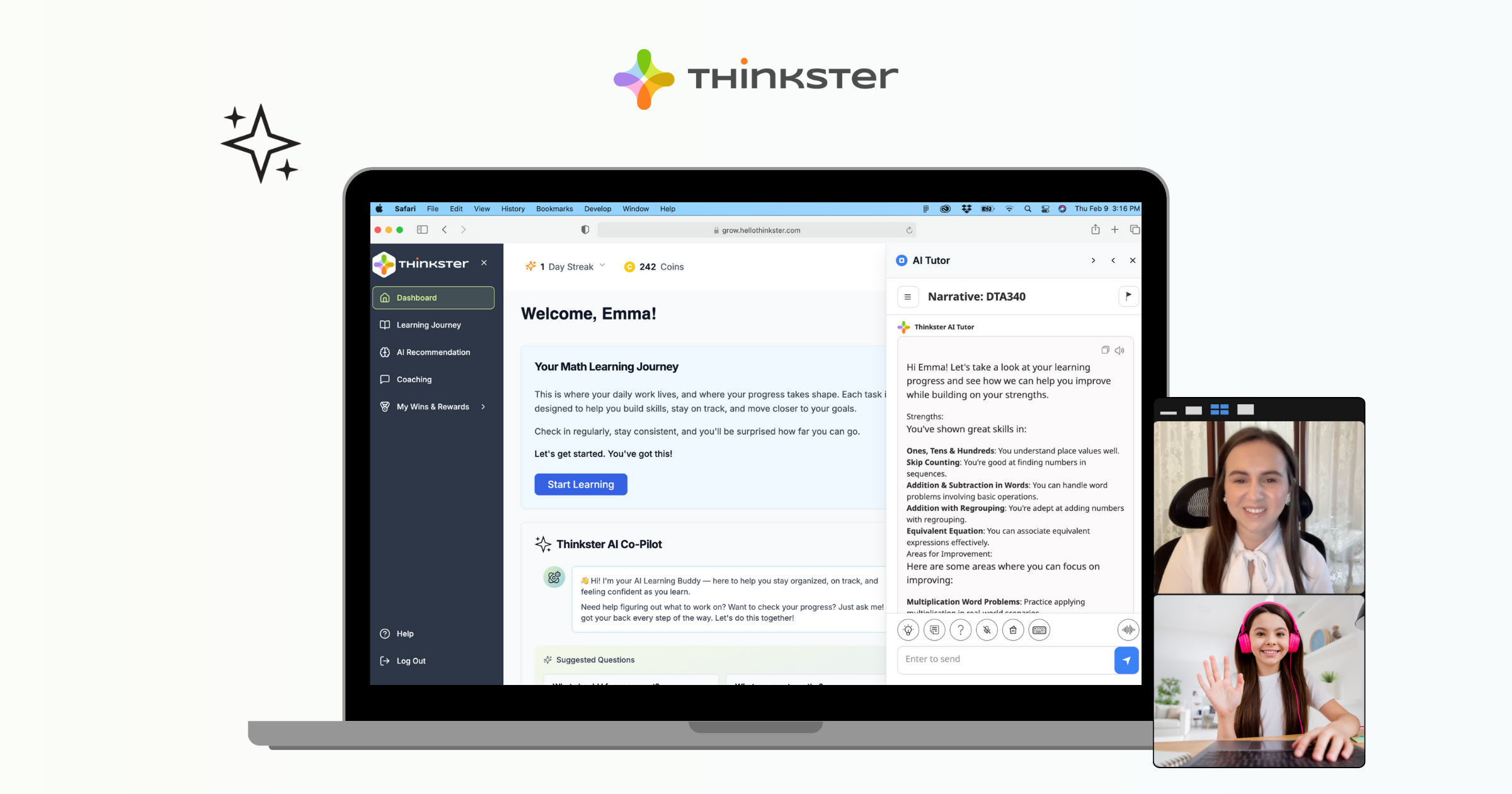
Thinkster Math platform showing laptop dashboard and tablet with live tutor video session

Most AI math tutors adjust the problems but not the teaching. Your child gets different questions, but the same explanation regardless of where they're confused. Thinkster puts a human tutor in the loop who reviews your child's actual work: not their answers, their thinking. How they approach a problem. Where they hesitate. What they try before giving up. A human notices things no algorithm catches yet.

The price range reflects a real tier system. Plans range from $45-295/mo depending on the level of human coaching, from AI-driven practice at the low end to personalized video sessions and custom learning plans at the top. The core differentiator is the human element, so the entry tier may not deliver the product's real value proposition. Be clear about what you're signing up for. Thinkster launched an AI Coach feature in May 2025 with voice interaction and multilingual support, but the human coaching remains what sets it apart.

The coaching relationship does something apps can't: a real person who knows your child's name and notices when they stop trying. That human accountability builds Connection in a way no app replicates. For parents who want the personalization of a private tutor at a lower price point, Thinkster offers a hybrid that sits between self-serve apps and full tutoring. The tutoring research is encouraging: meta-analyses find tutoring is one of the most effective educational interventions available, with an average effect of 0.37 standard deviations across 96 randomized studies (Nickow et al.), though the original "2 sigma" claim (Bloom) has never been replicated at that magnitude.

Strengths

  • + Human tutor reviews actual student work, not just scores
  • + Hybrid AI + human model personalizes both problems and teaching
  • + Connection through a real coaching relationship

Limitations

  • - Lower tiers have limited human coaching; full value requires premium plans
  • - Not designed for creative or exploratory math
  • - Wide price range makes value comparison difficult
Skip if

You want your child to work independently without an external coach. Khan Academy Math and Math Academy are self-directed tools that don't depend on a human in the loop.

Independent reviews: Homeschool Gardens review , Smarter Learning Guide review

Read the full Thinkster Math guide
ClassDojo logo

Dojo Tutor

Best for younger kids who need a real person

Disclosure
Cost
$30/session
Platform
Online (video)
Ages
5-14
Literacies
Persistence

*Disclosure: I work at ClassDojo, which makes Dojo Tutor. I'm confident recommending it to friends, but you should know the connection. Judge it by the evidence below.*

Dojo Islands character from ClassDojo's learning platform

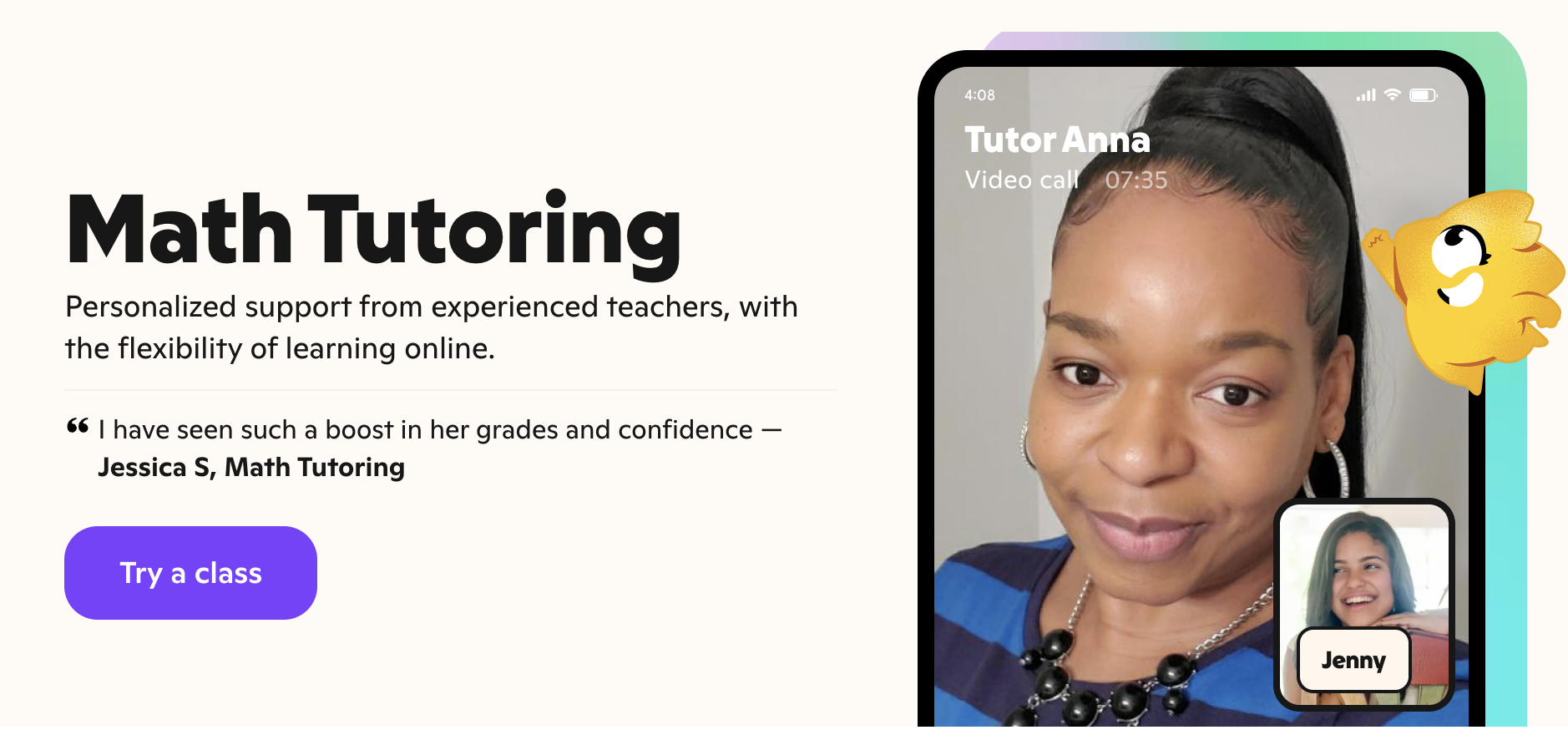
An eight-year-old struggling with fractions often needs someone to watch their face, notice confusion, and adjust the explanation in real time. Apps are getting better at this, but a human tutor remains the most responsive form of instruction available. Dojo Tutor delivers that through 1:1 online video sessions, starting at once per week. The format targets families who want a human tutor but can't access or afford in-person programs.

The child this is really for: an eight- or nine-year-old who shuts down in front of an app but opens up when a real person is watching. Persistence develops through the accountability of showing up each week. The tutoring relationship creates a one-on-one bond that strengthens Connection.

The candid limitations: at $30 per session (starting at once weekly, so roughly $120/mo), Dojo Tutor is less expensive than Kumon or Mathnasium but more expensive than any app on this list. The tutoring is broad, not math-specialized. A child who needs deep mathematical challenge beyond grade level will outgrow what a generalist tutor provides. For that profile, Beast Academy for self-directed enrichment or Math Academy for AI-adaptive acceleration are stronger fits. Dojo Tutor's strength is the human connection at a price point that makes tutoring accessible to more families.

Why This ExistsDisclosure

I helped launch Dojo Tutor. Both our eldest girls had private tutors at different points (one for reading, one for math), and in both cases the tutor moved the needle faster than anything else we tried. I wanted that to be accessible to more families. That's the origin story.

Strengths

  • + Real human tutor responsive to facial cues and confusion in real time
  • + Lower cost ($30/session) than traditional in-person tutoring
  • + Designed for younger learners who need patience and encouragement

Limitations

  • - Generalist tutoring, not math-specialized enrichment
  • - More expensive than any app-based option on this list
  • - Limited track record; newer than other tutoring options on this list
Skip if

Your child is self-motivated and works well independently. Khan Academy Math is free and self-directed. If they need deeper math challenge, Beast Academy provides it without a tutor.

Independent review: Trustpilot parent reviews 4.3 score from 23 verified reviews. Mix of positive and critical experiences.

Read the full Dojo Tutor guide
Also Worth Considering

Art of Problem Solving Online

Best if your child is aiming for math competitions or olympiads. The gold standard for competition prep, but the positioning is elite-only. ~$400-900 per course.

Brilliant

Best if your child wants interactive problem-solving across math, science, and logic. Kids solve puzzles before learning procedures. 70+ courses, ages 10+. ~$13-25/mo.

DragonBox Geometry

Best if your child loves puzzles and spatial reasoning. Euclid-inspired proof-based geometry for ages 8-13. Kahoot! Kids+ subscription.

Balance Beans

Best for the younger end of the range (ages 5-10). Physical, tactile introduction to algebraic balancing. ~$15-20.

Life of Fred

Best if your child hates math textbooks and loves stories. Story-based math enrichment, print-only. Supplement, not standalone.

Singapore Math

Best if you're homeschooling and want a gold-standard curriculum. Conceptual understanding through the concrete-pictorial-abstract progression (Bruner). Not designed as a supplement.

Synthesis Tutor

Best if your child is 5-8 and needs patient, low-pressure math practice. AI tutor with visual manipulatives. Good for building confidence, not for deeper challenge. ~$35/mo.

Mathnasium

Best if you want in-person diagnostic tutoring with a more individualized approach than Kumon. $200-400/mo. Largest math tutoring franchise in the US (~1,100 centers). Not yet scored in our framework; included because parents frequently ask.

Why These Eight Out of 41

I scored 41 math products in this age range. Browse all 41 scored math products. The remaining 27 fell into these categories:

  • Drill without understanding (IXL , SplashLearn , Todo Math ) : Apps that build procedural fluency through repetition but don't develop conceptual understanding. The child completes problems and earns points; the math stays shallow. (Kumon also drills, but earns its spot through the daily habit and in-person accountability these apps lack.)
  • Homework helpers, not learning tools (Photomath , Studdy ) : Products designed to get answers to homework problems rather than build mathematical thinking. If the goal is understanding, these work against it.
  • Engagement without math instruction (Prodigy Math ) : My kids used Prodigy for over a year. I felt great. They were "doing math" every day without being asked. Then I sat down and actually watched a session. They were collecting pets, battling monsters, and decorating rooms. The actual math was maybe 10% of the time, and always at the easiest level. I had been counting screen time as learning time, and it wasn't. That experience is why this category exists: game-first products where the math content is minimal or trivially easy.
  • School-only tools (ST Math , Freckle , DreamBox Learning ) : Products designed for classroom deployment that individual families can't access or purchase independently.
  • Too young for 8-12 (DragonBox Numbers , MathTango , My Math Academy ) : Products that technically overlap with age 8 but are designed for younger children and won't challenge a third grader.
  • Too early-stage or no consumer access (Thinkverse , Sparkli , Polymath ) : Products without public pricing, consumer availability, or sufficient track record to recommend.

Try This Week

  1. 1.

    Tonight, when your child gets a math problem wrong, try: "Good. That's where the learning happens." Most parents instinctively comfort ("it's okay, math is hard") or correct ("here, let me show you"). Both responses teach the child that mistakes are problems. Research on how the brain processes mistakes suggests that people who treat errors as learning opportunities show stronger neural attention to their mistakes and better accuracy afterward (Moser et al.). One sentence, repeated consistently, starts rewriting the "I'm not a math person" story.

  2. 2.

    Before dinner, ask: "How many grains of rice do you think are on this plate? How would you figure it out?" Don't grade the answer. The goal is the reasoning, not the number. Children who estimate more accurately on number tasks also score higher on math achievement tests—a pattern that holds from kindergarten through at least 4th grade (Booth & Siegler). Kids who develop number sense (a feel for whether a number is reasonable) outperform kids who can only execute procedures. (Builds Judgment.)

  3. 3.

    Play "24" with a deck of cards. Deal four cards. Find a way to make 24 using +, −, ×, ÷. When your child finds one, ask: "Is there another way?" Finding multiple paths to the same answer is the fundamental difference between procedural math and mathematical thinking. (Builds Curiosity.)

Get the next guide

One email when a new guide ships. No spam.

No ads. No affiliate links. Unsubscribe anytime.

FAQ

My kid is doing fine in school math. Do they need a supplemental product?

Not necessarily. If your child is engaged, challenged, and building understanding rather than just passing tests, school may be enough. Supplemental products add value when school math isn't challenging enough (Beast Academy), when your child needs more practice than school provides (Khan Academy Math), or when the school approach doesn't click with how your child thinks (DragonBox Algebra). Start with a conversation about how math feels to your child, not just their grades.

Is Kumon worth $150-200/month?

For some families, yes. Kumon's value is the daily habit, not the pedagogy. If your child needs structured, consistent practice and you can't provide it at home, Kumon delivers that. But if your child is already self-motivated, Khan Academy Math provides similar progression for free. And if the issue is engagement, not discipline, Kumon's worksheet-heavy approach may make things worse.

Should my kid just use ChatGPT or Claude for math help?

For checking work or exploring a concept they're curious about, sometimes. For learning math, not yet. AI can explain how to solve a problem your kid is stuck on. It can't notice that your kid has been stuck on the same type of problem for three weeks, or that they've stopped trying when the problem looks hard. The products on this list do those things. Use AI as a supplement to structured learning, not a replacement for it.

My kid says they're not a math person. Is that real?

The belief is real; the biology isn't. Math anxiety is transmitted from adults to children: when math-anxious parents help frequently with homework, their children learn less math and develop more anxiety over the school year (Maloney et al.). Growth mindset interventions show real but modest effects (d = 0.08 on average), with the largest benefits for at-risk students (Sisk et al.). The practical answer: change the experience of math before trying to change the belief. DragonBox Algebra and Prime Climb exist for exactly this.

What about Mathnasium vs. Kumon?

Both are in-person math programs with significant monthly costs. Kumon is structured, repetitive, and builds daily discipline. Mathnasium is more diagnostic and individualized, adapting to where your child struggles. If discipline is the issue, Kumon. If understanding is the issue, Mathnasium. Neither uses AI or adaptive technology. Both require driving to a center multiple times per week.

Didn't find your answer?

Which literacies does your child need most?

Take the 2-minute assessment and get a personalized profile.

Take the Quiz