Best-Of Guide

The Best Reading Apps for Kids

Most reading apps don't actually teach reading. Here are six that do.

By Mike Overell · Updated April 2026 · 12 min read · 6 picks from 42 scored

No ads. No affiliate links. How I research →

Disclosure: I work at ClassDojo, which makes Dojo Sparks. My three-year-old uses it. It's on the list because it earned the scores, but you should know the connection. More about me →

Most reading apps teach reading-adjacent activities: matching letter shapes, tapping highlighted words, watching animated stories. The child has fun. The parent sees "literacy" in the App Store and assumes learning is happening.

Reading is the foundational skill. Everything else your child learns builds on it. And right now, two-thirds of American kids aren't reading at grade level. The method that works is well-established, but most parents never hear about it, and most apps skip it entirely.

Friends kept asking me what reading apps to use, so I wrote this guide. I've scored 42 reading products and used several with my own three kids. Six passed. These are the strongest paths I've found for different kinds of families.

My top picks

If you can lead every lesson: Reading.com

If they practice alone: Dojo Sparks

Free alternative

Read to your child every night. And try the classic book: Teach Your Child to Read in 100 Easy Lessons.

What I left out

Reading apps that don't actually teach reading. There are many.

What I tell friends

Reading is the most important gift for your kids. There's a method that works, but most parents never learn it, and most apps skip it entirely.

My kid is learning letter sounds, and I can lead every lesson Reading.com · 99 scripted lessons. You lead every session.
My kid is learning letter sounds, and needs to practice alone Dojo Sparks · Personalized coach that listens, encourages and responds.
My kid reads but gets stuck on new words Ello · AI listens as they read and coaches fluency.
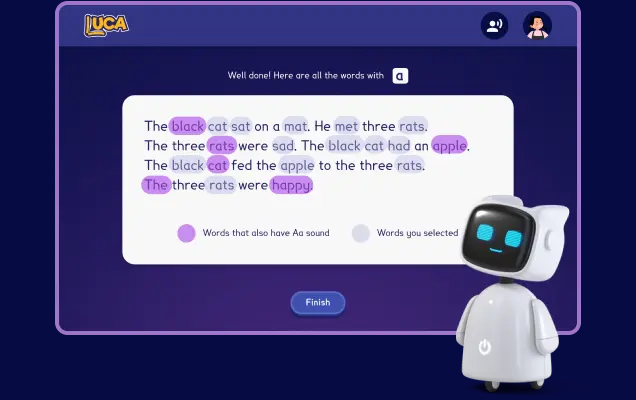
My kid is losing confidence Luca · Built for kids who learn differently.
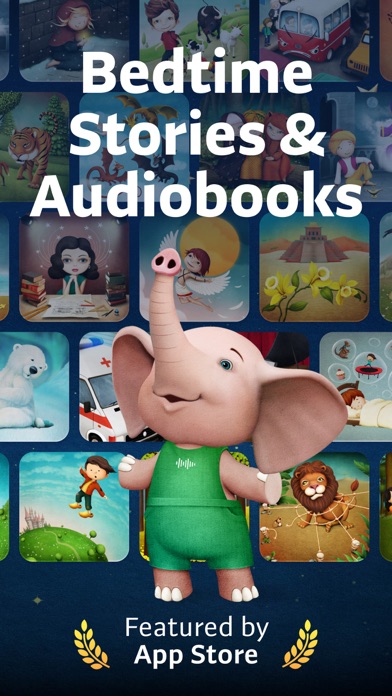
We want richer bedtime stories Readmio · Enriches read-aloud time; doesn't teach phonics.

Before you buy anything, try this.

A book. Teach Your Child to Read in 100 Easy Lessons by Siegfried Engelmann is the physical book several apps on this list digitize. In print since 1983. Costs about $15. For my family it felt stale, but it's worked for thousands of families. Try it before you pay for anything.

Reading aloud. A library card, a couch, 20 minutes each evening. We read to all three of our kids every night and it's non-negotiable in our house. No app replicates a parent pausing on a new word to ask "what do you think that means?"

The apps on this list exist for the moments when these aren't enough: when a parent can't be present, when a child needs more repetition than any adult has patience for, or when a learning difference requires adaptive technology. They supplement. They don't replace.

If you've tried this and want more, keep reading.

The Question You're Really Asking

Can I just rely on school to teach my child to read?

Optimists say schools are fixing this. Since 2018, 40+ states have passed "science of reading" laws mandating phonics. Mississippi went all-in in 2013 and climbed from 49th to 21st in national reading scores. Your child's school may already be doing this well.

Skeptics point to the numbers. Two-thirds of American fourth-graders read below proficiency. Even in the best schools, a teacher with 25 kids can't provide individual attention. Reading requires personal, real-time feedback, and most classrooms aren't built for that.

The research is clear. Kids who fall behind in reading almost never catch up: 88% of struggling readers in first grade are still struggling in fourth (Francis et al., 1996). The gap widens every year. The science on how to teach reading is settled. What matters is whether your child gets it.

My Take

We learned the hard way. Our eldest started school during Covid. We read to her every night and sent her to an expensive private school. By first grade she was behind, and we only found out from a report card. The fancy school was failing her.

We hired a tutor, and within months she was reading Harry Potter. That sold me on the value of direct instruction from someone who was properly trained.

With our younger two, we didn't wait. We tried "100 Easy Lessons" with one, but for us it was too static. Now our three-year-old is on Sparks. We're not relying on school to figure it out.

Top Picks
Top Pick · If you can sit with your child
Reading.com logo

Reading.com

Best when you want to teach your child to read yourself
Mike's List
Cost
~$15/mo ($90/yr)
Platform
iOS, Android
Ages
3-9
Reading.com parent-led scripted phonics program

This is the product for the parent who thinks: I want to teach my child to read myself.

Reading.com scores zero Strong literacies in our framework. This is the one product where I deliberately override my own rubric. Direct Instruction's whole point is that it removes the ambiguity that builds Agency, and at age 5, that's the right trade. It's on this list anyway, because the 99 scripted lessons follow a Direct Instruction model tracing back to Siegfried Engelmann. Each 15-20 minute session covers letter sounds, blending, and co-reading decodable books. The parent reads the script. The child follows. Pictures stay hidden until after the child decodes the text, which prevents guessing from context.

No AI. No gamification. No adaptive algorithm. The instruction is explicit, sequential, and scaffolded by a human parent. A meta-analysis of 328 studies found significant positive reading effects from Direct Instruction, with scripting that allows non-specialist adults to deliver effective instruction (Stockard et al.). No reading methodology has more evidence behind it.

Mike's TakePersonally tested

I used this with my second daughter alongside a tutor. It taught me how to help her, not just her how to read. We tried "100 Easy Lessons" first. Too stale. This was more engaging.

Strengths

  • + Any caregiver can deliver effective reading instruction
  • + Strongest evidence base on this list
  • + Shared parent-child format builds connection over months

Limitations

  • - Zero Strong literacy scores; Direct Instruction eliminates the ambiguity that builds Agency
  • - Requires consistent adult time (15-20 min/session, 99 sessions)
  • - No adaptive features; pace set by curriculum, not child
Skip if

Your child needs to practice independently. Ello coaches without a parent present. Dojo Sparks works as solo phonics practice.
Read the full Reading.com guide
Top Pick · If your child needs to practice alone
Dojo Sparks logo

Dojo Sparks

Best for kids just starting to sound out letters

Mike's List Disclosure
Cost
~$9.99/mo
Platform
iOS, Android
Ages
3-9
Literacies
Persistence

Disclosure: I work at ClassDojo and was involved in launching Sparks. Judge it by the scores and limitations below.

Dojo Sparks AI reading coach with speech recognition for early readers

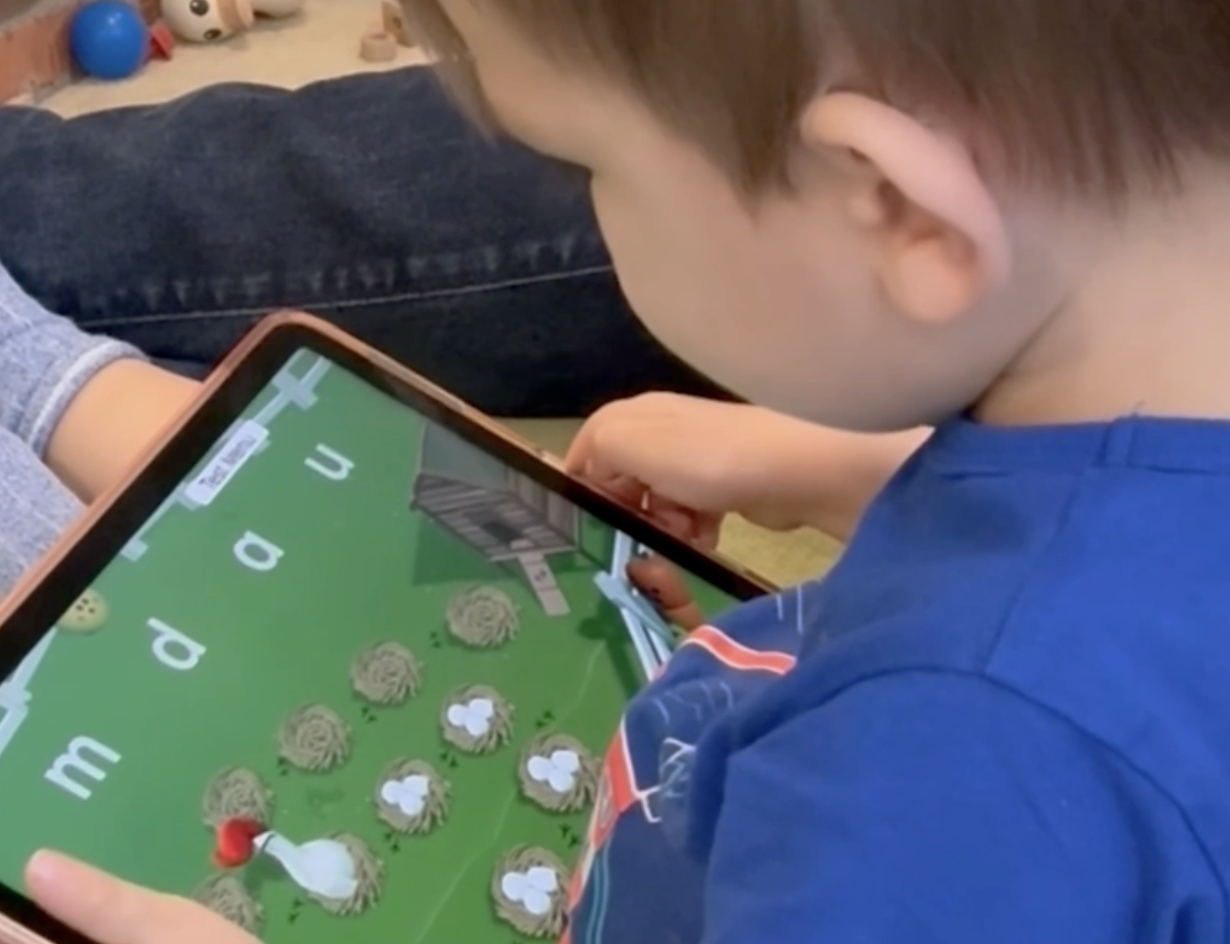
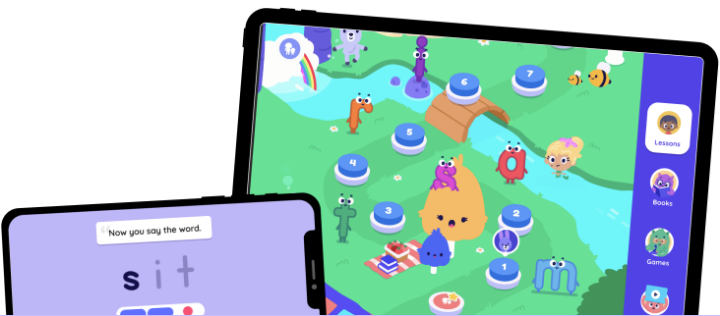
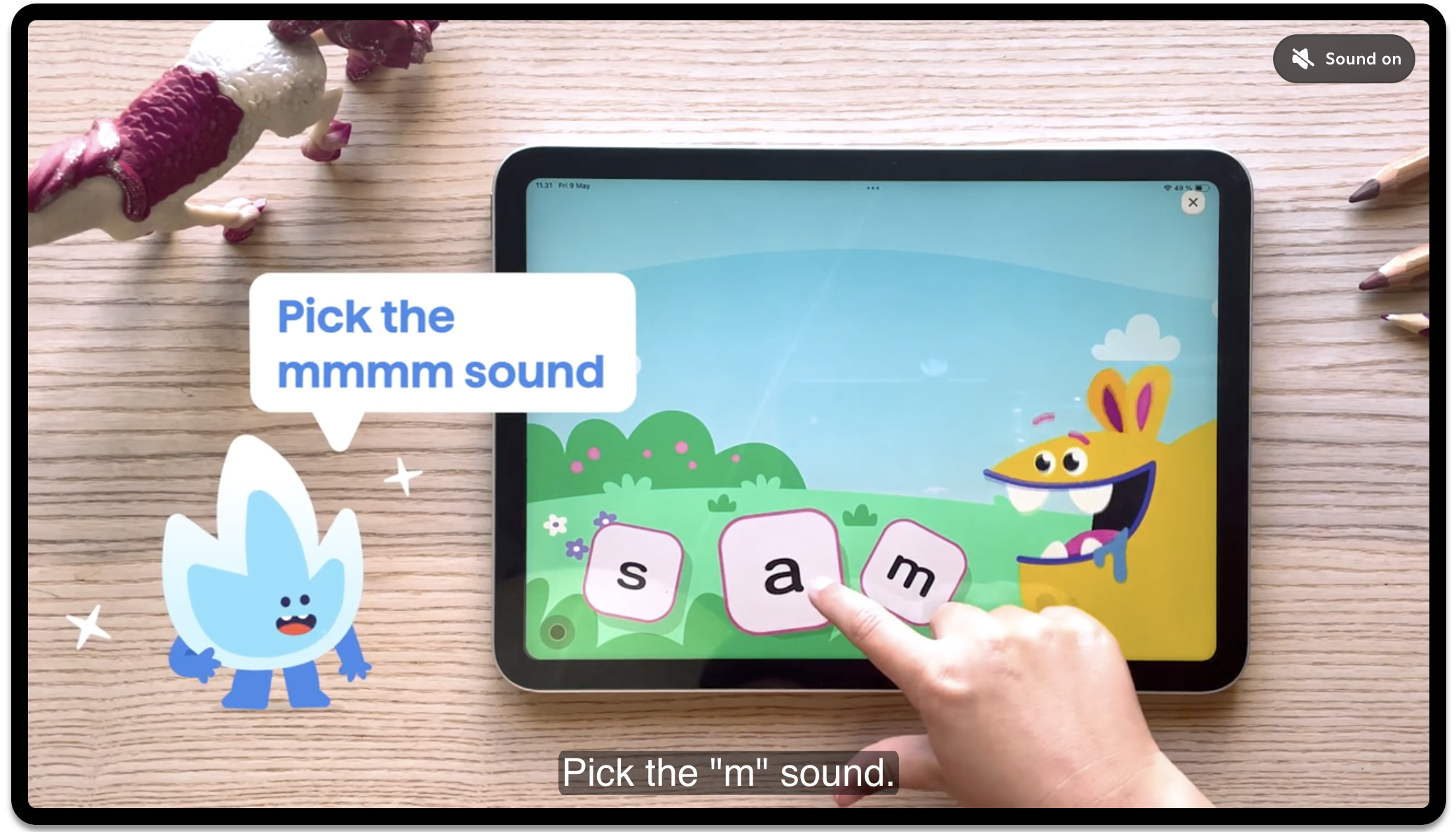
A five-year-old learning to read needs two things: systematic phonics instruction and enough engagement to practice daily. Most apps deliver one, not both. Sparks combines them. An animated coach listens as the child speaks, traces, and blends through 5-10 minute sessions. Real-time speech recognition means the app responds to what the child actually says, not what they tap.

The progression covers letter sounds through blending and word reading, following the systematic phonics sequence identified as most effective for early readers (Ehri et al.). Research on distributed practice found short, frequent sessions produce stronger retention than longer ones (Cepeda et al.). Sparks is built around that principle.

Mike's TakePersonally tested · Disclosed

My three-year-old's face lights up when Sparky says her name. She's learning letters, blending sounds, and asking to practice. That's a great feeling.

Strengths

  • + Real-time speech feedback catches errors tap-based apps miss
  • + 5-10 minute sessions align with distributed practice research
  • + Adapts to actual pronunciation level, not just age

Limitations

  • - Narrowly focused on phonics; doesn't build Curiosity or Creativity
  • - No peer or social reading features
  • - Requires the ClassDojo app
Skip if

Your child is past letter sounds and needs fluency practice with real books. Ello coaches oral reading across hundreds of leveled texts.

Read the full Dojo Sparks guide
Ello logo

Ello

Best for kids who can sound out words but read slowly

Cost
~$15/mo ($139/yr)
Platform
iOS only
Ages
4-8
Literacies
Persistence
Ello AI reading coach interface

Once a child can decode individual words, the next challenge is fluency: reading smoothly enough that comprehension becomes possible. Most children stall here. Fluency requires practice reading aloud with someone who listens and catches mistakes gently. Most families can't carve out 20 minutes of focused listening every day. Ello fills that gap with speech recognition that catches mispronunciations in real time, not a human, but more attentive than no one.

Children read aloud from a library of 700+ leveled books. The AI identifies mispronounced words and offers correction in real time. The experience mirrors a patient reading tutor: follow along, intervene when needed. Ello doesn't let children skip forward when they stumble on a word; they re-read until it lands. That design friction is exactly what fluency practice requires.

Mike's TakeSupporter, not a user

The most promising AI reading coach I've seen, outside of Sparks. My older two are past it and my youngest is on Sparks. Strong product, just not the right time for my family.

Strengths

  • + Real-time oral reading feedback frees parents from being sole coach
  • + 700+ leveled books with automatic progression
  • + Storytime mode adds creativity without diluting the reading core

Limitations

  • - iOS only; excludes Android families
  • - Solo experience; Connection is absent
  • - Assumes basic phonics knowledge
Skip if

Your child isn't yet blending letter sounds into words. Dojo Sparks builds the phonics foundation Ello builds on.

Read the full Ello guide
Readmio logo

Readmio

Best for your nightly read-aloud routine

Cost
Freemium
Platform
iOS, Android, Web
Ages
3+
Literacies
Curiosity · Creativity · Connection
Readmio story app

A parent reads the story aloud. The app listens for cue words and adds ambient sound effects and music. The voice, pacing, and emotional tone stay in human hands. The child listens, imagines, and fills in the visual world the text only describes.

This is the only product on this list where Connection is a core feature. Research on dialogic reading found interactive shared reading accelerates vocabulary growth more than passive listening (Mol et al.). Creativity scores Strong because Readmio deliberately avoids showing illustrations, leaving the child's imagination to build the visual world.

Mike's TakeTried it

I've tried it. Good product. But screen-free bedtime reading is non-negotiable in our house. If you already have the habit, Readmio makes it richer. If you don't, start without the app.

Strengths

  • + Parent-child connection is the product, not a feature
  • + Sound effects stimulate imagination without replacing it
  • + Free tier is enough to establish a habit

Limitations

  • - Does not teach decoding or phonics
  • - Child rarely drives the experience; Agency is shared
  • - Requires a willing adult reader every session
Skip if

You don't want screens or technology near bedtime.

Read the full Readmio guide
Luca (Lucid Reading) logo

Luca (Lucid Reading)

Best for kids who are falling behind and losing confidence

Cost
Paid
Platform
Web
Ages
5-13
Literacies
Persistence · Adaptability
Luca AI reading tutor

A struggling 7-year-old handed the same app a fluent 5-year-old uses gets a message the app didn't intend: reading isn't for you. Most reading tools move at one pace. Kids who can't keep up disengage.

Luca is built for those kids. The AI listens at the phoneme level, catching precisely where decoding breaks down. Lessons and stories adapt to both reading level and age-appropriate interests, so a struggling second-grader isn't reading texts designed for preschoolers. Four decades of dyslexia research identify phoneme-level processing as the core challenge in reading disabilities (Vellutino et al.). Luca targets that bottleneck directly.

Strengths

  • + Phoneme-level speech recognition catches specific sound breakdowns
  • + Age-appropriate content for older struggling readers
  • + Changes instructional approach, not just difficulty

Limitations

  • - Evidence base promising but early; no peer-reviewed outcomes yet
  • - Creativity limited; child is reader, not author
  • - Judgment and Connection not part of the design
Skip if

Your child reads at or above grade level. Ello or Readmio will be more engaging.

Read the full Luca (Lucid Reading) guide
Mentava logo

Mentava

Best when a private tutor isn't an option

Cost
~$500/mo
Platform
iOS
Ages
3-8
Literacies
Persistence
Mentava AI reading tutor

Every other product on this list costs a fraction of what Mentava charges. At ~$500/month, that demands different scrutiny. The model is closer to private tutoring than to an app: 120 levels of structured daily sessions covering letter sounds, blending, and decoding, with human coaching for parents via messaging and video review. Sessions run 15-30 minutes.

Persistence scores Strong through deliberate cognitive demand and neutral feedback that builds frustration tolerance. The design is anti-addictive: no variable rewards, no streaks, no infinite scroll. For families who can afford it and can't access a strong private tutor, the individualized model is distinctive. For everyone else, the five products above cover the same progression at a fraction of the cost.

Strengths

  • + Builds persistence through deliberate cognitive demand and neutral feedback
  • + Anti-addictive design: no variable rewards, streaks, or infinite scroll
  • + Human coaching for parents included

Limitations

  • - ~$500/month excludes most families
  • - Does not develop Agency, Curiosity, or Creativity
  • - Fully prescribed curriculum with no child goal-setting
Skip if

Cost is a consideration at all. The other five products on this list cover the same progression for under $20/month.

Read the full Mentava guide
Also Worth Considering

Teach Your Monster to Read

Strong game-based phonics, about $5 and free on web. Less adaptive than the picks above.

Zora Learning

Adaptive stories for kids past decoding. Best as a bridge product, not a starter.

Bookbot

Real-time speech feedback on a freemium budget. Narrower content than Ello.

Google Read Along

The free AI reading companion. Useful but less structured than paid phonics apps.

Kobi

Dyslexia support with comprehension checks. Narrower scope than Luca.

Lexia Core5

Strong if your school already uses it. Not designed for individual families.

Hooked on Phonics

Structured program with physical workbooks. Dated interface.

Libby

Free ebooks and audiobooks. For after your child can read independently.

Why These Six Out of 42

I scored 42 reading products in this age range. The remaining 36 fell into these categories:

  • Engagement without instruction (ABCmouse , Homer , Lingokids ) : Reading activities bolted onto a broader curriculum. The reading components don't take a child from sounds to sentences.
  • Letter recognition only (Endless Alphabet , AlphaBlocks , Letter School ) : Teach letter names and formation but stop before blending and decoding.
  • Libraries without instruction (Epic! , Vooks , FarFaria ) : Book collections that build love of reading but don't teach decoding.
  • Classroom-only tools (Raz-Kids , Amplify CKLA , Waterford ) : Designed for school deployment, not individual families.

Try This Week

  1. 1.

    Open Dojo Sparks or Reading.com and let your child work through the first few levels. Watch where they hesitate on letter sounds.

  2. 2.

    Read a story aloud tonight, with Readmio or without it. Pause three times and ask your child to predict what happens next.

  3. 3.

    Have your child read one page aloud and count the words they stumble on. More than five per page, the text is too hard; try Ello's leveled library.

Get the next guide

One email when a new guide ships. No spam.

No ads. No affiliate links. Unsubscribe anytime.

FAQ

Do I even need a reading app, or should I just read to my kid every night?

Both. Reading aloud builds vocabulary and comprehension. Phonics apps teach decoding. You need both. The question is whether you can deliver structured phonics yourself. If not, a good app is how your child gets it.

Is my kid falling behind if they're not reading by age 5?

Not necessarily. Some kids read fluently at 5; others don't click until 7 or 8. Watch progress, not timeline. If they've plateaued despite consistent practice, talk to their teacher about screening. Luca is built for kids who need extra support.

Are reading apps making my child a worse reader?

Not the ones on this list. The risk is apps that gamify letter matching without systematic phonics. They create the illusion of progress without teaching decoding.

Should I be using phonics or whole language?

The research resolved this years ago. Systematic phonics produces significantly stronger outcomes, especially for the youngest readers (Ehri et al.). Phonics isn't the whole picture; shared reading and vocabulary matter too, but they build on the phonics foundation, not instead of it.

Is $500/month for Mentava worth it?

Depends on what you're comparing it to. Every other app on this list costs a fraction of Mentava. If your child is progressing with Dojo Sparks or Reading.com, there's no evidence spending more produces proportionally better outcomes. At $500/month I'd personally use a human tutor.

How much should I spend on reading apps?

Start with what's available. Both Dojo Sparks and Reading.com are under $20/month and cover systematic phonics. Price doesn't predict outcomes. What matters is whether the app teaches phonics and whether your child uses it consistently.

Didn't find your answer?

Which literacies does your child need most?

Take the 2-minute assessment and get a personalized profile.

Take the Quiz