
Sparkli
Ages 5-12 · freemium · AI Product · sparkli.ai ↗
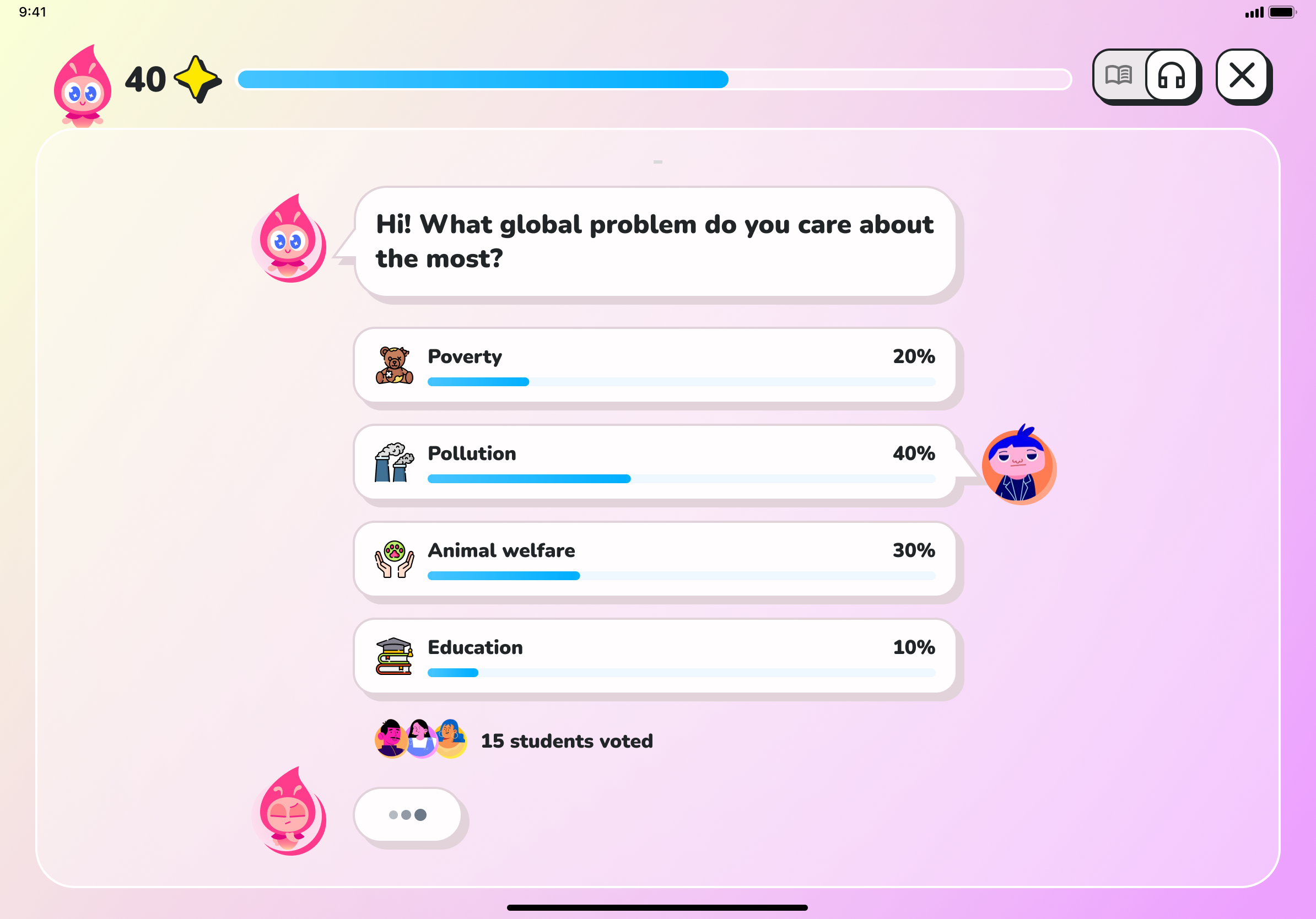


Sparkli is a new AI learning app for kids ages 5-12. Instead of relying on text alone, it builds topic journeys with audio, visuals, quizzes, and games. The pitch is simple: if a child is curious about something, Sparkli tries to turn that interest into an interactive expedition.
Sparkli has focused developmental strength worth knowing about. It builds curiosity. The main growth opportunity: The evidence base is still early.
Strengths & gaps
Strengths
- ● Sparkli’s strongest signal is Curiosity. The product is explicitly designed to turn a child’s question or interest into a richer path instead of a one-shot answer.
- ● Sparkli also looks better than average on Adaptability. The AI-generated journeys appear built to meet children where they are and keep them moving.
Gaps
- ○ The evidence base is still early. Sparkli is launch-stage, so most of the public record is product framing rather than long-term usage evidence.
- ○ Sparkli is weaker on Judgment and Self-Regulation. The available sources talk about engagement and exploration, not about reflection or impulse control.
Detailed scores
How Sparkli performs on each of the 9 literacies in our framework.
Doing
— 0 of 3 Strong
Sparkli gives children some ownership because it is framed as choice-driven and exploratory. A child can follow an interest instead of a fixed worksheet. But the app is still heavily AI-authored, so the range of agency appears bounded.
Sparkli seems designed to keep children engaged through varied media and interactive pacing. That can support staying with a topic longer. But the harvested evidence does not yet show much about working through hard frustration or repeated failure.
Adaptivity is part of the core story. Sparkli claims to build personalized learning journeys instead of a single fixed lesson. That supports some flexibility, even if the depth of that personalization is still hard to verify from public material.
Thinking
— 1 of 3 Strong
Curiosity is why Sparkli exists. The product is openly framed around turning interest into exploration using audio, visuals, quizzes, and games. That makes it one of the clearer specialist products in this batch.
Sparkli is more open than a drill app because children move through interactive topic journeys. But the current evidence does not yet show children making, designing, or revising original work. It looks exploratory more than generative.
The public story is about holding attention and encouraging exploration. That matters, but it is not the same thing as building judgment. There is little evidence yet of comparison, evaluation, or reflective decision-making.
Being
— 0 of 3 Strong
Sparkli is described as a personal app experience. The harvested sources do not show peer collaboration, conversation, or belonging as central product mechanics. Connection is outside the demonstrated scope.
Sparkli aims to keep kids engaged, but engagement is not self-regulation. The public evidence does not show pacing tools, reflection prompts, or supports for managing distraction. That keeps the rating low.
Sparkli is framed around curiosity and exploration. The harvested evidence does not tie the experience to identity, values, or contribution. Purpose is not yet visible in the public record.
Based on 3 sources
Reviewed by New Literacies
Scored by our research-derived framework · AI-assisted analysis with editorial review · 3 sources reviewed · Our methodology →
Get the next guide before it goes live
One email when a new product review ships.
Free. No spam. Unsubscribe anytime.
See other products strong in the same literacies: