Synthesis
Ages 5-11 · paid · AI Product · synthesis.com ↗
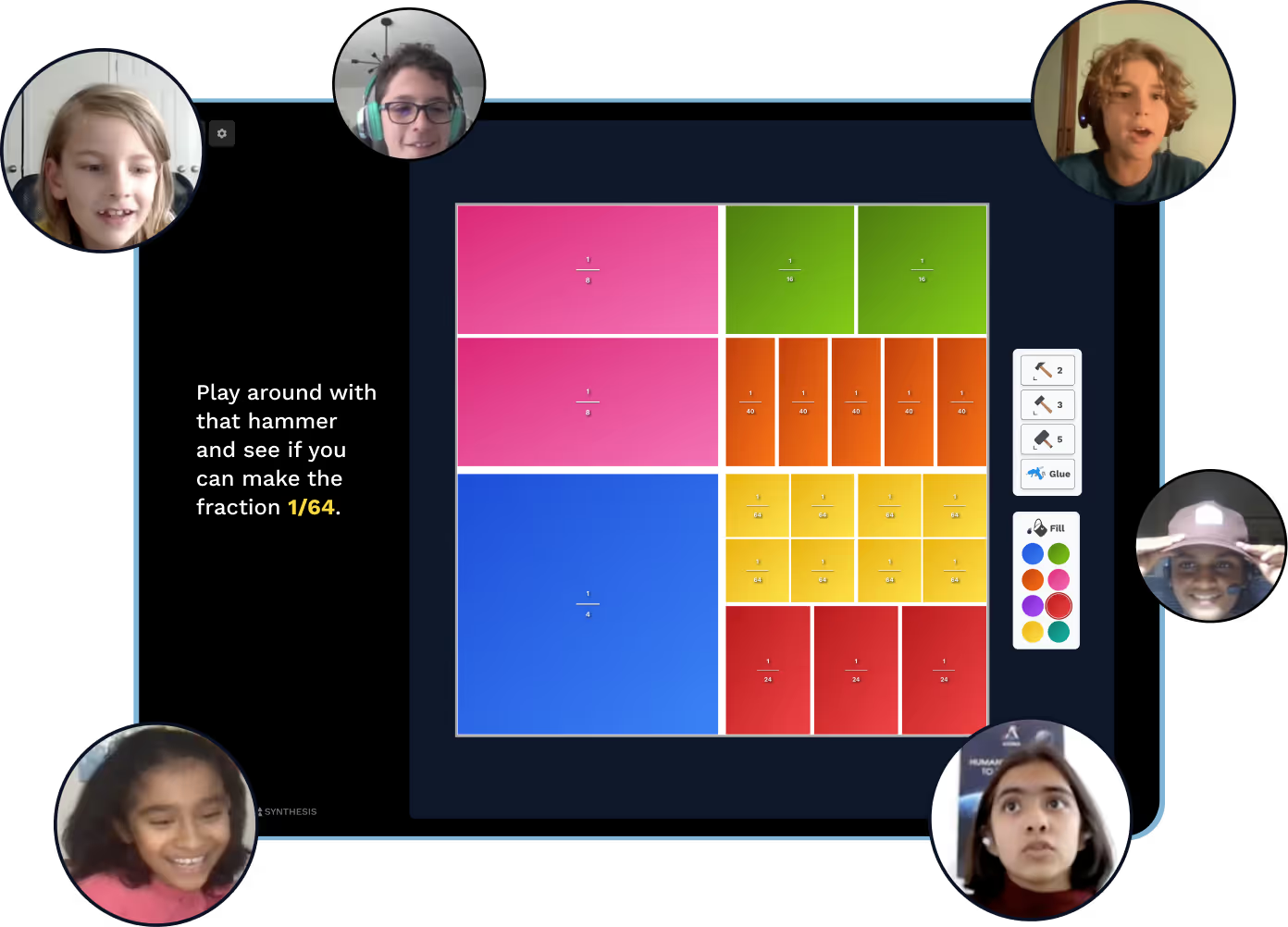


Synthesis Tutor is an AI math tutor for elementary-age children. Your child talks through math problems with an on-screen guide, uses digital manipulatives, and works through short interactive lessons instead of a static worksheet. The approach is step-based — your child interacts at each problem-solving step rather than just submitting final answers — which research shows is one of the most effective designs for AI tutoring. Note: This guide covers the Synthesis Tutor math experience only, not Synthesis Teams or Soft Skills.
We've reviewed Synthesis against our 9-literacy developmental framework. The main growth opportunity: The broader evidence for AI math tutoring in K-12 is more cautious than the marketing suggests.
Strengths & gaps
Strengths
- ● Synthesis Tutor's step-based interactive design is grounded in the most effective approach to AI tutoring. Research shows that step-based tutoring systems achieve learning gains close to human tutoring — far better than traditional software (VanLehn, 2011). The theoretical foundation is strong.
- ● The patient, encouraging tone helps reduce math anxiety. Research shows that tutoring — including AI-assisted — can measurably reduce math anxiety in elementary children (Supekar et al., 2015; Wang et al., 2025). Parent reviews consistently describe lower frustration and longer willing engagement, especially for ages 5-8.
- ● Oklahoma selected Synthesis for the first statewide AI math tutoring pilot in 3rd-grade classrooms (March 2025), signaling institutional confidence in the approach. No efficacy data from the pilot has been published.
Gaps
- ○ The broader evidence for AI math tutoring in K-12 is more cautious than the marketing suggests. The most comprehensive research review of math tutoring software found near-zero overall effects in K-12, and outcomes were actually worse for struggling learners (Steenbergen-Hu & Cooper, 2013). Parents choosing Synthesis for a child who's behind in math should know the evidence is thin for that use case.
- ○ No Synthesis-specific efficacy study has been published. Unlike products with published RCTs — such as DragonBox (n = 1,850; Decker-Woodrow et al., 2023) — Synthesis's claims rest on broader ITS research and parent testimonials, not product-specific outcome data.
- ○ Content depth ceiling. Multiple independent sources — Unite.AI, AI Tools for Kids, Reddit, Trustpilot — flag that advanced or older children run out of challenge or find the AI more scripted than expected. The product is strongest for ages 5-8 on foundational skills; the 8-11 range is less well-served.
- ○ Agency is structurally limited. The tutor decides the sequence, prompts, and corrections. The child responds within that structure. This is a pedagogical choice that makes the tutoring effective, but it means the product doesn't build self-direction, goal-setting, or independent mathematical thinking.
Detailed scores
How Synthesis performs on each of the 9 literacies in our framework.
Doing
— 0 of 3 Strong
Synthesis Tutor is responsive but system-led. The tutor decides the lesson sequence, prompts, and correction path; the child acts within that structure. Research shows this is actually the reason step-based tutoring works — the system controls the interaction flow that produces learning gains (VanLehn, 2011). But effective pedagogy and developmental capacity-building can pull in different directions. The child benefits from the structure but doesn't practice goal-setting, self-direction, or autonomous decision-making. One parent reviewer noted their 5-year-old manages sessions independently (SmartMama), which is operational independence, not Agency in the developmental sense.
There is a real persistence signal. Parent reviews consistently describe children staying with sessions, returning willingly, and engaging longer than with other math apps. The growth mindset framing — "mistakes are a natural part of learning" — is confirmed across multiple parent reports (Play Learn Thrive, App Store reviews). However, editorial reviews and community forums both flag a content depth ceiling: advanced or older children run out of challenge or find the AI more scripted than it first appears (Unite.AI, Reddit, Trustpilot). The broader research picture is sobering: the most comprehensive review of math tutoring software in K-12 found near-zero overall learning effects (Steenbergen-Hu & Cooper, 2013), which means persistence may be sustained by engagement mechanics rather than rewarded with proportional learning growth.
The tutor adjusts level, representation (manipulatives, flashcards, guided explanations), and pace based on the child's performance. That gives children practice adjusting to changing formats within elementary math. But the adaptation is system-initiated, not child-initiated — the child doesn't choose how to approach a problem or which representation to use. Competitive comparison suggests Khanmigo's Socratic questioning model may build more independent reasoning than Synthesis's guided approach (AI Tools for Kids comparison).
Thinking
— 0 of 3 Strong
Synthesis makes math feel more explorable than a worksheet app through manipulatives and interactive puzzles. But the child moves through a scaffolded lesson path, not pursuing their own questions. The tutoring research measures learning outcomes, not curiosity or inquiry drive. We found no evidence that Synthesis creates genuine information gaps or "I want to know" moments. DragonBox, by contrast, uses puzzle design to make kids want to see what happens next. Synthesis's engagement is real but scaffolded rather than curiosity-driven.
No open-ended making, no original artifact creation, no expressive output. The child solves, responds, and explains within guided problems.
Step-based tutoring builds analytical reasoning (VanLehn, 2011). Synthesis's step-by-step problem-solving with manipulatives exercises reasoning within elementary math. Official materials and reviews frame the product around understanding and strategy rather than memorization. But in-product decisions are convergent: problems have correct answers, not competing tradeoffs. The child doesn't evaluate whether their reasoning makes sense in ambiguous contexts — they evaluate whether they got the answer right. Moderate is the right ceiling.
Being
— 0 of 3 Strong
The core relationship is between one child and an AI tutor. Parents can monitor progress via dashboard, but that is oversight, not collaboration. The product does not build human connection, empathy, or teamwork.
This is where the academic evidence is strongest. Research shows tutoring — including AI-assisted — can measurably reduce math anxiety in elementary children. Supekar et al. (2015) showed 8 weeks of cognitive tutoring eliminated anxiety-related brain responses in high-math-anxiety 3rd graders. Wang et al. (2025) found AI-assisted learning reduced math anxiety in primary school students. Synthesis's patient, low-stakes design with immediate encouragement and bounded sessions plausibly activates this pathway, and parent reviews consistently report lower math frustration. However, the product doesn't explicitly teach self-regulation strategies (emotional labeling, coping, metacognition). It provides a regulated environment; it doesn't teach regulation.
Effort serves individual mastery and confidence. There is no contribution dimension, no real-world application framing, and no connection to identity or values.
Based on 23 sources
- Research doi.org — 00461520.2011.
- Research doi.org —
- Research doi.org — JNEUROSCI.0786 15.
- Research doi.org — acp.
- Research educationnext.org — ai tutors hype or hope for education forum
- Product eric.ed.gov
- Product apa.org — edu a0037123.pdf
- Product eric.ed.gov
- Product pmc.ncbi.nlm.nih.gov — PMC
- Product unite.ai — synthesis tutor review
- Product aitoolsforkids.com — synthesis tutor review ai math tutor for kids
- Product aitoolsforkids.com — synthesis tutor vs khanmigo ai math tutor comparison
- Product brighterly.com — synthesis tutor review
- Product apps.apple.com — id
- Product reddit.com — synthesis_ai_math_tutor_anyone_have_experience
- Product trustpilot.com — www.synthesis.is
- Product smartmama.io — synthesis tutor review 5 year old
- Product playlearnthrive.com — synthesis ai review
- Product fivelittlerascals.com — homeschooling math from monsters to artificial intelligence
- Product okbusinessvoice.com — gov stitt task force launching ai program to teach oklahoma students math
- Product synthesis.com — tutor
- Product synthesis.com — tutor main
- Product synthesis.com — fundraise amjad balaji
Reviewed by New Literacies
Scored by our research-derived framework · AI-assisted analysis with editorial review · 23 sources reviewed · Our methodology →
Get the next guide before it goes live
One email when a new product review ships.
Free. No spam. Unsubscribe anytime.