
Thinkverse
All ages · paid · AI Product · thinkverse.co ↗
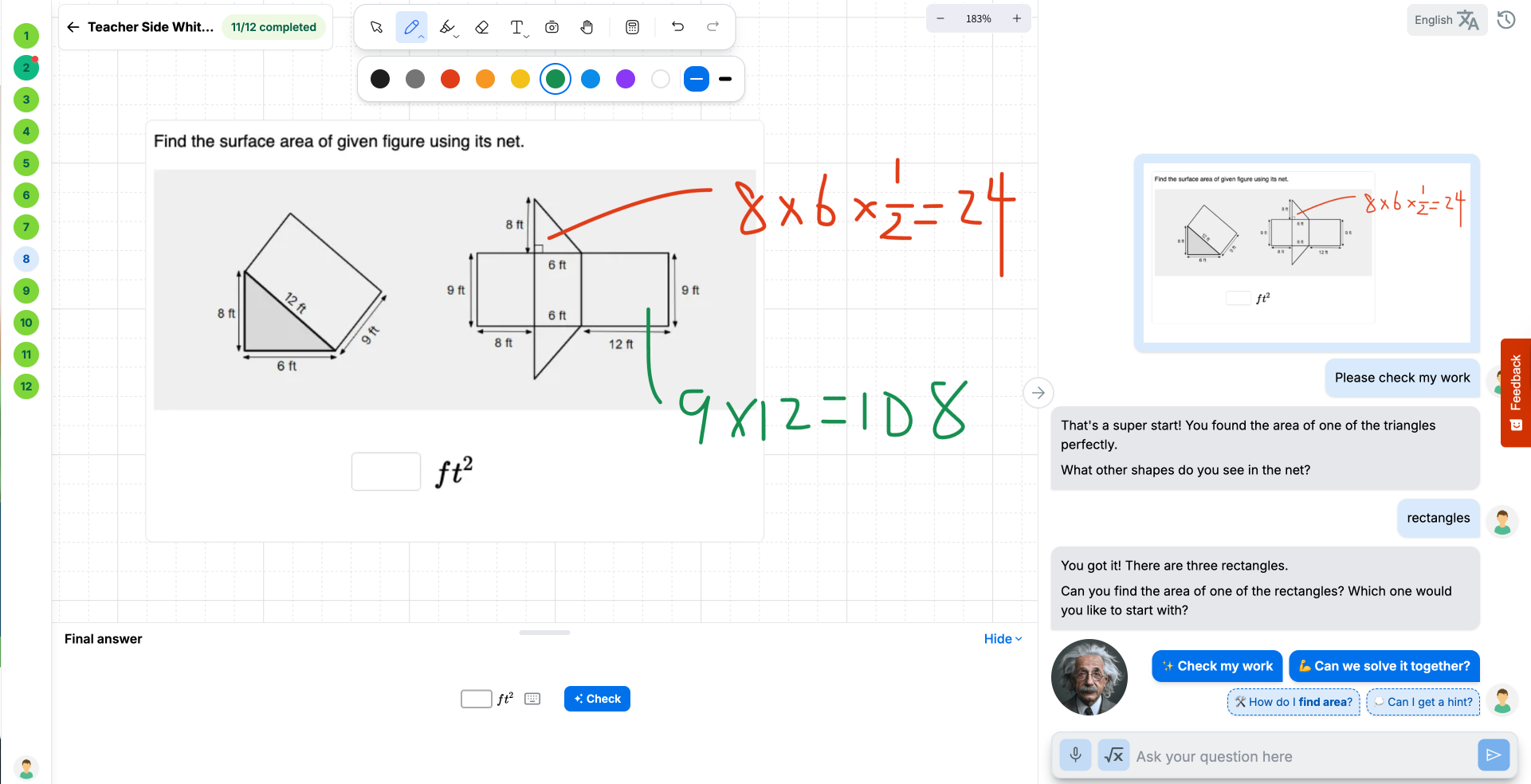
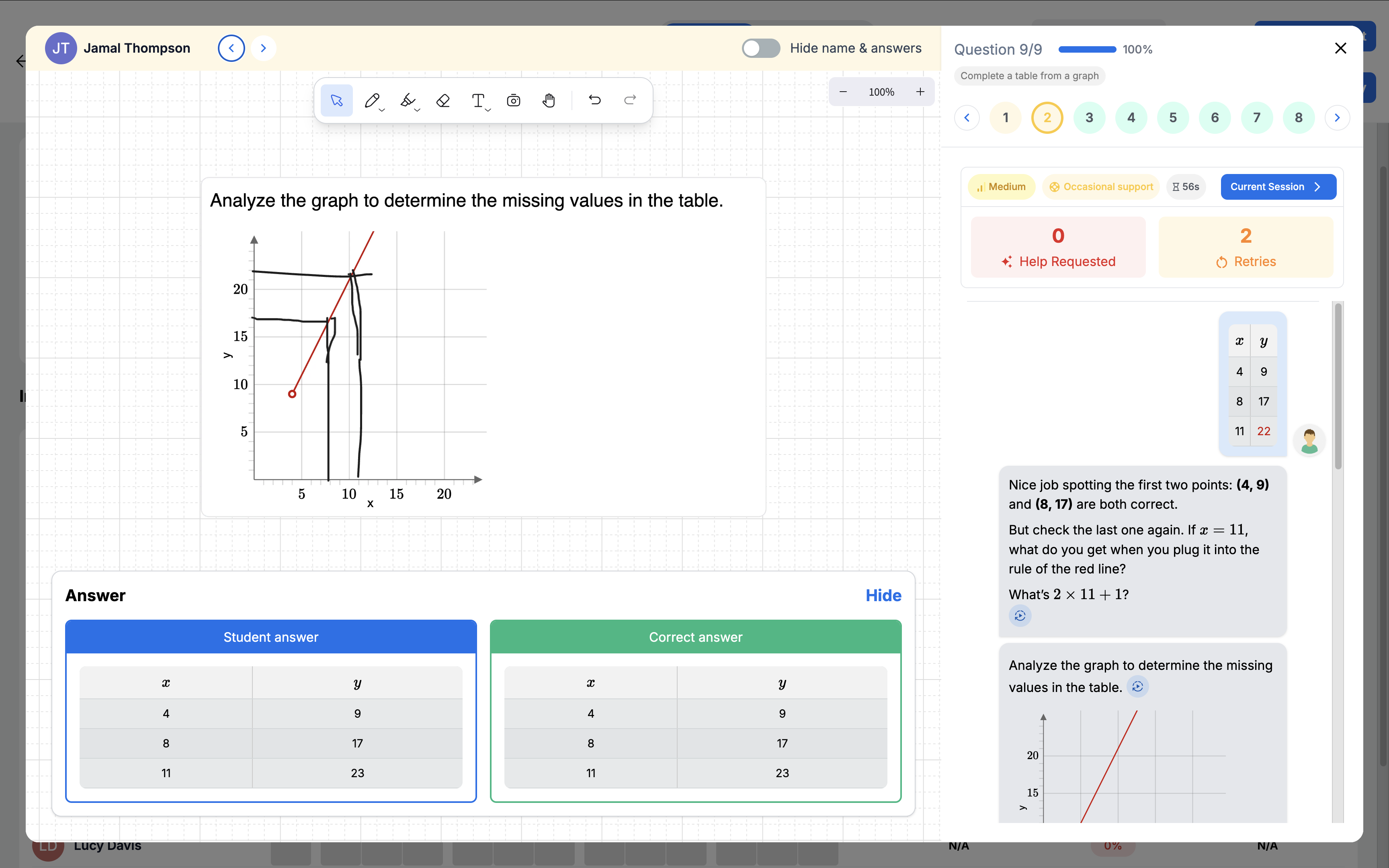
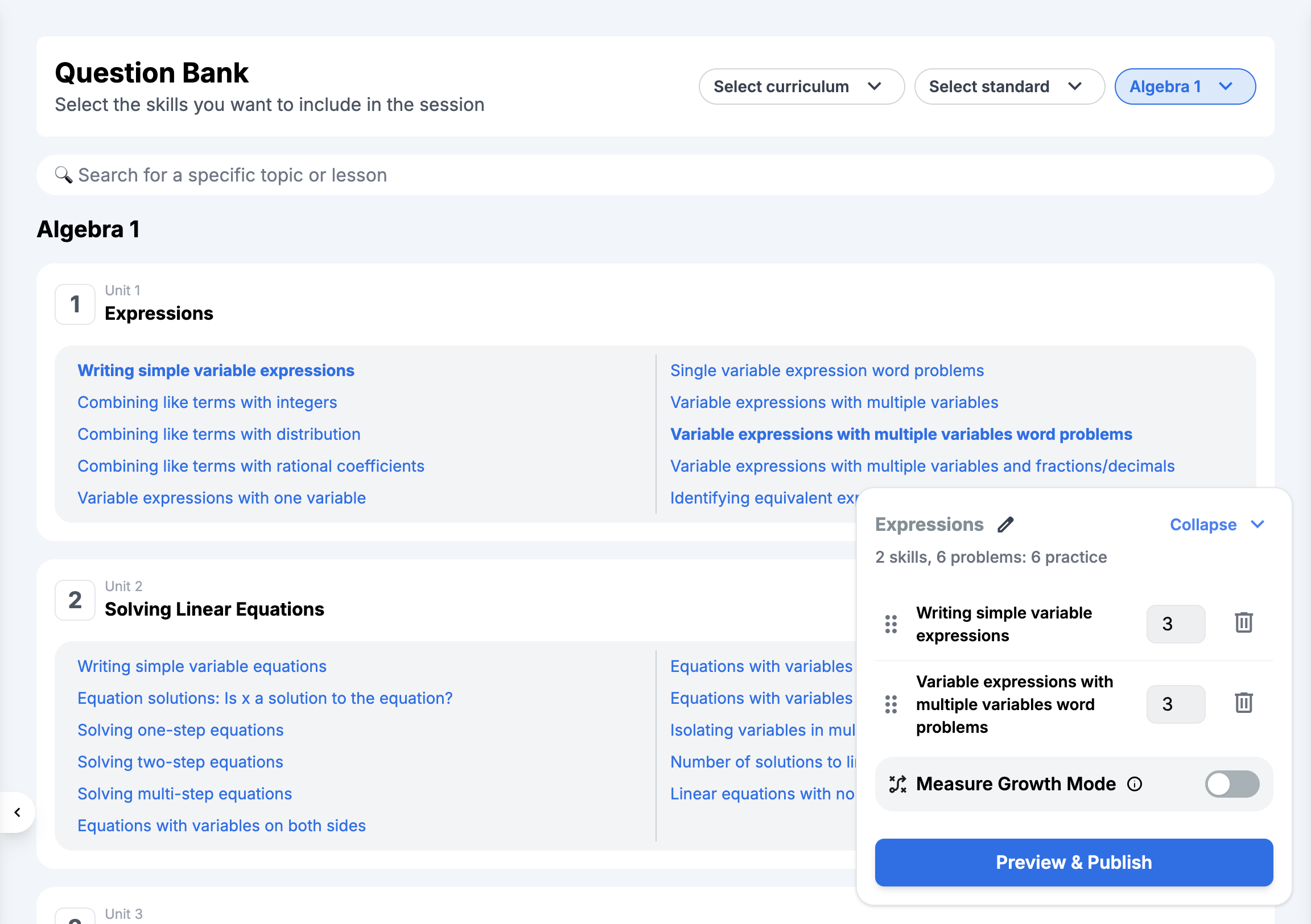
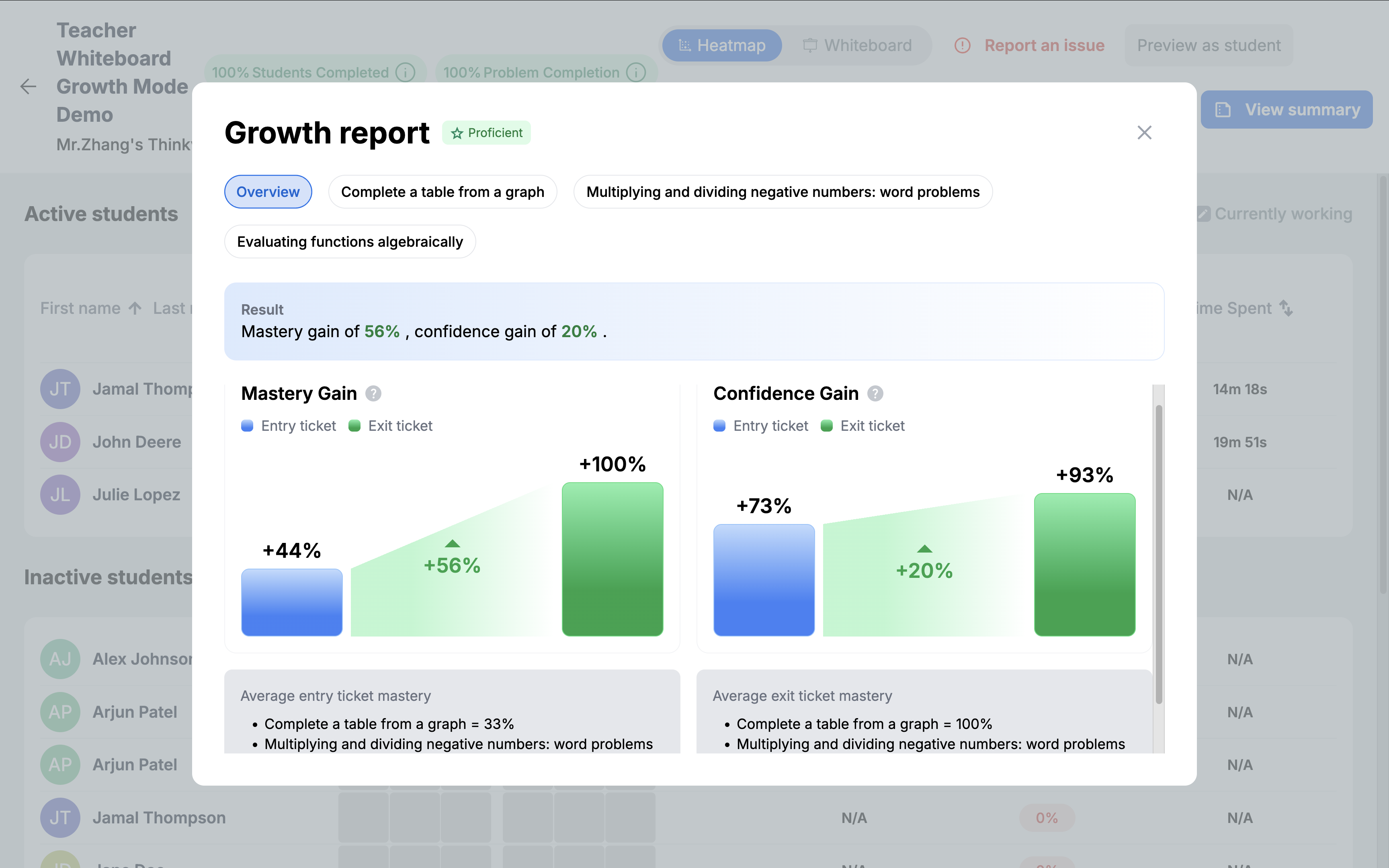
Thinkverse is an AI math tutor aimed at schools. Students get adaptive support and scaffolded feedback while teachers get insight into learning gaps and class-wide patterns. The design goal is not just tutoring, but tutoring that feeds back into classroom instruction.
Thinkverse has focused developmental strength worth knowing about. It builds hands-on skills. The main growth opportunity: thinkverse is weak on Curiosity and Creativity. The public record is about outcomes and support, not open inquiry.
Strengths & gaps
Strengths
- ● Thinkverse is strongest on Adaptability. Real-time targeted feedback and gap analysis are central to the product.
- ● Thinkverse also scores well on Persistence because it is designed to support independent problem-solving without immediately collapsing into answer-giving.
Gaps
- ○ Thinkverse is weak on Curiosity and Creativity. The public record is about outcomes and support, not open inquiry.
- ○ Evidence quality is limited because most of the public detail comes from the company itself.
Detailed scores
How Thinkverse performs on each of the 9 literacies in our framework.
Doing
— 2 of 3 Strong
Thinkverse wants students to solve problems independently, which is better than pure answer delivery. That creates some agency. But the experience is still structured by the system’s feedback and pathing.
Thinkverse’s best developmental signal is that it appears to keep students in the work. Scaffolded guidance can extend effort without removing the challenge. That is a real persistence benefit.
Adaptability is a core strength. Thinkverse emphasizes real-time targeted feedback, learning-gap analysis, and multilingual support. The system is clearly built to respond to student need rather than deliver the same experience to everyone.
Thinking
— 0 of 3 Strong
The public materials do not describe open-ended exploration. Thinkverse is framed as a tool for stronger outcomes in math. That keeps Curiosity low.
Thinkverse is not a making environment. Students use it to solve and understand math work. The harvested sources do not show original creation.
The platform seems to surface student thinking and support reasoning through next steps. That builds some analytical judgment inside math. But it remains domain-bound and tool-mediated.
Being
— 0 of 3 Strong
Teachers are more present here than in a pure AI app because Thinkverse feeds them insight. But the learner’s direct interaction still appears mostly with the AI. Connection is weak rather than absent.
A scaffold that gives help without immediately collapsing the problem can support better frustration tolerance. Thinkverse seems designed in that direction. Still, explicit self-regulation teaching is not visible in the public evidence.
Thinkverse is framed around proficiency, confidence, and teacher efficiency. The public evidence does not connect the student’s effort to identity, values, or contribution. Purpose is outside the demonstrated scope.
Based on 3 sources
- Product thinkverse.co
- Product thinkverse.co — copy of new version home
- Product thinkverse.com — about
Reviewed by New Literacies
Scored by our research-derived framework · AI-assisted analysis with editorial review · 3 sources reviewed · Our methodology →
Personalization bridge
Not sure what your kid needs most?
Take the quiz to see which literacies matter most for your family, then get practical things to try at home.
Get your family profileExplore more
See other products strong in the same literacies: