
DreamBox Learning
Ages 5-14 · paid · Curriculum · dreambox.com ↗

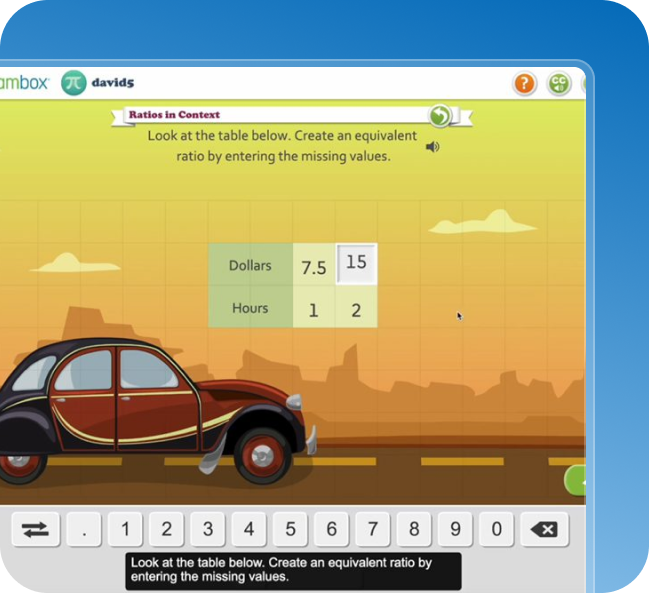
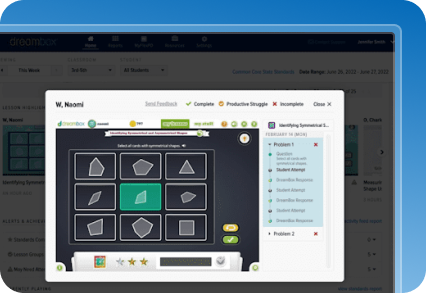

DreamBox Learning is an adaptive math program where kids solve short interactive lessons built around visual models, number sense, and game-like tasks. The system adjusts the sequence in real time as the child works. Teachers and parents get progress data while the child mostly experiences it as a structured math game.
We've reviewed DreamBox Learning against our 9-literacy developmental framework. The main growth opportunity: DreamBox doesn't open into creativity, purpose, or connection.
Strengths & gaps
Strengths
- ● DreamBox's clearest strength is structured mathematical thinking. The visual models and adaptive sequence push kids to test ideas instead of only memorizing procedures.
- ● DreamBox can keep children working in the zone where math is hard but still possible. That gives it real Persistence and Adaptability signals, even if they don't spike.
Gaps
- ○ DreamBox doesn't open into creativity, purpose, or connection. The child is solving the program's tasks, not pursuing a self-chosen project.
- ○ When the interface or instruction feels unclear, the friction can become plain frustration. That limits how confidently DreamBox can be called Strong for Persistence.
Detailed scores
How DreamBox Learning performs on each of the 9 literacies in our framework.
Doing
— 0 of 3 Strong
DreamBox gives kids some control over how they solve a problem. They manipulate objects, test moves, and work at their own pace. But the bigger path is still system-directed, not child-directed.
DreamBox keeps challenge in play through adaptation. Kids have to stay with a problem and recover from errors. But some reviews point to opaque feedback and abrupt frustration, which weakens the case for Strong.
DreamBox asks kids to move between representations and shift strategies as lessons change. That builds flexibility inside math. The transfer stays narrow, though, because the system does most of the planning.
Thinking
— 0 of 3 Strong
The strongest DreamBox lessons create small moments of "why does that work?" Visual models help. But the curiosity loop is short because the child is still following a prescribed sequence.
DreamBox is about solving predefined tasks. Kids are not designing, building, or revising original work. The thinking can be smart without being creative in the rubric's sense.
DreamBox builds analytical judgment inside math. Kids compare quantities, choose moves, and see what works. It does not ask them to weigh perspectives or navigate open tradeoffs.
Being
— 0 of 3 Strong
DreamBox is mainly a solo experience. Any collaboration comes from how a teacher uses it, not from the product itself.
DreamBox creates real frustration and delay. Children need to manage that to continue. But it doesn't teach naming emotions, calming down, or recovering on purpose.
DreamBox can make a child feel more capable in math. It does not connect the work to contribution, identity, or something larger than system progress.
Based on 6 sources
Reviewed by New Literacies
Scored by our research-derived framework · AI-assisted analysis with editorial review · 6 sources reviewed · Our methodology →
Get the next guide before it goes live
One email when a new product review ships.
Free. No spam. Unsubscribe anytime.