Kahoot! Geometry by DragonBox
Ages 8-13 · freemium · Product · dragonbox.com ↗
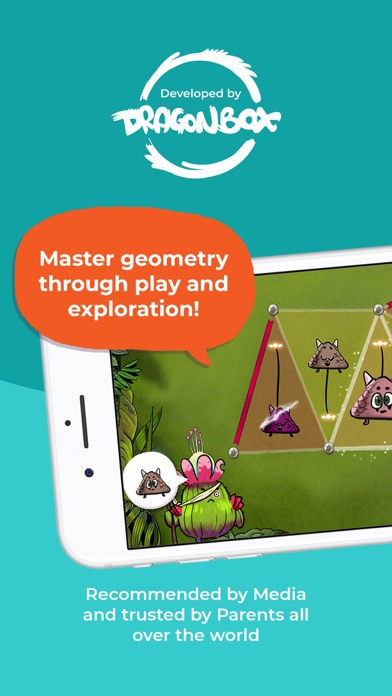
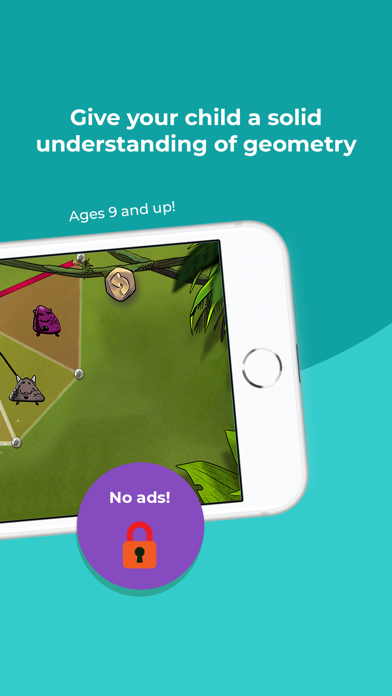
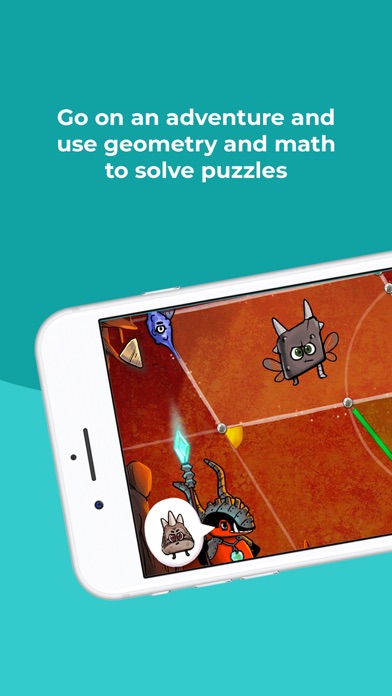
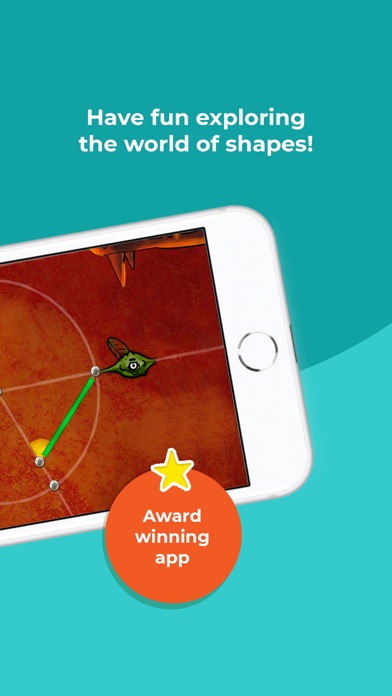
Kahoot! Geometry by DragonBox is a geometry puzzle game where kids move shapes around to recreate proofs and unlock new rules. They play through 100+ puzzles on a story path about saving Euclid's Island from Osgard, with normal and hard modes and optional family play. The app works best as guided play for kids who can sit with frustration. It is built more like a reasoning game than a drill app.
Kahoot! Geometry by DragonBox has focused developmental strength worth knowing about. It builds persistence. The main growth opportunity: the app is narrow. It builds geometry reasoning, not broad creativity or connection.
Full review
One-Line Summary
Kahoot! Geometry by DragonBox turns Euclidean proofs into a puzzle game where kids tap, draw, and drag shapes to solve geometry.
Capacity Signature
`[A][G][A][A][R][A][-][A][-]` - 1 Strong, 5 Moderate, 1 Limited, 2 Not Assessed
Strengths & gaps
Strengths
- ● Persistence is the headline strength. More than 100 escalating puzzles and no hints create real struggle, and that struggle is the point.
- ● The app makes geometry visual and physical. Kids tap, draw, and drag shapes to rebuild proofs instead of memorizing definitions.
- ● The developer provides parent and teacher resources, which makes follow-through possible outside the app.
Gaps
- ○ The app is narrow. It builds geometry reasoning, not broad creativity or connection.
- ○ It can stall kids who need help decoding instructions. One parent review said a child was "just stuck" when the app did not explain what it wanted.
- ○ Transfer depends on adults. Common Sense and teacher reviews both point to the need for guidance and follow-up.
Detailed scores
How Kahoot! Geometry by DragonBox performs on each of the 9 literacies in our framework.
Doing
— 1 of 3 Strong
Kahoot! Geometry by DragonBox gives kids some real choice because they can pick normal or hard mode and use it alone or with family guidance. But the app still decides the sequence of work, so the child is choosing within a set puzzle path rather than setting their own goals.
This is the clearest win in the product. The puzzles get harder, hints are not available, and both Common Sense and teacher reviewers describe kids hitting real difficulty and needing help to keep going. That combination builds sustained effort instead of quick completion.
Each chapter introduces a new rule, so kids have to update what they think shapes can do. The limit is that the adaptation stays inside one geometry framework, so the product develops flexible thinking without pushing much transfer to other domains.
Thinking
— 0 of 3 Strong
The story world, the shape creatures, and the exploration-and-discovery framing make the app feel inviting. Even so, it is still a guided game that resolves its own questions, so it sparks curiosity more than it sustains it.
Kahoot! Geometry by DragonBox asks kids to reconstruct mathematical proofs, not invent new ones. There is no open-ended making layer, so the game does not really build creative generation or revision.
The app asks kids to notice shape properties, choose the right rule, and decide how to build a proof. That is genuine reasoning practice, but it remains tightly contained inside geometry instead of opening into broader evidence or tradeoff judgment.
Being
— 0 of 3 Strong
DragonBox says kids can learn on their own or as a family through guidance and collaborative play. That is useful context, but the app does not itself create the social interaction, shared identity, or belonging that would make Connection a clear score.
No hints means kids have to tolerate uncertainty and keep trying. The teacher review shows that difficulty eventually requires assistance, which is exactly the kind of friction that can practice self-regulation even if the app does not teach coping moves directly.
The app frames geometry as a playful adventure, not as a values or contribution project. Kids are learning because the puzzle demands it, not because the game ties the work to identity or meaning.
Based on 6 sources
- Review commonsensemedia.org — kahoot geometry by dragonbox
- Review commonsense.org —
- Product apps.apple.com — id
- Product dragonbox.com — elements
- Product dragonbox.com — resources
- Product play.google.com — details
Reviewed by New Literacies
Scored by our research-derived framework · AI-assisted analysis with editorial review · 6 sources reviewed · Our methodology →
Personalization bridge
Not sure what your kid needs most?
Take the quiz to see which literacies matter most for your family, then get practical things to try at home.
Get your family profileExplore more
See other products strong in the same literacies: