Best-Of Guide

The Best Games That Build Connection

Stop counting screen time, focus on who else is playing instead. These 8 games bring people together.

By Mike Overell · Updated May 2026 · 18 min read · 8 picks from 60 scored

No ads. No affiliate links. How I research →

Disclosure: I work at ClassDojo, which makes Dojo Islands. My two eldest kids have been weekly users for over two years. They came to it at home, not through a classroom. It's on this list because they earned their place on it, but you should know the connection. It's flagged again on the Dojo Islands card below. More about me →

Two beliefs persist in most parent chats: video games are bad, or screens are bad. Both are wrong. In 2026 the American Academy of Pediatrics doubled down on what they said a decade earlier: screen time alone doesn't matter. What matters: what's on the screen, and who's playing with them.

Families that play together stay together. The research backs it: more frequent shared video-game play is associated with greater family closeness, and the families that benefit most are the ones with the weakest baseline communication (Wang, Taylor, & Sun, 2018).

The mirror case isn't pretty. Excessive solo gaming is associated with worse outcomes for kids, and the risk falls heaviest on boys. Across three decades of research on internet gaming disorder, 6.8% of male adolescents show these patterns (loss of control, displacement of school, sleep, friendships) versus 1.3% of female adolescents (Fam, 2018). Kids who fall into them get more depressed and isolated over time. Playing with family is one of the few things that helps.

I played a lot of Mario Kart as a kid, mostly with my sisters, my friends, and my dad. Most of what I remember isn't the racing; it's the time we spent together. I wanted that for my own three kids. I'd wished for a Nintendo Wii for years, but Nintendo killed it. I almost bought a Switch, and instead chose the Nex Playground for last Christmas. It's been the best purchase of 2026 so far.

Games come in many forms, not just on screen. This list spans four: board games, hybrid hardware, digital co-op, and outdoor. I scored 60 games and recommend 8. They all build connection with other people.

My top pick

Nex Playground. One console, three generations.

Free alternative

Family dinner, phones off.

What I left out

Games that put strangers in your kid's chat. There are many.

What I tell friends

Buy games you'll play with them. Skip the ones they'll play alone.

IRL with no screens

We want a cooperative board game everyone can play Pandemic: Family Edition · Cooperative tabletop; the talking is the game.
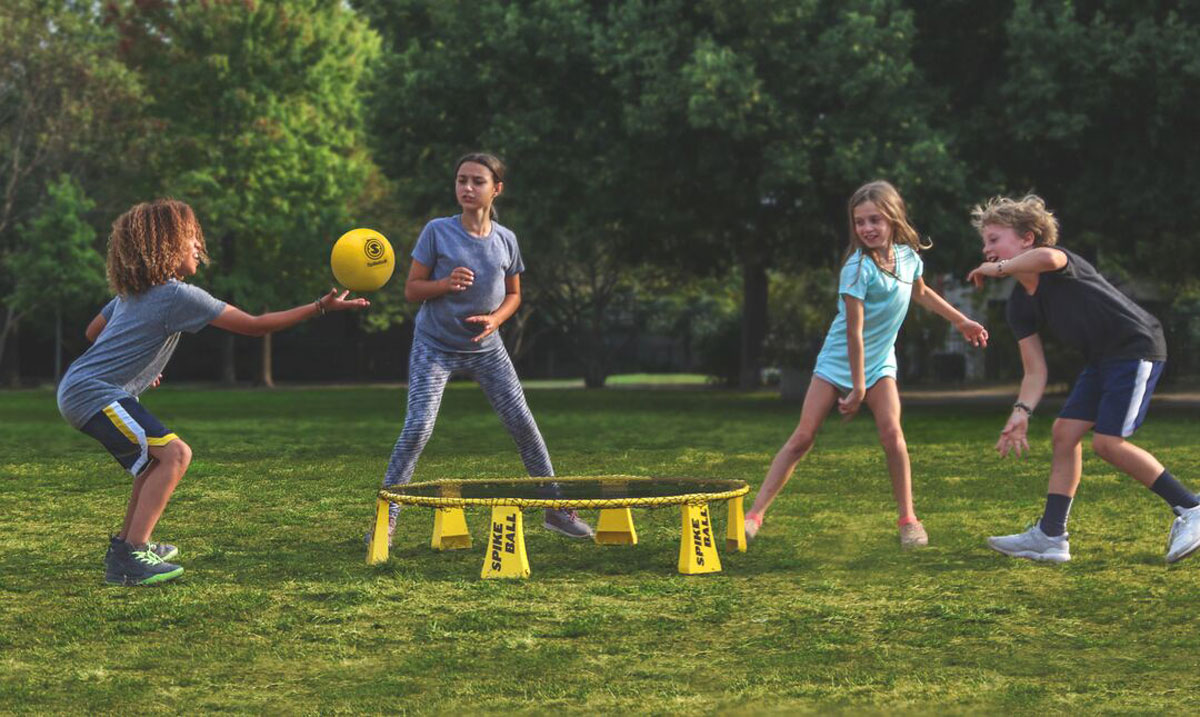
We want to play together, outside Spikeball · Outdoor net game; sub-2-minute setup, mixed-age teams.

IRL with screens

We want active game night that everyone can play Nex Playground · Body-as-controller; collapses the age gap.
We want serious co-op with our teen It Takes Two · Two-player only; the design cannot progress without verbal coordination.
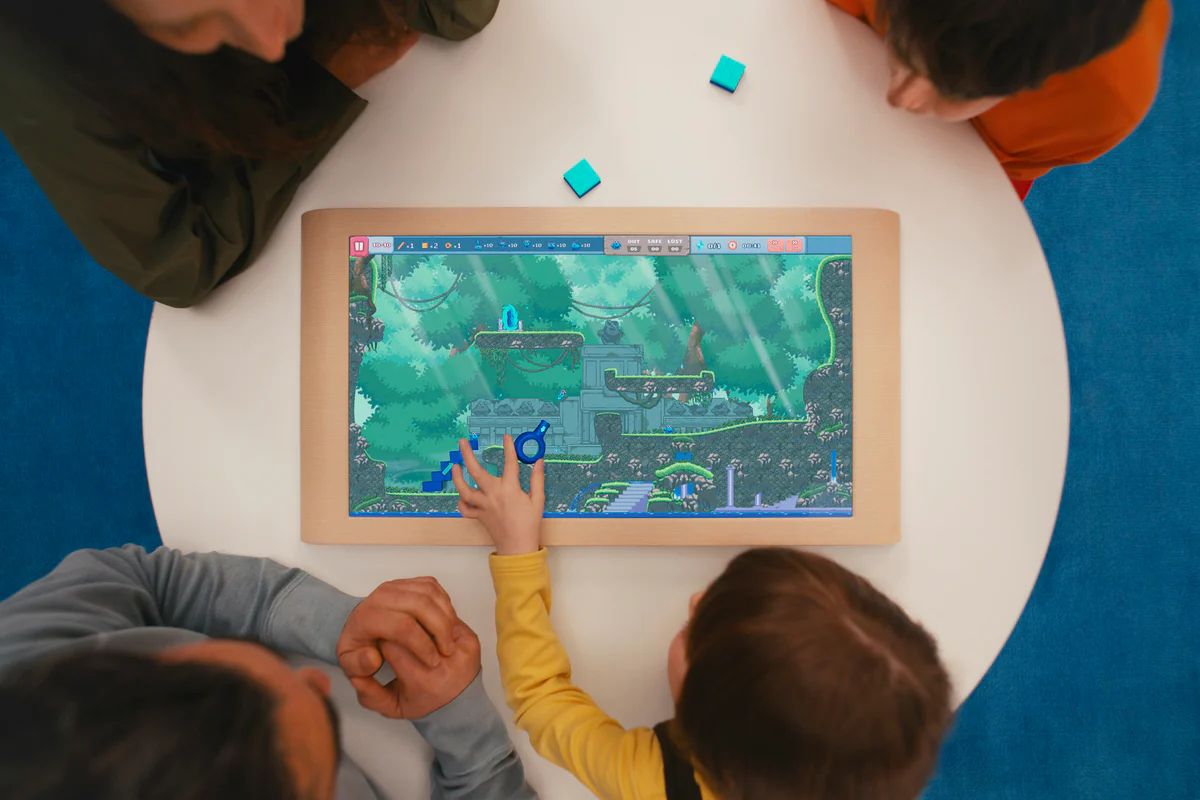
We want interactive tabletop games for the whole family Board (board.fun) · Touchscreen tabletop with grabbable physical pieces; co-presence is the only mode.
We want to sing without setup Carpool Karaoke The Mic 2.0 · Bluetooth mic; pairs with any phone, no app, no account.

Fully online

Our kids want to play with friends and siblings online Dojo Islands · Pre-authored phrases, approved-friends-only; safest online multiplayer I've found.
We want to play with relatives far away Board Game Arena · 700+ games, voice chat, $42/year for the full library.

Before you buy anything, try this.

Eat dinner together. Regular family meals are linked to less depression, better grades, and lower substance abuse (Harris et al.). The mechanism is the predictable togetherness, not the food.

Drive somewhere together with no devices. A 30-minute drive with no headphones and a real conversation does more for Connection than anything on this list. Co-engagement, not minutes, is the variable (AAP, 2016).

Play with no product. Cards. UNO. Pictionary on a napkin. Tag. The active ingredient is showing up together, not the specific game (Eriksson et al., 2021).

The products on this list are for when you want something more: a focal point for game night, a game siblings come back to, a way to pull in grandparents on equal footing. They supplement. They don't replace.

The Question You're Really Asking

Am I losing my kid to a screen?

Optimists say the screen becomes a way to talk, not a wall between kids and parents. Shared video-game play is associated with greater family closeness, and the families who benefit most are those with weaker baseline communication (Wang, Taylor, & Sun, 2018).

Skeptics point to Sherry Turkle's Alone Together as the strongest cultural argument that always-on connection trades contact for intimacy. She interviewed people; she didn't measure the size of the effect. The worry is real, even if the magnitude isn't settled.

The research is clear on what doesn't predict outcomes: minutes alone. The biggest study — 350,000+ teens — found screen time explains less than half a percent of wellbeing (Orben & Przybylski). The most-cited review and the Goldilocks paper agree: effects are small, only the extremes matter (Odgers & Jensen; Przybylski & Weinstein). The AAP's 2026 update tells parents what to do with this: focus on what kids are playing and who's with them, not the clock. Kids who mostly play alone do worse on average, especially adolescent girls (Coyne et al., 2011). For boys, the bigger risk is compulsive gaming — losing sleep, blowing off friends, can't stop (Fam, 2018). What works is playing together. The specific game matters less than parents think (Eriksson et al., 2021).

My Take

My biggest practical takeaway has been to avoid solo gaming on screens. Our kids' iPads don't have any games on them. The one exception is Dojo Islands, which is collaborative by design. So: all online games are literally with other people.

I've also come to think screen size matters more than parents talk about. Bigger screens are more inclusive by nature. I can watch or play with my kids on a TV; we can't crowd around a phone (it's designed for solo consumption).

Now our kids are older (10, 8), we also take family game night more seriously. Cards. Board games, Prime Climb, from the math guide.

Top Picks
Top Pick · Multi-generational
Nex Playground logo

Nex Playground

Best for households where multiple generations play together
Mike's List
Cost
$199 + games
Platform
TV console, motion camera
Ages
4–12 + adults
Literacies
Connection
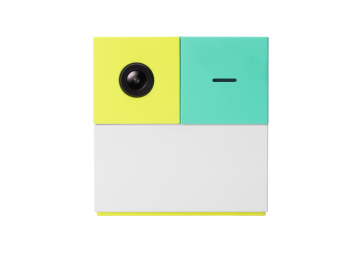
Nex Playground motion-controlled console

Drop a four-year-old, a ten-year-old, and a grandparent in a living room with Nex Playground, and they can play the same game. It's a motion-sensing console that connects to your TV. The camera reads body movement. No menus to navigate, no controllers to manage. Catching a virtual ball feels like catching a real one. The skill ceiling is leg speed and reflexes, not button memorization. The kids usually win.

The design is built for Connection: cooperative games require timing your movements with someone else, and competitive games make you read each other's body language across the room. Specific games carry the loop. Mirrorama's 31 interactive body filters are the open-ended option in the library; anyone can drop in, preschooler to grandparent. Elmo Says, with three difficulty levels, turns Simon Says into an impulse-control challenge. Homerun Heroes adds competitive leaderboards for tweens and siblings. Across the 50+ game library, the same loop holds: camera reads you, room watches each other, points come from showing up together.

The research backs it: showing up together matters more than the specific game (Eriksson et al., 2021). At $199 (5 games included) plus a Play Pass at $89/year, the lifetime spend lands well under a Switch with a library, for a console that gets used by every age in the house.

Mike's TakePersonally tested

This was my best purchase for Christmas 2025. The console lives in our living room. When friends come over, we can hear the joy and laughter through the wall. On a family ski trip with three generations, the grandparents tried the dancing game and the kids beat them every time.

Strengths

  • + The camera reads body movement, so there's no controller skill gap between adults and young kids.
  • + Built for local multiplayer; no online accounts, no setup.
  • + Few consoles let grandparents, parents, and preschoolers all play.

Limitations

  • - Game library is thinner than Switch or PlayStation; expect to buy two or three games.
  • - Older teens will find it babyish; the design is built for elementary-age kids.
  • - Needs floor space and a camera-friendly TV setup.
Skip if

You want a competitive shooter or platformer with a deep library. Switch is the off-list alternative. If your kids are 14+ and want deeper co-op, It Takes Two is the pick.

Independent reviews: WIRED (2024) Nex Playground Review: Family Fun and Gimmicky Games, TechRadar (2025-12-17), Today's Parent Parent-voice supporting review

Read the full Nex Playground guide
Pandemic Family Edition logo

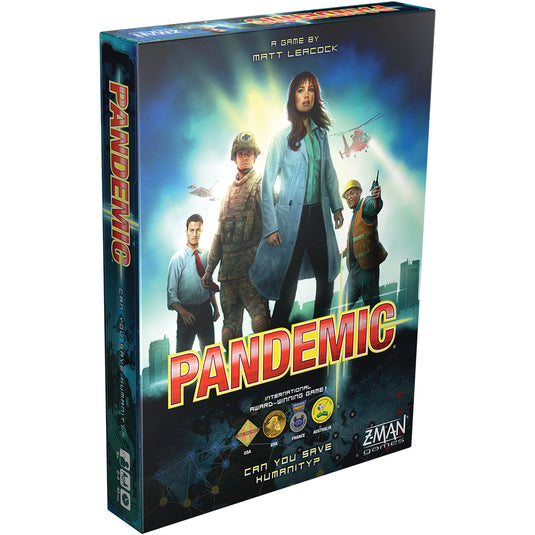
Pandemic, Family Edition

Best for the family that wants to plan and lose together

Cost
~$30
Platform
Tabletop
Ages
8+
Literacies
Connection
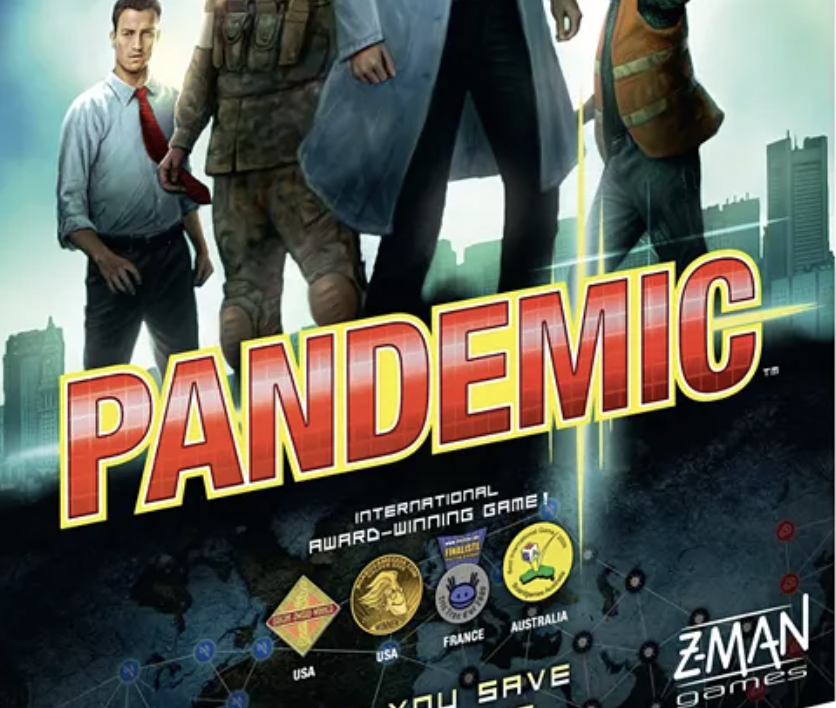
Pandemic Family Edition cooperative board game

Four players, one board, a deck of cards trying to wipe out humanity. The game beats you more often than you beat it. Family Edition strips the original's medical-research mechanics down to a level a third-grader can run, but keeps the core: every decision is a group decision, and the game ends when the team's plan does.

Pandemic forces talking. You can't win without saying your plan out loud, having someone push back, and revising it together. That's where the connection happens. GamesRadar called the original "a psychological shot of espresso" for that reason. Losing together, with a plan you all debated, builds it faster than winning alone. The research backs it: cooperative and competitive board games produce equal prosocial effects in preschoolers; what works is playing together at all (Eriksson et al., 2021). Family Edition plays in 40–60 minutes: long enough that the planning matters, short enough to play again next weekend.

Strengths

  • + Co-op design makes the talking the game; you can't win without saying your plan out loud.
  • + 40–60 minutes hits the family-night sweet spot.
  • + Loss is part of the design; builds frustration tolerance the right way.

Limitations

  • - Some kids find the disease theme stressful; check before buying.
  • - Two-player is flatter than 3–4 players.
  • - One bossy kid can dominate. A parent at the table fixes that; without one, rotate who calls the shots.
Skip if

Your kids struggle with strategic loss. Spikeball gives a faster win-loss cycle; Nex Playground is more forgiving.

Independent reviews: GamesRadar+ (2021, updated 2025-08-26) — "a psychological shot of espresso", Common Sense Media Pandemic: The Board Game, The Brick Castle (2019-08-08) Family Edition specific

Read the full Pandemic, Family Edition guide
Spikeball logo

Spikeball

Best for off-screen, off-couch, on the lawn

Cost
~$60
Platform
Outdoor or indoor
Ages
6+ (younger with adult)
Literacies
Connection
Spikeball TITAN roundnet set with yellow circular net and balls

A small round net pitched on a lawn, four players spiking a ball at it, rules learnable in about 90 seconds. The game falls apart without talking. You and your partner have to call shots, signal who's going for the ball, and react together when the rally turns. That's where connection happens, screen or no screen.

Pediatricians worry about screens crowding out exercise (AAP 2026). Spikeball doesn't have that problem. Setup takes under 90 seconds, rallies last longer than you plan for, and you get a workout without it feeling like one.

Play it as a mixed team: one parent and one kid against another adult-and-kid pair. That's what makes it multi-generational, and why it's on this list rather than a list of yard games.

Mike's TakePlayed with friends

We've played this with friends at the beach and the park. It's likely a birthday present for one of our girls this year.

Strengths

  • + Sub-2-minute setup; lowest friction-to-start on this list.
  • + Mixed-age teams work; younger kids keep rallies alive when paired with a parent.
  • + Travels: lawn, beach, gym, park.

Limitations

  • - Needs ~30 feet of clear ground.
  • - Indoor play requires a lot of ceiling height.
  • - Skill curve is real; the first ten minutes feel like nobody's any good yet.
Skip if

You don't have outdoor space or a flat indoor area. Nex Playground is the indoor full-body alternative.

Independent reviews: CleverHiker (2015-05-12), Outdoors.com (2017-05-25)

Read the full Spikeball guide
It Takes Two 3D logo

It Takes Two

Best for serious co-op time with your teen

Cost
$40 (two players)
Platform
PC, PlayStation, Xbox, Switch
Ages
14+ (mature themes)
Literacies
Connection
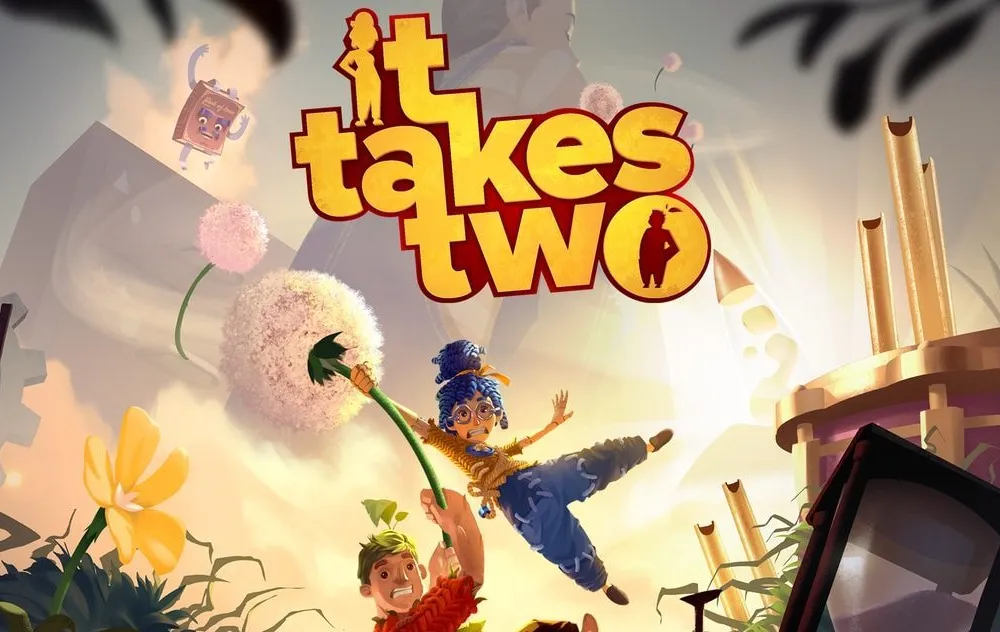
Cody and May holding oversized joysticks playing a giant arcade game together

If you own a PlayStation, Xbox, PC, or Switch and you want to play with your teen, this is one of the best co-op games on the market. The design literally can't progress without verbal coordination. Almost every puzzle requires both players to do different things at the same time: one has a hammer, the other has a nail; one fires sap, the other fires matches that ignite it. Solo play is impossible. The 12–15 hour campaign is a 12–15 hour conversation.

Reviews and awards back it. Game of the Year at The Game Awards 2021, the D.I.C.E. Awards, and the BAFTAs. 20M+ copies sold. "A fantastically creative co-op game that nails every new concept it introduces" (GameSpot's 9/10). "A beautiful, breakneck-paced, co-op adventure" (IGN's 9/10). What the reviews miss: the design forces parents and kids to talk to each other.

Rated Teen by ESRB. Common Sense Media rates it 14+, and you should know why before you buy. The frame story is a couple in the middle of a divorce, transformed into dolls by their daughter's tears, who must work together to find their way back. An early scene involving a stuffed elephant lands like the opening of Pixar's Up: emotionally serious, briefly devastating, aimed at older kids and adults. (CSM calls the same scene "unnecessarily cruel"; your read may vary.) For ages 14 and up, this is a clear top pick. For 10–13, it requires parent engagement and an honest conversation about the themes. Below 10, this is not the right game for your family.

This is not a handoff product. The Friend's Pass means one $40 copy supports both players for the full campaign, but the parent has to play. Families that don't already talk much benefit more from co-play than families that already do (Wang, Taylor, & Sun, 2018). Read that twice. The families this game is most useful for are the families most likely to dismiss it.

Strengths

  • + You can't play this in parallel silence; talking is how you make progress.
  • + Friend's Pass means one $40 copy covers two players for the whole campaign.
  • + New mechanics every 30–60 minutes mean you keep re-coordinating with your partner.

Limitations

  • - Two players only; families with two kids will need to rotate.
  • - The Switch port is the weakest of the four versions.
  • - 12–15 hours is a real time commitment.
Skip if

Your kid is under 10, or you don't want to commit 12+ hours of co-play. Pandemic: Family Edition is the cooperative pick for younger kids; Nex Playground is the multi-kid family-night anchor.

Independent reviews: GameSpot (2021, 9/10), IGN (2021, 9/10), Common Sense Media Parents' Guide; rates 14+ for thematic content

Read the full It Takes Two guide
Board

Board (board.fun)

Best for a screen the whole family gathers around

Cost
$499–699
Platform
24" touchscreen tabletop
Ages
7–12 + adults
Literacies
Connection
The Board console — 24-inch tabletop game device on white background

I haven't tested Board myself. What follows is based on specialist review consensus and the device's documented design. The screen lies flat on a table, the pieces are physical and grabbable, and the only way to play is to gather around it. There's no controller a kid can wander off with. The controller is the table. That's a different kind of screen experience, designed so everyone has to be in the room and taking turns.

Three reviews. Same conclusion. One called Board "the most social videogame experience we've ever encountered" (Wargamer's 8/10). Another called it "a revelation" (Meeple Mountain). A skeptical 7/10 flagged solo play and teen-only play as the weakest modes, but agreed the device works best in family or intergenerational settings (Newsclip). When the family gathers around, this works.

The marketing is misleading. Board advertises "12 games included," but its own games library shows 7 titles at launch with another 5 sold separately at $34.95–$44.95 each. Plan for $100–200 a year in games on top of the $499 (Founders) or $599–699 (standard) hardware. Board sits at the premium end of the digital-tabletop spectrum; Board Game Arena does similar work in a browser for free or $42/year, orders of magnitude cheaper.

I have lower conviction on this pick than on the others, because I haven't tested it. But the reviewers all agree, and that's enough to put it on the list. If the price is wrong for your family, Board Game Arena does most of the same job in a browser for free.

Strengths

  • + Designed so everyone is in the room together; you can't drift off with a controller.
  • + Three independent reviews agree it brings families together.
  • + Physical pieces on a touchscreen; feels like a board game, not a controller game.

Limitations

  • - $499–699; this is a premium pick.
  • - "12 games included" claim is misleading; expect 7 at launch plus ~$100–200/year for the library.
  • - Teens are the weakest demographic in every review.
Skip if

Cost is a real constraint, or you only have one kid. Board Game Arena covers the digital-tabletop job for free; Pandemic: Family Edition is the analog cooperative pick.

Independent reviews: Wargamer (8/10) — "the most social videogame experience we've ever encountered", Meeple Mountain Board.fun device review — "a revelation", Newsclip (7/10) skeptical hands-on

Read the full Board (board.fun) guide
Carpool Karaoke The Mic logo

Carpool Karaoke The Mic 2.0

Best for kitchen and car singalongs with no setup

Cost
~$50
Platform
Bluetooth handheld mic
Ages
4+ (with adult)
Literacies
Connection
Rose gold Carpool Karaoke The Mic 2.0 wireless microphone

Music brings people together. Family singing. Road trips. Kitchen dance parties. Karaoke is the playful version: singing badly, on purpose, with the people you love. That's connection at full volume.

The category is underserved. Most karaoke products skew adult or get bogged down in subscriptions and song catalogs. The Singing Machine Carpool Karaoke Mic 2.0 is the best practical fit for kitchen and car singalongs: a Bluetooth handheld mic with built-in speakers, sound effects, and duet pairing for a second mic. Songs come from whatever the family already has on Spotify, Apple Music, or YouTube. No app, no account, 30-second setup.

Three sources back it. The #1 karaoke mic (Rolling Stone). 4.5 stars from 10,000+ user reviews (Billboard). The dissenting voice came from a 2019 review of the 1.0: "road trip karaoke isn't an activity that needs much improvement." What makes this work is what your family does with it: passing the mic to a sibling without grabbing it back is self-regulation in miniature. A 30-second pair turns a 40-minute drive into something the kids ask to do again.

Two alternatives worth knowing. Singa Family is the smart-TV pick: on-screen lyrics, song catalog. Let's Sing 2026 is the console pick: scoring, competitive mode. We picked the Mic because it works anywhere, no setup required.

Strengths

  • + 30-second setup; pairs with any phone, no account, no app.
  • + Songs come from your music subscription; you own the catalog.
  • + Two-mic pairing built in: designed for a duet.

Limitations

  • - No on-screen lyrics; kids need to know the songs.
  • - No scoring or competitive mode (use **Let's Sing 2026** if that matters).
  • - Plastic build; not ruggedized for a four-year-old's drop test.
Skip if

You want a karaoke setup with on-screen lyrics. The smart-TV alternative (Singa Family) is closer.

Independent reviews: Rolling Stone (2022-12-16) #1 pick, Billboard (2022-03-06), Engadget (2019-06-20) Skeptical hands-on of original Mic 1.0

Read the full Carpool Karaoke The Mic 2.0 guide
Dojo Islands logo

Dojo Islands

Best for online play with siblings and approved friends

Mike's List Disclosure
Cost
Free (optional pass)
Platform
Web, iOS, Android
Ages
5–12
Literacies
Connection

I work at ClassDojo, which makes Dojo Islands. My family has been using it for more than two years, and the experience below is genuine family use, not professional obligation.

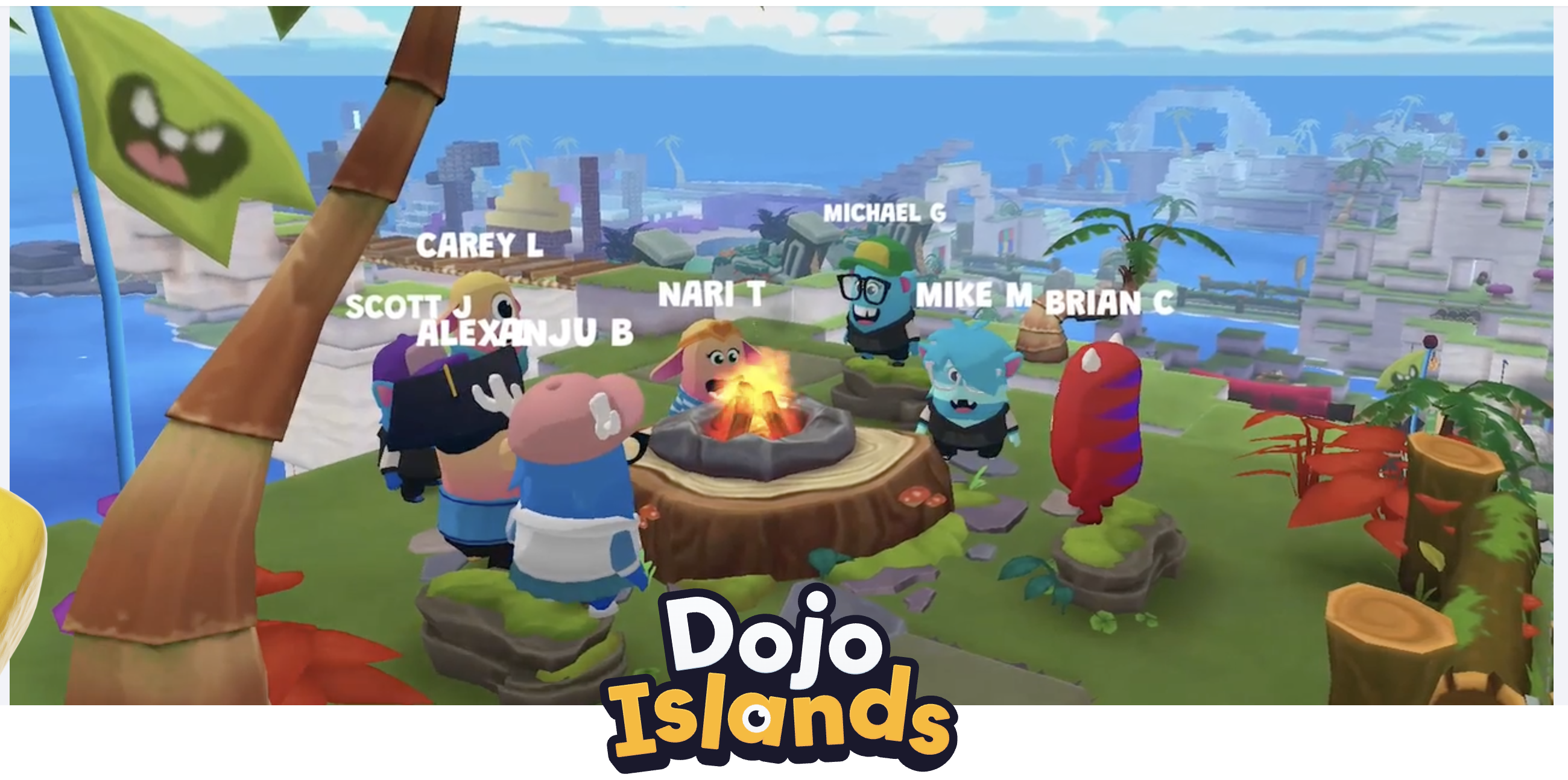
Dojo Islands private multiplayer sandbox

Most parents have heard of Roblox. Many have noped out because of the safety concerns: open chat with strangers, content moderation gaps, exposure to people you'd never invite into your house. Dojo Islands was built to be the opposite. Your kids can only play with people you've approved. There's no open chat; communication runs through pre-authored phrases. Strangers can't appear in your kid's game.

Many kids first see Dojo Islands in the classroom. At home, they get a private "home island" that works differently. Want a friend to come play? Scan a QR code and the friend is in their game in seconds. Parents can join the same way. So can siblings or kids on a playdate. Once you're on the island, there are multi-player games designed for shared play: zombie tag, racing courses, and more. The whole thing is built for kids to play with people they know.

Dojo Islands is designed primarily for kids playing with other kids. You can join in as a parent, and it works, but parent-co-play isn't what it was built for. If that's what you want, Nex Playground or It Takes Two are the picks. ClassDojo carries the Common Sense Privacy Verified Seal, the strongest third-party privacy credential for a kids' product. My kids use it, and I personally recommend it to friends and family.

Mike's TakePersonally tested · Disclosed

My older kids use Dojo Islands the way I used the Nintendo at a friend's house in the 1990s: a place to be with their people, with low parental friction.

Strengths

  • + Strangers can't appear in your kid's game; communication is via pre-authored phrases only.
  • + QR code makes it easy for friends, siblings, and parents to join an existing game.
  • + Common Sense Privacy Verified Seal; ClassDojo's safety design is among the strongest in the category.

Limitations

  • - Not a parent-co-play product; if you want to play with your kid, this isn't the pick.
  • - Best for kids who already have a sibling or classmate to play with; solo play is flatter.
  • - Building tools are simpler than dedicated creative platforms; my eldest has hit the ceiling.
Skip if

You want a game where you're playing with your kid. Nex Playground is the family-night pick; It Takes Two is the older-kid co-op.

Independent review: Common Sense Education ClassDojo review (privacy/platform credential, not a Dojo Islands play review)

Read the full Dojo Islands guide
BGA

Board Game Arena

Best for playing with relatives far away

Cost
Free tier / Premium $42/year
Platform
Browser, iOS, Android
Ages
Account 13+; games 8+
Literacies
Connection
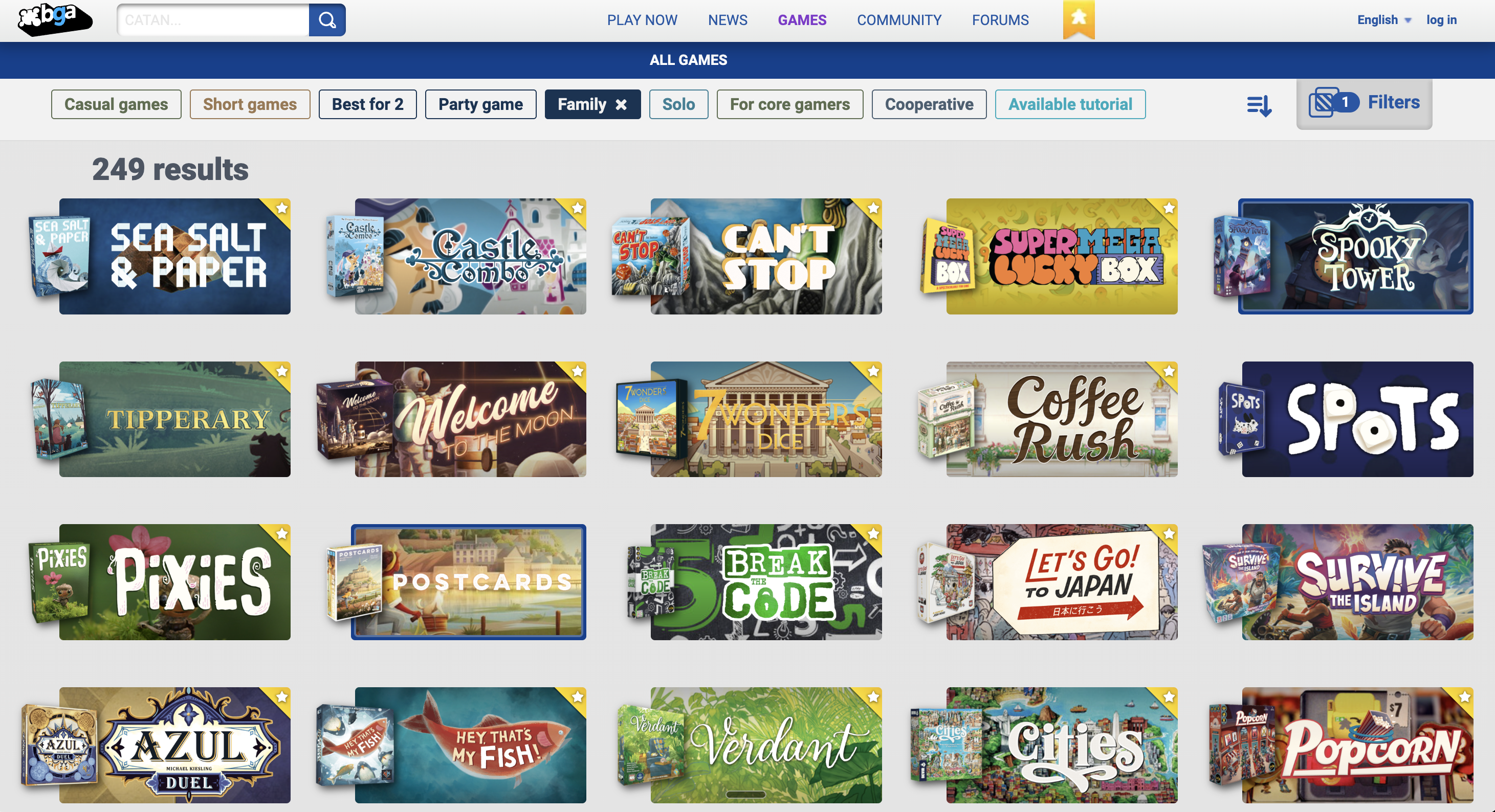
Screenshot of Board Game Arena game lobby browser interface

Three cities, one family. BGA gets everyone to the same table. It's a platform, not a game: 700+ digital implementations of board games (Catan, 7 Wonders, Splendor, and more), built-in voice chat, and rule enforcement that lets a 9-year-old play 7 Wonders without an adult coaching every move. Free tier is usable; Premium opens the full library at $42/year. It won 2025 Game of the Year at Meeple Mountain, unusual for a platform: "incredibly accurate, smooth, accessible implementations of dozens of the most popular games ever made."

Nothing else on this list does what BGA does. Cousins in another city, grandparents who can't fly out for game night, an aunt in a different time zone: BGA lets a family table form across geography. Weekly play builds the kind of connection that's hard to get otherwise.

Two honest things to know. First, in-person beats remote: if your family lives within driving distance, a $30 copy of Catan beats a $42/year subscription. Second, I haven't personally tested BGA. What you're reading is based on review consensus and the platform's documented design. BGA is for when you can't all be in the same room.

Strengths

  • + Free tier is usable; Premium ($42/year) opens the full library.
  • + 700+ digital implementations; rule enforcement means no adult has to coach every move.
  • + Playing with relatives in another city isn't served by anything else on the list.

Limitations

  • - Account requires 13+; younger kids use a parent's account.
  • - In-person play is almost always richer; BGA is for the distance case.
  • - Free tier requires *someone* in the room with Premium to start a table.
Skip if

Your extended family lives within easy driving distance. Pandemic: Family Edition and Board are the in-person picks.

Independent reviews: Meeple Mountain (2025-03-09) — "Game" of the Year, Meeple Mountain Supporting — "Bravo, Board Game Arena!"

Read the full Board Game Arena guide
Also Worth Considering

The Crew: Mission Deep Sea

Ages 10+, $15–20. If your family has kids 10+ and can sit with the no-talking rule, this is exceptional. The cheapest pick that nails connection.

Codenames Family Edition

The strongest word game we passed on. Pandemic carries the cooperative slot.

Jackbox Party Pack

Party-game library; family-friendly filter required.

Just Dance 2026

Multi-generational physical party game. Cliché pick, but still works.

Stardew Valley, Animal Crossing: New Horizons, Forbidden Island, Wavelength, Dixit

More games worth knowing; all scored well in our research.

Singa Family Karaoke

If you have a smart TV and want a song catalog with on-screen lyrics.

Let's Sing 2026

If you have a console and want scoring/competition mode.

Watching this space

Two we're still evaluating: Beasts of Balance (a cheaper analogue to Board) and Sky: Children of the Light (the cleanest "non-toxic online multiplayer" on the market, but the free-to-play monetization needs more thought).

Why These Eight Out of 60+

I scored 60+ games against the Connection framework. The cuts fell into a few patterns:

  • Strong product, narrow fit (The Crew: Mission Deep Sea ) : The Crew: Mission Deep Sea is a brilliant cooperative card game, but the strict 10+ floor and "you cannot speak" rule make it narrow. Worth knowing about, but not a flagship pick.
  • Cliché picks (Just Dance 2026 , Codenames Family Edition ) : Just Dance 2026 is a working multi-generational dance game, but it's the most predictable pick in the category. Codenames Family Edition is a strong word game, but Pandemic carries the cooperative slot more decisively.
  • Already covered (Jackbox Party Pack , Hasbro Game Night ) : Jackbox Party Pack is excellent for parties, but Carpool Karaoke and Board Game Arena cover the same ground. Hasbro Game Night is beaten by BGA on breadth, free tier, and remote-family play.
  • Mixed safety profile (Roblox ) : Roblox is the obvious example. Some servers are social, others are stranger-chat funnels. Without a known-friend server in mind, it's a gamble. Dojo Islands earns the online-play slot instead.
  • Designed to pull kids back, not connect them (Pokémon GO ) : Pokémon GO uses engagement loops and in-app monetization that pull kids back through dopamine, not through real connection.

Try This Week

  1. 1.

    Schedule a phone-free, no-screens dinner this week. Don't make it a Big Conversation; just eat together. The cheapest, best-supported way to build connection.

  2. 2.

    Block out a regular weekly game night. Cards, board games, whatever's around. The point isn't the game; it's the standing time.

  3. 3.

    Set up Nex Playground (or any console you already own) in the room with the most foot traffic. Don't put it in a kid's bedroom; put it where everyone walks past it on the way to the kitchen. (Shared play becomes the path of least resistance.)

    Try with Nex Playground

Get the next guide

One email when a new guide ships. No spam.

No ads. No affiliate links. Unsubscribe anytime.

FAQ

Are video games actually good for my kid?

It depends on what they're playing, with whom, and how much. Kids who mostly play alone do worse on average; the strongest data is in adolescent girls (Coyne et al., 2011). Playing with a parent is associated with the opposite, especially for families that don't already talk much (Wang, Taylor, & Sun, 2018). For boys, the bigger thing to watch is compulsive gaming: losing sleep, blowing off friends, can't stop (Fam, 2018). Three things matter: what's on the screen, who's playing with them, and whether you're one of them.

How much screen time is OK?

Counting minutes is the wrong question. The AAP's 2026 update walked away from blanket time limits. Their guidance: focus on what kids are playing, who's with them, and whether play is crowding out sleep, exercise, and time with people.

My kid only wants to play Roblox / Fortnite / something else not on this list. Should I worry?

Worry less about the specific game; pay attention to who they're playing with and whether the game surfaces strangers. Roblox is a mixed bag: some servers are social, others are stranger-chat funnels. A kid playing with known friends on a private server is in a totally different situation than one in a public lobby. Dojo Islands is the closest pick on this list to "Roblox without the strangers."

My kid is 8 and I want to play It Takes Two. Can we?

In our house, no. Common Sense Media rates it 14+, and the divorce frame plus a few specific scenes aren't aimed at an 8-year-old. For 8–10, Pandemic: Family Edition is the cooperative pick. For 10–13, It Takes Two is possible with active parent engagement and a real conversation about the themes. For 14+, it's a clear top pick. Age-appropriate content matters here. The Coyne study found that the protective effect of co-play disappears when content is too mature for the kid (Coyne et al., 2011). That finding is in adolescent girls; it hasn't been cleanly replicated in boys.

Didn't find your answer?

Which literacies does your child need most?

Take the 2-minute assessment and get a personalized profile.

Take the Quiz