Endless Alphabet
Ages 3-6 · paid · Product · originatorkids.com ↗
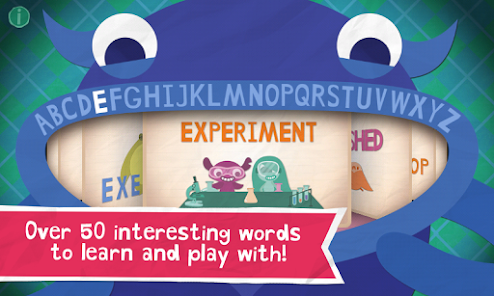
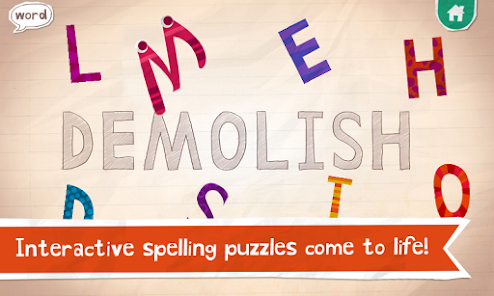
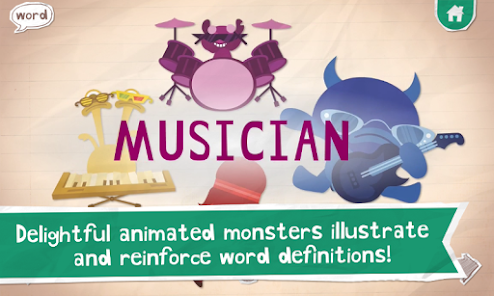
Endless Alphabet is a preschool vocabulary app. Kids pick a word, drag letters back into place, hear the letter sounds, and watch a short animation that shows the meaning. The app is built for short, repeatable play sessions, not for open-ended reading or collaborative work. It works best as a quick literacy activity on a phone or tablet. Children can return to it for new words, but the experience stays inside one simple puzzle loop.
We've reviewed Endless Alphabet against our 9-literacy developmental framework. The main growth opportunity: Endless Alphabet does not build much persistence.
Strengths & gaps
Strengths
- ● Endless Alphabet is easy for young children to use. The drag-and-drop loop is clear, and the animations make vocabulary feel alive.
- ● The app gives kids some choice. They can pick a word to explore and move through it at their own pace.
- ● The word set is broad enough to stay interesting. The app and store listings both point to periodic additions and a fairly large vocabulary set.
Gaps
- ○ Endless Alphabet does not build much persistence. The app is designed to avoid failure and stress rather than ask for struggle.
- ○ It is not a social product. There is no built-in collaboration, shared task, or communication layer.
- ○ It is a narrow literacy tool. It helps with word recognition and vocabulary, but it does not do the work of a full phonics or reading curriculum.
Detailed scores
How Endless Alphabet performs on each of the 9 literacies in our framework.
Doing
— 0 of 3 Strong
Endless Alphabet gives kids a small but real sense of control. They can choose a word, drag the letters, and work at their own pace. But the objective is still set by the app, so this is choice inside a scaffold rather than child-directed goal setting.
Endless Alphabet is intentionally low-friction. Originator and Google Play say there are no high scores, failures, limits, or stress, which makes the app welcoming but not persistence-building. Kids can keep returning for new words, but they are not practicing productive struggle.
The child does the same kind of action every time. Pick a word, match the letters, hear the sounds, and watch the animation. That repetition supports familiarity, but it does not ask kids to switch strategies or adapt to new problem types.
Thinking
— 0 of 3 Strong
Endless Alphabet uses silly monsters and unusual vocabulary to keep kids interested. Common Sense says older kids can still enjoy the animations and expand their vocabularies, and Originator says new words are added over time. The app still gives the answer away quickly, so curiosity is present but bounded.
The app does not ask children to invent something new. They are reconstructing a word from a fixed set of letters, which is playful but not original creation. There is no open-ended artifact or revision cycle.
For a preschooler, Endless Alphabet is about recognition and matching, not weighing evidence or tradeoffs. The child is not being asked to compare viewpoints or judge reliability. That makes judgment out of scope for the core experience at this age.
Being
— 0 of 3 Strong
Endless Alphabet is a solo app. It does not require a partner, a peer group, or a shared project. Any connection comes from the adult helping with the device, not from the product design.
The app is calm by design, which can make it a good short-session activity. But it removes pressure rather than teaching a child how to handle frustration. There are no coping tools or emotion skills built into the experience.
Endless Alphabet helps children learn words, not reflect on who they are or what matters to them. It does not connect effort to helping others or to a larger goal. Purpose is not part of the design.
Based on 9 sources
- Review commonsensemedia.org — endless alphabet
- Review commonsense.org — endless alphabet
- Review commonsense.org —
- Product wired.com — endless alphabet
- Product originatorkids.com — endless alphabet
- Product play.google.com — details
- Product apps.apple.com — id
- Product phonics.org — endless alphabet app review
- Product apps.apple.com — id
Reviewed by New Literacies
Scored by our research-derived framework · AI-assisted analysis with editorial review · 9 sources reviewed · Our methodology →
Get the next guide before it goes live
One email when a new product review ships.
Free. No spam. Unsubscribe anytime.