Google Read Along
Ages 5-10 · free · AI Product · readalong.google ↗
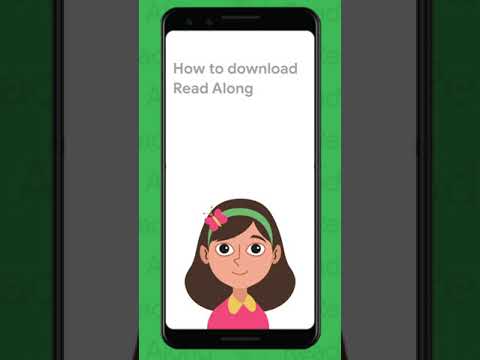
Google Read Along is an early-reading app where children read stories aloud while an in-app buddy named Diya listens and helps in real time. Kids work through short stories and word games, earn stars and badges, and get support when they stumble on a word. The whole experience is designed to make solo practice less intimidating.
Google Read Along has focused developmental strength worth knowing about. It builds persistence. The main growth opportunity: Creativity and Judgment stay thin.
Strengths & gaps
Strengths
- ● Google Read Along is strongest for Persistence. It gives children immediate support without ending the challenge, which is exactly what many early readers need to keep trying.
- ● The app also does decent work on Agency and Curiosity for a phonics-style product. Kids can choose stories and move independently through a large library.
Gaps
- ○ Creativity and Judgment stay thin. Children are reading prepared text, not making meaning in a deeper or more original way.
- ○ Connection is outside the design. Diya may feel friendly, but it is still an app voice, not a shared human reading experience.
Detailed scores
How Google Read Along performs on each of the 9 literacies in our framework.
Doing
— 1 of 3 Strong
Read Along puts the child in the active role of reading aloud. Children can pick stories and move at their own pace. But the experience remains strongly guided by the app, so the agency is real but bounded.
Read Along is built to help children keep going through small moments of difficulty. Diya listens, helps when the child gets stuck, and rewards progress with stars and badges. That makes the app notably stronger for persistence than a static reading worksheet or passive video.
Children have to recover from errors and try again when pronunciation goes wrong. The app keeps that recovery loop light and immediate. But the strategy adjustment mostly comes from Google's system support rather than from the child generating new approaches.
Thinking
— 0 of 3 Strong
The story library and language range give children some room to explore. There is more browsing and follow-your-interest energy here than in a single-track decoding program. Still, curiosity stays secondary to guided reading practice.
Google Read Along does not ask children to invent, compose, or revise. Its core loop is reading existing text aloud with AI support. That makes creativity a limited part of the experience.
The child is usually trying to pronounce and continue, not make nuanced decisions. There is some meaning-making in reading, but the app is mostly targeting fluency and confidence, not judgment as the rubric defines it.
Being
— 0 of 3 Strong
Read Along can support a child who reads alone, but it does not create human collaboration or discussion. Any family connection would come from how the app is used around the child, not from the product's core design.
The app creates manageable moments of effort and frustration. Children practice returning to the text, taking correction, and finishing a session. The structure is supportive enough that this lands at Moderate, not Strong.
Read Along helps children read better. It does not connect that practice to identity, contribution, or values in a sustained way.
Based on 3 sources
- Product readalong.google
- Product readalong.google — impact
- Product play.google.com — details
Reviewed by New Literacies
Scored by our research-derived framework · AI-assisted analysis with editorial review · 3 sources reviewed · Our methodology →
Get the next guide before it goes live
One email when a new product review ships.
Free. No spam. Unsubscribe anytime.
See other products strong in the same literacies: