
Raz-Kids
Ages 4-12 · paid · Product · raz-kids.com ↗
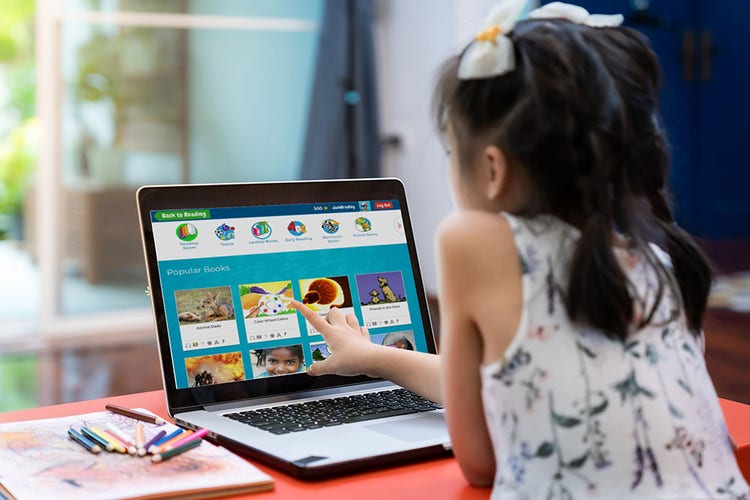
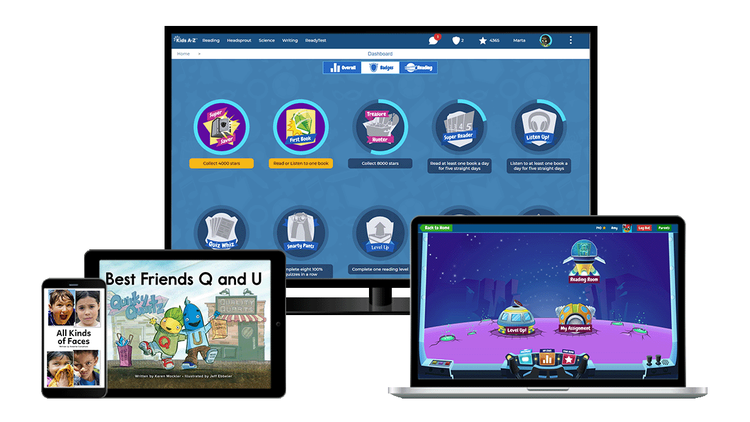
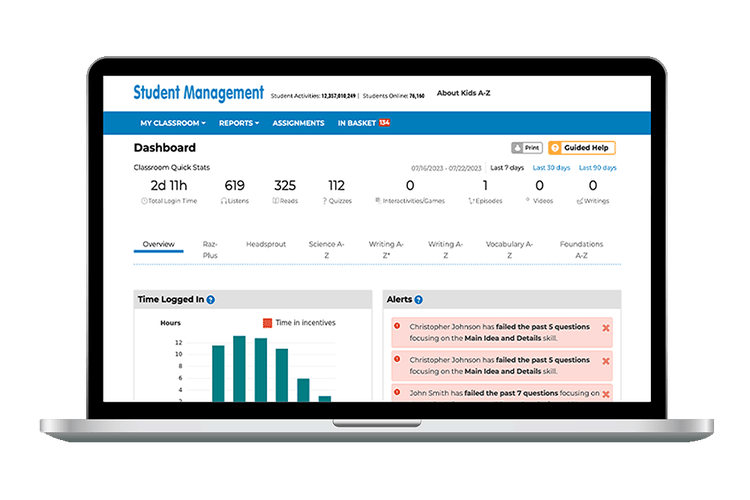
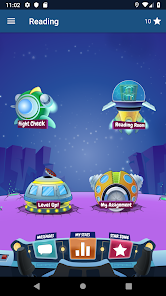
Raz-Kids is a leveled reading system for classrooms and homes. Children listen to books, read aloud or silently, record their reading, and take quizzes, while teachers assign levels and track progress. The Reading Room adds extra books in English, Spanish, and French. Kids A-Z mobile access gives the same reading loop on tablets and phones.
We've reviewed Raz-Kids against our 9-literacy developmental framework. The main growth opportunity: the reading loop is tightly guided. Kids make choices, but they do not set the agenda.
Strengths & gaps
Strengths
- ● Raz-Kids is easy to differentiate. Teachers can place students at a level, assign books, and track progress without much setup.
- ● It gives children lots of reading reps. Listen, read, record, quiz, repeat.
- ● The Reading Room adds some real breadth with Spanish, French, songs, and poems.
Gaps
- ○ The reading loop is tightly guided. Kids make choices, but they do not set the agenda.
- ○ Several reviewers say the books can feel simple or not especially engaging for older readers.
- ○ The product does not build open-ended creativity or peer connection.
Detailed scores
How Raz-Kids performs on each of the 9 literacies in our framework.
Doing
— 0 of 3 Strong
Raz-Kids gives children control over some parts of the session. They can choose books, listen first, read aloud, record themselves, and use annotation tools. But teachers still set levels and assignments, so the child is choosing within a scaffold.
Raz-Kids keeps children in a repeated read-quiz-level-up loop. Incentives and progress reports make the routine easy to sustain, and teachers say students can use it for daily reading. Still, the texts are often simple, so the product supports persistence more than it demands it.
Raz-Kids adapts through placement, level changes, and differentiated assignments. Teachers can move students up or down based on running records and quiz results. That supports flexible reading instruction, but the child is not doing much strategy switching on their own.
Thinking
— 0 of 3 Strong
The library covers fiction, nonfiction, songs, poems, and multiple languages. That gives children enough variety to explore. But the product mostly hands over finished texts and quizzes, so curiosity stays guided rather than open-ended.
Raz-Kids asks children to respond to reading, not invent something new. Retellings and recording are useful literacy behaviors, but they are not original creation. There is no blank-canvas mode here.
The quizzes, retellings, and placement tools require children to notice meaning and decide what fits. That is real reading judgment. It stays narrow, though, and does not reach broader evidence weighing or tradeoff reasoning.
Being
— 0 of 3 Strong
Raz-Kids is designed around individual reading and teacher oversight. The product does not create peer collaboration or belonging on its own. Any connection comes from the classroom around it.
The self-paced workflow asks children to finish books and pass quizzes before moving on. That can build follow-through and patience. But Raz-Kids does not explicitly teach coping skills or emotional recovery.
Raz-Kids frames reading as practice, progress, and confidence. It does not connect the work to identity, values, or service. Purpose is outside the scope of the product.
Based on 10 sources
- Review commonsense.org — raz kids
- Review commonsense.org —
- Review commonsense.org —
- Product learninga-z.com — overview
- Product raz-kids.com — AboutRazKids
- Product raz-kids.com — assessing a students level
- Product help.learninga-z.com — 7025844 assigning resources on raz kids
- Product help.learninga-z.com — 7026149 raz kids and text complexity
- Product apps.apple.com — id
- Product play.google.com — details
Reviewed by New Literacies
Scored by our research-derived framework · AI-assisted analysis with editorial review · 10 sources reviewed · Our methodology →
Get the next guide before it goes live
One email when a new product review ships.
Free. No spam. Unsubscribe anytime.