
Luca (Lucid Reading)
Ages 5-13 · paid · AI Product · luca.ai ↗
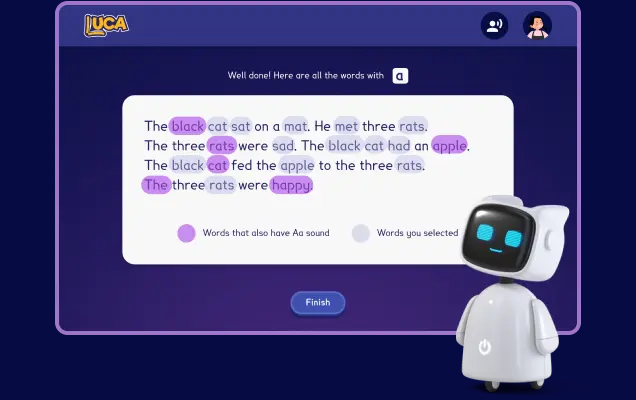
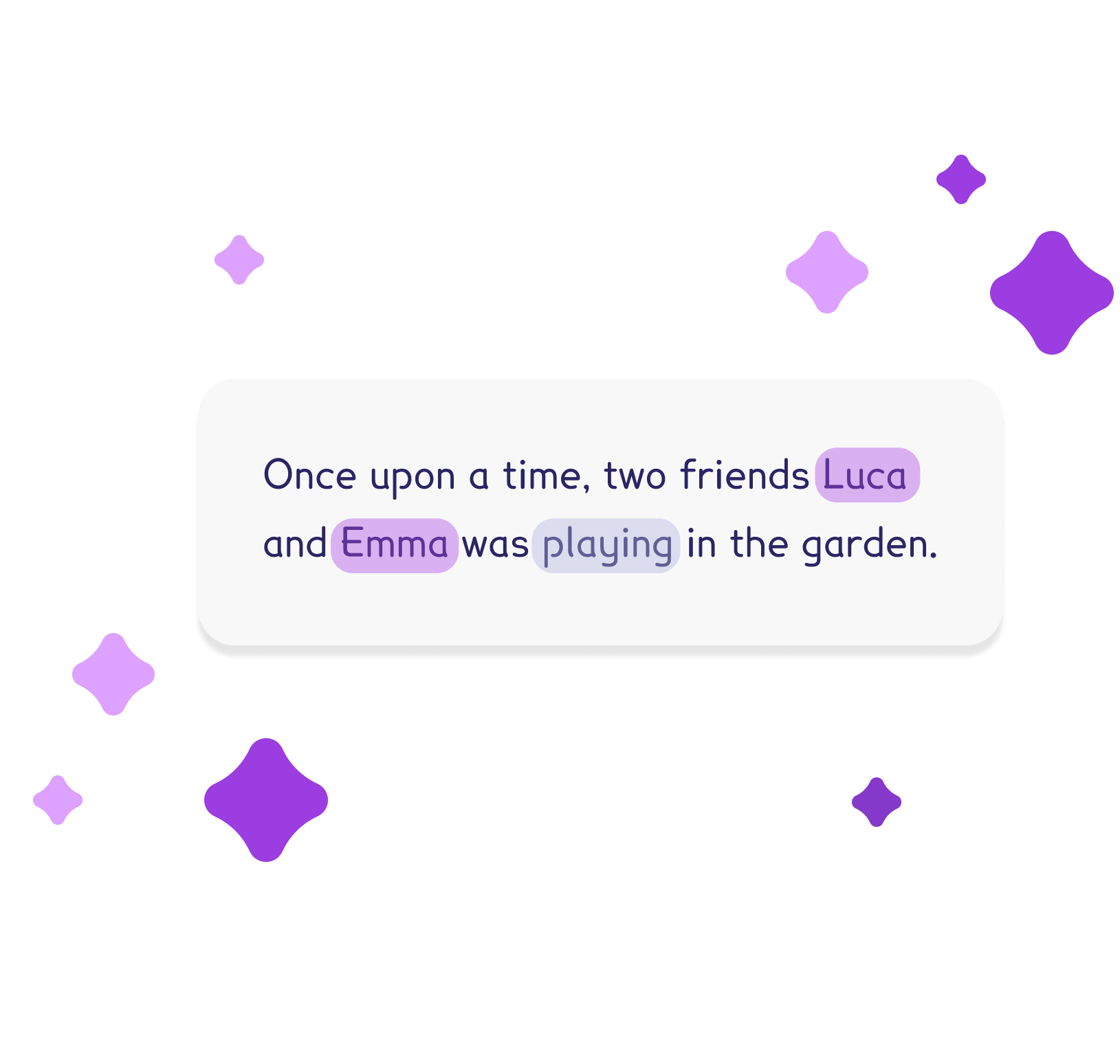
LUCA is an AI reading tutor for struggling and dyslexic readers. It listens to children read aloud, responds at the phoneme level, and serves personalized stories and lessons that are meant to fit both reading level and age-appropriate interests.
Luca (Lucid Reading) has focused developmental strength worth knowing about. It builds hands-on skills. The main growth opportunity: judgment is limited because the work is tightly focused on decoding and reading support.
Strengths & gaps
Strengths
- ● LUCA is strongest where many reading tools fail: it tries to keep older struggling readers from disengaging. Matching skill level to age-appropriate interests is a real persistence advantage.
- ● Adaptability is another clear strength. The product is explicitly built to listen closely and change support around the learner.
Gaps
- ○ Judgment is limited because the work is tightly focused on decoding and reading support.
- ○ Creativity gets some lift from custom stories, but the child still is not the author.
- ○ The evidence base is promising but still early. I did not surface a peer-reviewed outcomes study in this pass.
Detailed scores
How Luca (Lucid Reading) performs on each of the 9 literacies in our framework.
Doing
— 2 of 3 Strong
LUCA gives the child a direct role in the learning loop. They read aloud and receive immediate response. But the overall path is still tightly guided around intervention goals.
Persistence is one of LUCA's clearest strengths. The product tries to remove a major dropout trigger for struggling readers by matching reading difficulty with age-respectful content. That can help a child keep going instead of shutting down.
LUCA adapts at the phoneme level and generates skill-aligned stories around the learner's needs. That is a direct instructional flexibility advantage. Few reading tools make that adaptation so central.
Thinking
— 0 of 3 Strong
Interest-matched content can make text feel worth returning to. That matters for reluctant readers. The curiosity loop remains bounded by intervention design.
Custom stories create a more flexible and imaginative reading environment than a fixed library does. But the child is still reading a generated story, not making one.
LUCA is not built around evaluating options, perspectives, or sources. Its main job is targeted reading support. Judgment therefore stays limited.
Being
— 0 of 3 Strong
Teachers and specialists may use LUCA to support students better. But the child's direct experience is not primarily relational.
Better fit between challenge and dignity can lower emotional resistance. That can help a child stay with a hard reading task. LUCA does not explicitly coach self-regulation.
LUCA aims to accelerate reading growth. It does not strongly connect that growth to identity, values, or contribution.
Based on 4 sources
- Product luca.ai
- Product pilot26.luca.ai
- Product nextpittsburgh.com — luca ai provides reading skills for dyslexic students
- Product f6s.com — luca ai
Reviewed by New Literacies
Scored by our research-derived framework · AI-assisted analysis with editorial review · 4 sources reviewed · Our methodology →
Get the next guide before it goes live
One email when a new product review ships.
Free. No spam. Unsubscribe anytime.
See other products strong in the same literacies: