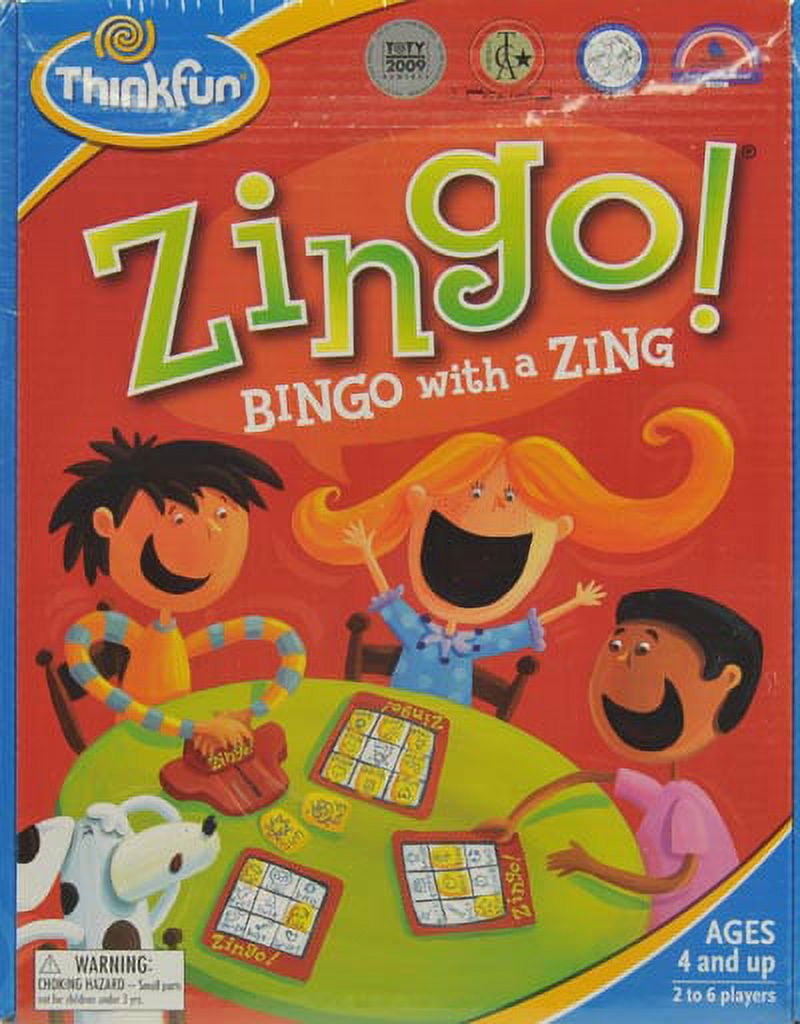
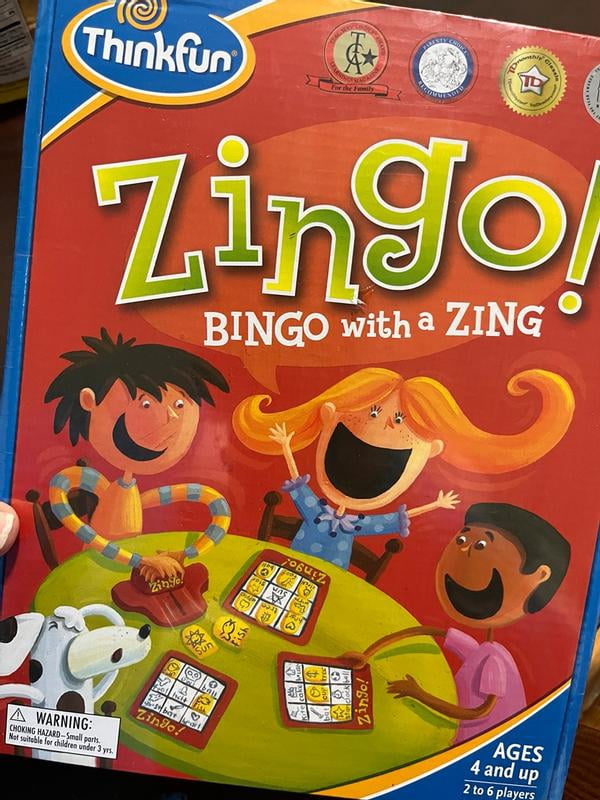
Zingo!
Ages 4-8 · paid · Product · thinkfun.com ↗
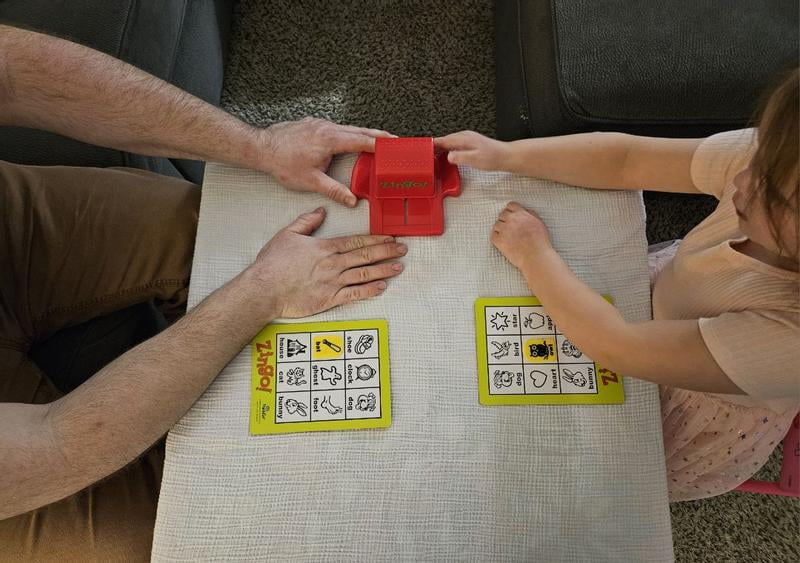
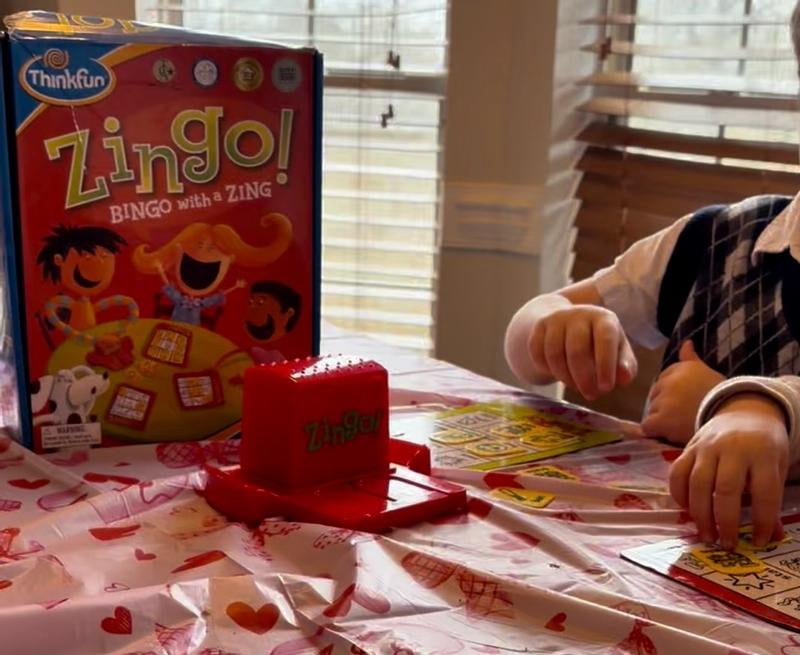
Zingo is a bingo-style matching game for pre-readers and early readers. A child slides the Zinger dispenser, two tiles appear, and players race to match the picture-word tile to their board before someone else claims it.
We've reviewed Zingo! against our 9-literacy developmental framework. The main growth opportunity: agency and creativity are limited. Kids are matching, not directing or creating.
Strengths & gaps
Strengths
- ● Zingo's main strength is accessibility. Very young players can learn it quickly and join family play.
- ● The game also gives age-appropriate self-regulation practice because short losses are frequent and manageable.
Gaps
- ○ Agency and creativity are limited. Kids are matching, not directing or creating.
- ○ The broader developmental footprint is narrow. Zingo is a good early-learning game, not a deep capacity-builder.
Detailed scores
How Zingo! performs on each of the 9 literacies in our framework.
Doing
— 0 of 3 Strong
Zingo is mostly about reacting fast to tiles. The child has very little control over goals or direction.
Short rounds make it easy to try again. That helps younger children stay in the game after losing.
The game offers some scaling through its boards. Beyond that, the decision space stays small.
Thinking
— 0 of 3 Strong
The Zinger and image-word matching can feel fresh and exciting for early players. The curiosity does not run very deep.
Children are following a fixed matching loop. There is almost no room for self-authored expression.
Recognition and speed dominate. Tradeoff-rich judgment is not a core part of play.
Being
— 0 of 3 Strong
Zingo is a good family-table starter. Kids share attention, call out words, and play in the same space.
Young children do have to wait, miss tiles, and keep playing kindly. That matters at this age.
Purpose sits outside the game's design.
Based on 4 sources
- Product walmart.com —
- Product engagedfamilygaming.com — family board game review zingo
- Product screenwiseapp.com — zingo boardgame
- Product raisinghooks.com — zingo
Reviewed by New Literacies
Scored by our research-derived framework · AI-assisted analysis with editorial review · 4 sources reviewed · Our methodology →
Get the next guide before it goes live
One email when a new product review ships.
Free. No spam. Unsubscribe anytime.