
Wavelength
Ages 10-18 · paid · Product · wavelength.zone ↗
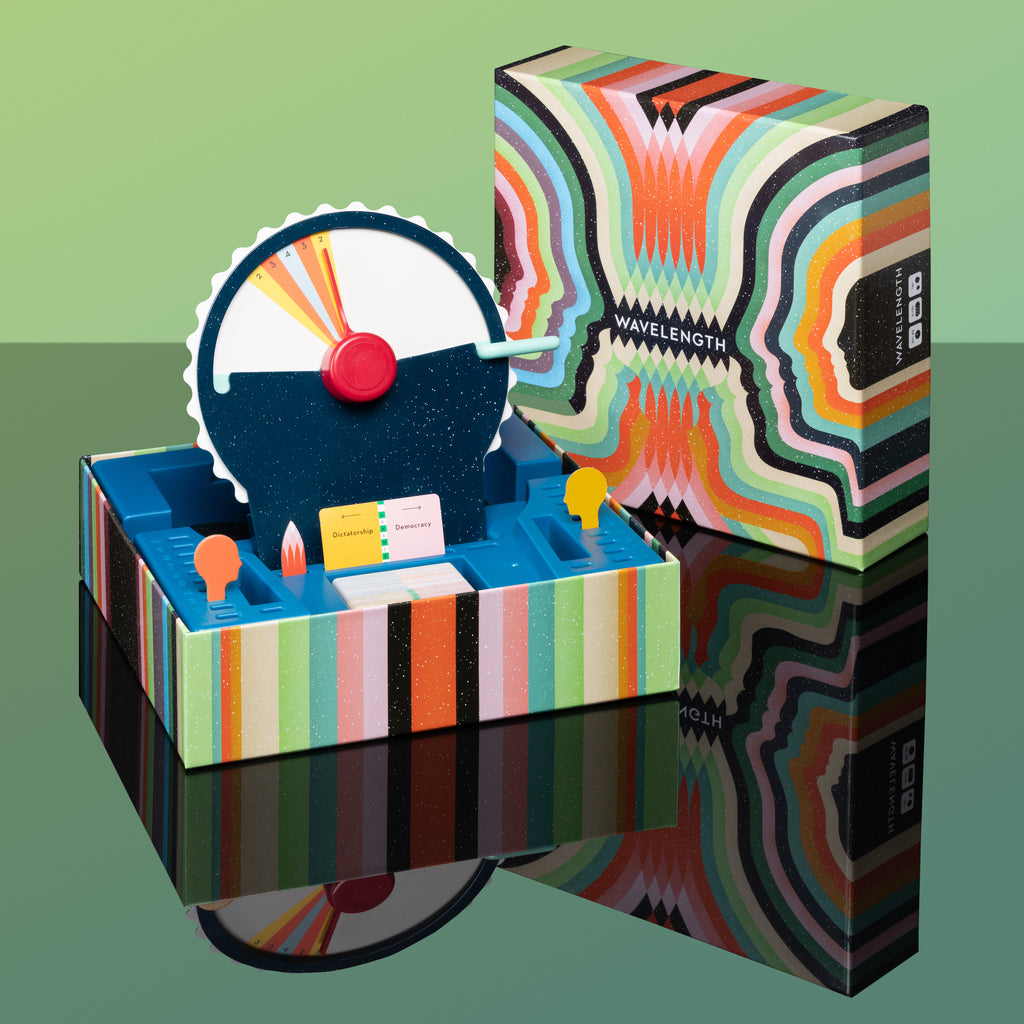


Wavelength is a mind-reading party game where one player gives a single clue for a hidden point on a spectrum and the team debates where that clue belongs. The physical dial is the center of the game, and each round is really an argument about gray areas like hot vs cold or fantasy vs sci-fi. This package scores the tabletop board game only. The app is a separate line and is excluded here so the scope stays coherent.
Wavelength stands out for developmental impact across multiple literacies. It builds cognitive skills, connection. The main growth opportunity: persistence is not a major feature. The game is round-based and social, not a long struggle arc.
Full review
The NL Score measures developmental capacity-building, not product quality.
Strengths & gaps
Strengths
- ● Wavelength is strongest for Creativity, Judgment, and Connection. The game only works when someone invents a clue and the table tries to read it together.
- ● It is a strong family or game-night game. The rules are simple, the setup is quick, and the conversation does most of the work.
- ● It helps kids notice how different people think. The same clue can land in different places for different players, which is the whole point.
Gaps
- ○ Persistence is not a major feature. The game is round-based and social, not a long struggle arc.
- ○ Purpose is thin. Wavelength does not connect play to values, service, or identity.
- ○ Younger kids may need help with abstract vocabulary. The game still works, but the clue space gets subtler fast.
Detailed scores
How Wavelength performs on each of the 9 literacies in our framework.
Doing
— 0 of 3 Strong
Wavelength gives kids real decisions each round. The Psychic chooses a clue, then the rest of the team decides where the dial should land. But the game still sets the spectrum and the scoring, so the child is acting inside a fixed structure rather than setting the whole direction.
Wavelength is not a grind. The rounds are short, the rules are simple, and the fun comes from conversation and surprise. Players may want to keep playing because the spectra change, but persistence is not central enough to the design to score it.
The clue has to fit the table in front of you. Screenwise and Co-op Board Games both show that different people read the same spectrum differently, so the Psychic has to adapt to the group's mental map. Still, the task stays the same every round, so the adaptation is real but narrow.
Thinking
— 2 of 3 Strong
The game creates a small gap between what a clue means and where the target actually sits. That gap makes people ask questions, compare examples, and wonder why someone else heard the clue differently. The curiosity is real, but it is momentary. The game closes the loop fast and moves on.
Wavelength asks the Psychic to invent a clue that lands in exactly the right place on a spectrum. That is original thinking, not a template response. The clue has to be understandable, precise, and fresh enough to work for this exact table. The game lives or dies on that inventive move.
Judgment is the core skill here. The clue has to balance precision and risk, and the team has to judge where the hidden target sits before the dial locks in. Every turn is a tiny tradeoff under uncertainty, which makes the reasoning visible and repeatable.
Being
— 1 of 3 Strong
Wavelength is a social game first. Screenwise describes it as a giant engine for conversation, and that matches the table experience: players explain themselves, debate nuance, and learn how other people think. The game is trying to sync the group up, not just score points.
The game asks players to wait, listen, and tolerate disagreement. That gives some practice staying calm when people see the clue differently. But Wavelength does not teach coping strategies or emotion tools, so the regulation is incidental rather than explicit.
Wavelength is about shared play and social calibration. It does not connect effort to values, identity, or contribution beyond helping the team guess correctly. Purpose is outside the product's observable scope.
Based on 6 sources
- Product wavelength.zone
- Product cmyk.games — wavelength
- Product screenwiseapp.com — wavelength
- Product coopboardgames.com — wavelength
- Product dicetower.com —
- Product boardgamegeek.com — wavelength
Reviewed by New Literacies
Scored by our research-derived framework · AI-assisted analysis with editorial review · 6 sources reviewed · Our methodology →
Personalization bridge
Not sure what your kid needs most?
Take the quiz to see which literacies matter most for your family, then get practical things to try at home.
Get your family profileExplore more
See other products strong in the same literacies: