
TypingClub
Ages 7-17 · freemium · Product · typingclub.com ↗
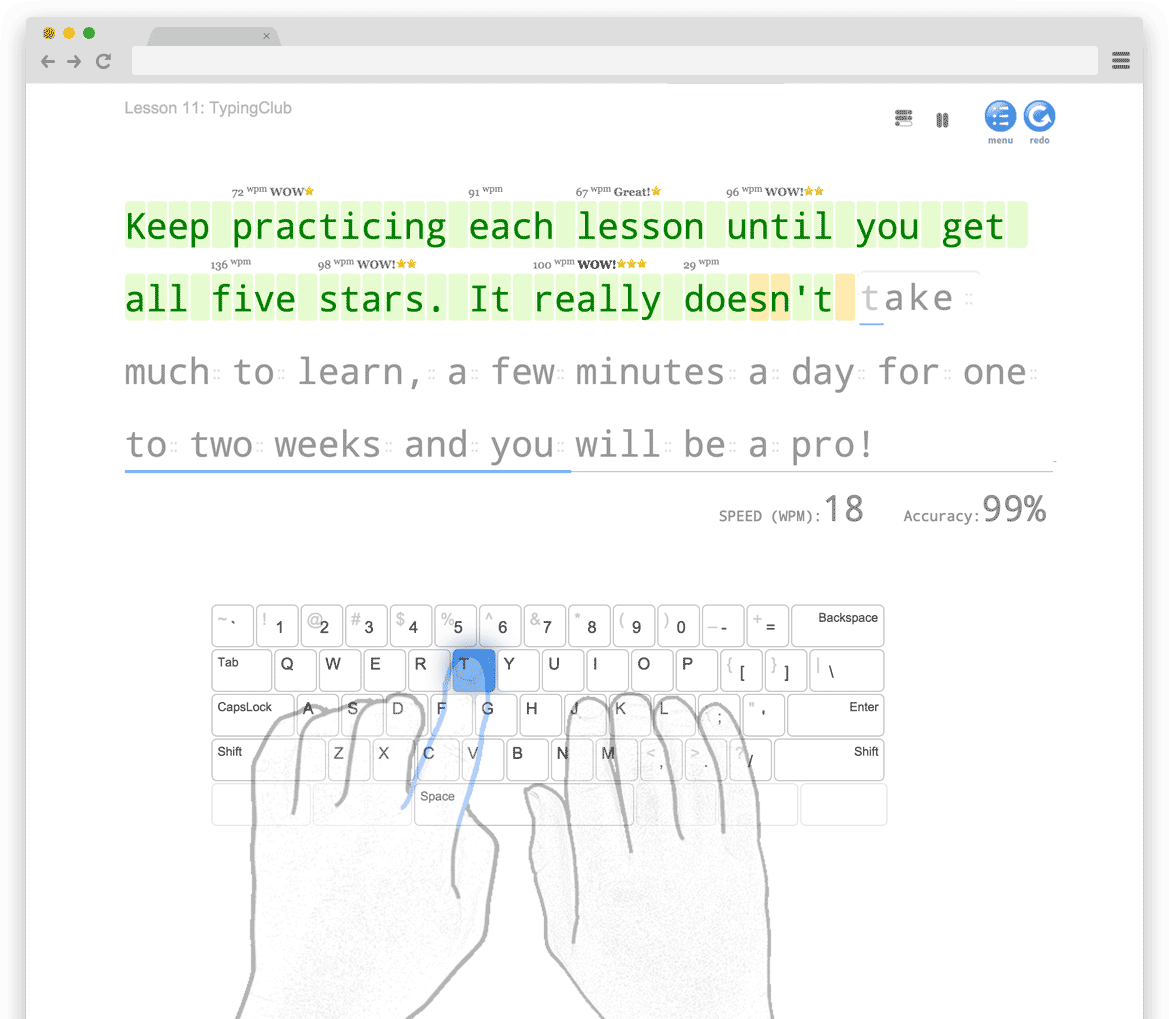

TypingClub is a web typing curriculum with guided lessons, games, stories, and classroom controls. Kids practice touch typing through a set progression aimed at building speed, accuracy, and stamina. It makes a narrow skill more engaging, but it is still a narrow skill trainer.
TypingClub has focused developmental strength worth knowing about. It builds persistence. The main growth opportunity: typingClub offers little agency or creativity. The child is improving a preset skill in a preset system.
Strengths & gaps
Strengths
- ● TypingClub is strongest for Persistence. It asks children to keep working at a skill where progress is gradual and measurable.
- ● It also supports self-regulation better than many drill tools. Kids have to manage focus, boredom, and the temptation to chase speed before accuracy.
Gaps
- ○ TypingClub offers little agency or creativity. The child is improving a preset skill in a preset system.
- ○ The experience is mostly individual and procedural, so curiosity, connection, and purpose stay thin.
Detailed scores
How TypingClub performs on each of the 9 literacies in our framework.
Doing
— 1 of 3 Strong
TypingClub gives the child a clear path. That helps with usability. But it leaves very little room for self-chosen goals or meaningful ownership of the learning direction.
TypingClub builds Persistence because typing takes repetition. The platform's steady lesson progression, accuracy feedback, and stamina framing all reinforce the idea that skill comes from staying with hard, sometimes boring practice.
TypingClub does require adjustment. Children refine finger use, pacing, and error correction across different lesson types. But the product never becomes truly open-ended, so adaptability remains moderate.
Thinking
— 0 of 3 Strong
TypingClub is trying to make practice engaging, not mysterious. Kids may enjoy the lessons more than a plain worksheet, but they are not being invited into much exploration or question-driven learning.
TypingClub includes stories and coding modes, but the creative ceiling is still low. The child is responding to prompts, not generating something meaningfully their own.
TypingClub teaches children to notice performance and correct mistakes. That is useful. But the judgment involved is narrow and procedural, not broad reasoning.
Being
— 0 of 3 Strong
TypingClub can live inside a classroom, but the work is mostly solo. Rankings and teacher dashboards do not amount to genuine collaboration.
TypingClub creates real self-regulation practice. Students need to keep going, correct themselves, and stay accurate through repetitive work. The product doesn't teach regulation directly, but it gives the child a real workout in it.
TypingClub helps with a useful life skill. The platform itself, though, rarely connects that skill to identity, values, or contribution. Purpose stays mostly outside the experience.
Based on 4 sources
Reviewed by New Literacies
Scored by our research-derived framework · AI-assisted analysis with editorial review · 4 sources reviewed · Our methodology →
Personalization bridge
Not sure what your kid needs most?
Take the quiz to see which literacies matter most for your family, then get practical things to try at home.
Get your family profileExplore more
See other products strong in the same literacies: