
Toniebox
Ages 3-8 · paid · Product · tonies.com ↗
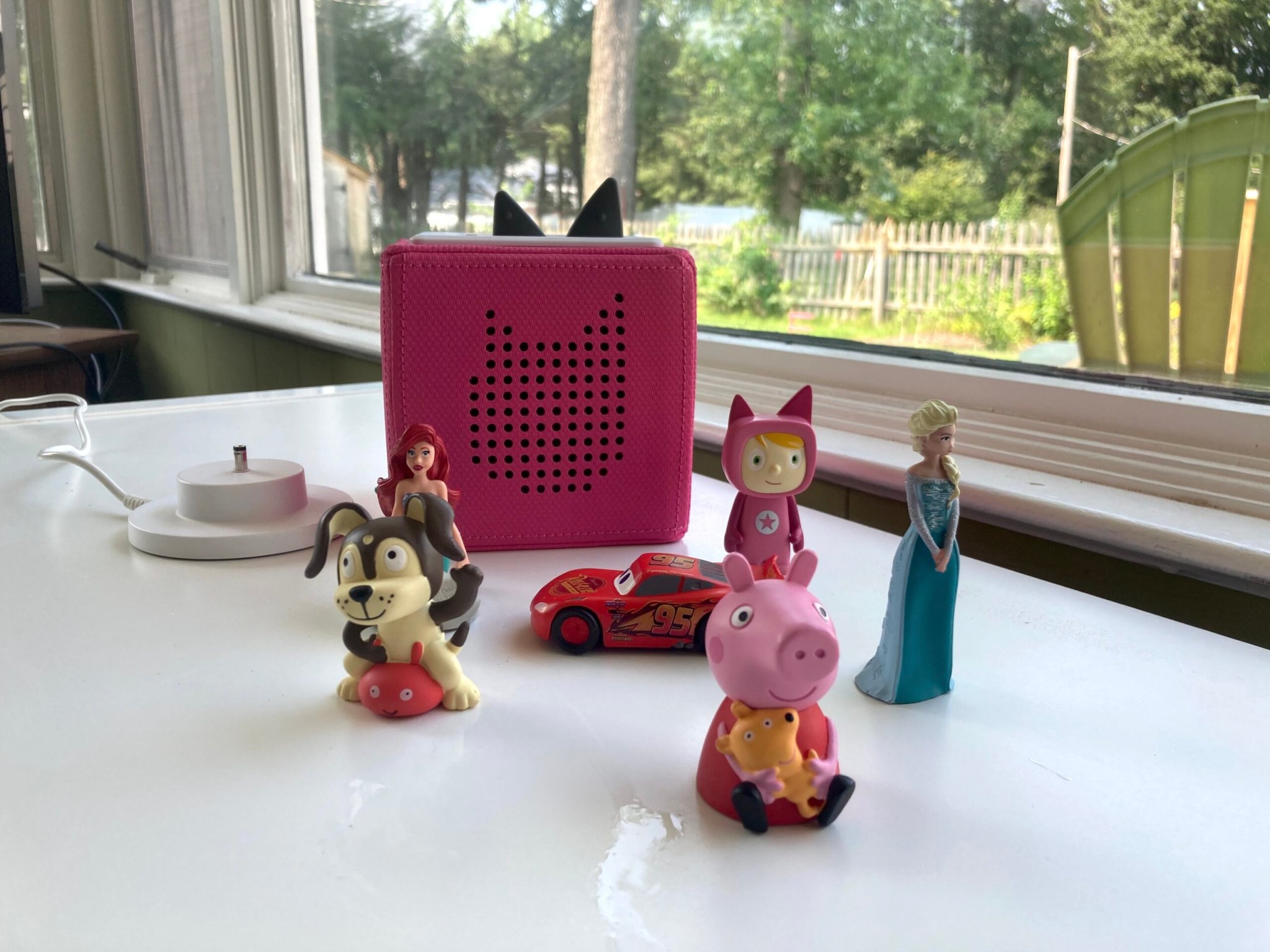
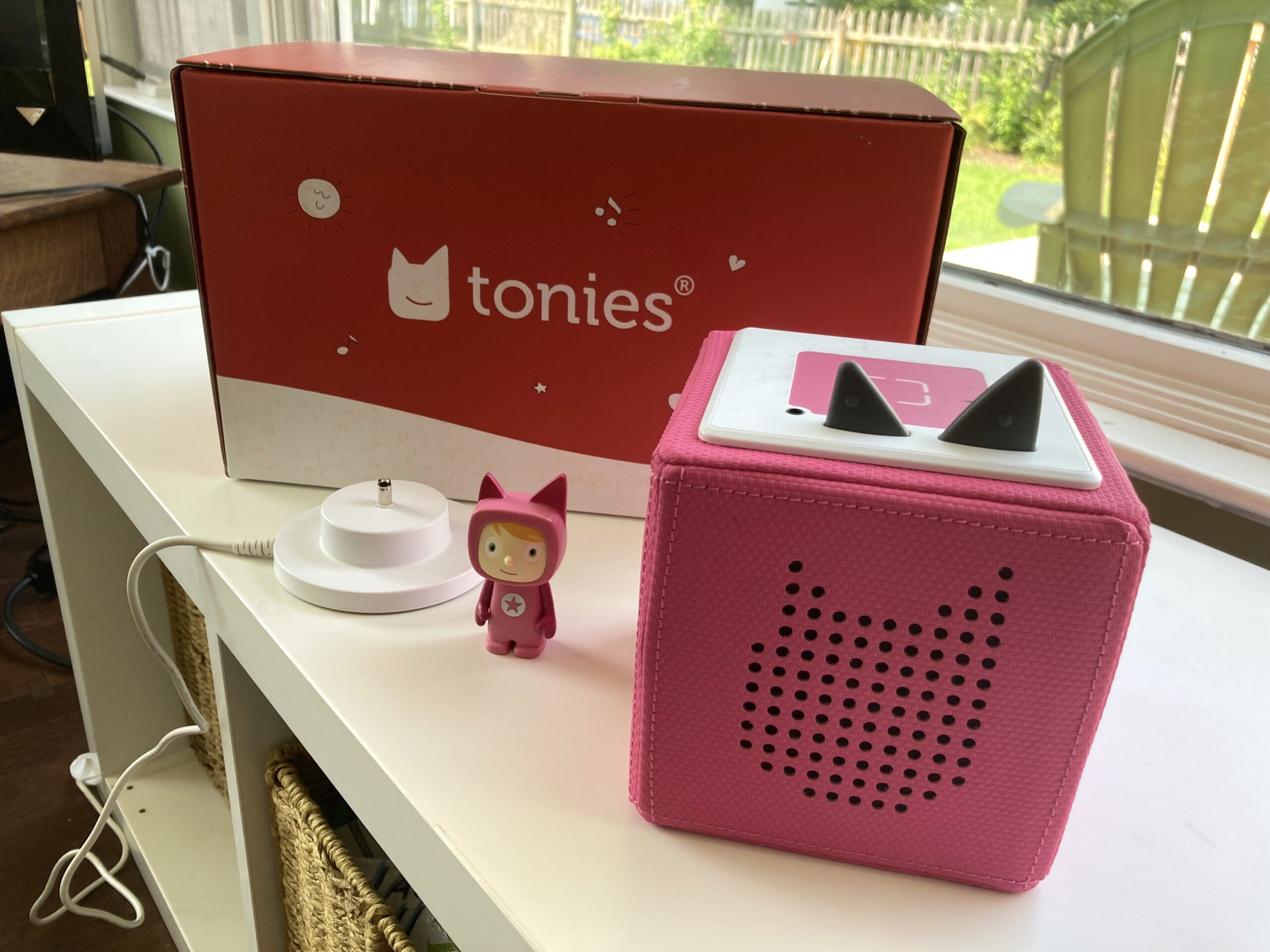
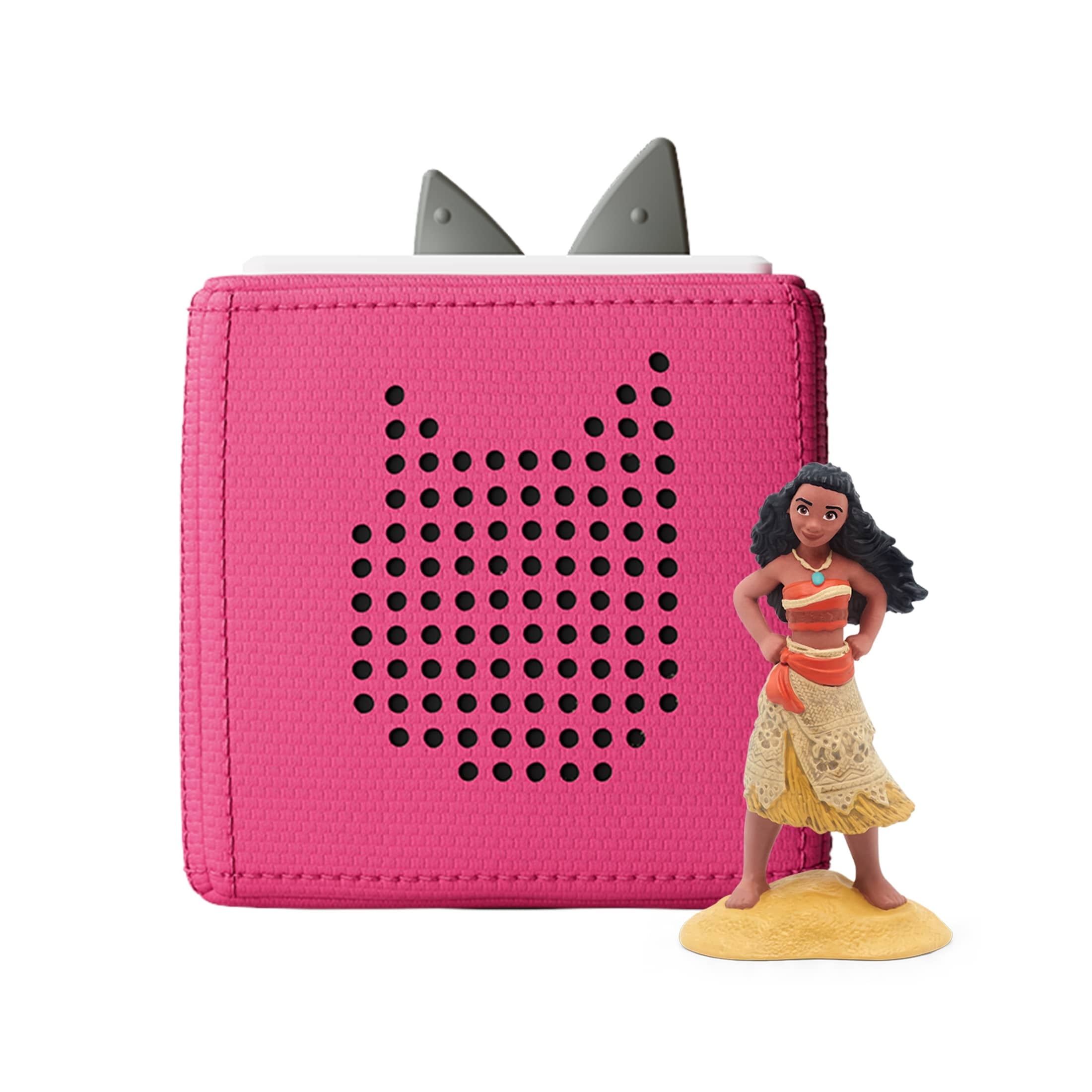
Toniebox is a screen-free audio cube for young kids. A child places a Tonie figure on top and the matching stories, songs, or audiobook starts right away. Families can also record or upload custom audio to a Creative Tonie, then play it back on the box. It works best as a routine device: bedtime, car rides, quiet time, or family storytime. The experience is simple on purpose, with physical controls instead of menus.
We've reviewed Toniebox against our 9-literacy developmental framework. The main growth opportunity: Toniebox does not build much persistence or adaptability.
Strengths & gaps
Strengths
- ● Toniebox is very easy for young children to operate. The physical controls and figure-based selection make it simple to use without menus.
- ● It has real listening breadth. The library of characters, stories, songs, and audiobooks gives kids lots of repeatable choices.
- ● Creative Tonies add a genuine customization layer. Families can record or upload their own audio and replay it on the box.
Gaps
- ○ Toniebox does not build much persistence or adaptability. The content is fixed, and the experience is designed to be easy rather than effortful.
- ○ Judgment and purpose are mostly outside its scope. The child is choosing what to hear, not weighing evidence or connecting effort to values.
- ○ It can support calm routines, but it does not teach self-regulation. The box soothes the child more than it trains the skill.
Detailed scores
How Toniebox performs on each of the 9 literacies in our framework.
Doing
— 0 of 3 Strong
Toniebox gives a child direct physical control over the listening experience. They can choose a figure, start playback, adjust volume, and switch tracks without adult help once it is set up. But the choices are still mostly preselected by adults, so the child is selecting among options rather than setting their own direction.
The box is built to be easy, immediate, and low-friction. That makes it great for engagement, but it means the child is not doing hard work, recovering from failure, or building frustration tolerance. Toniebox holds attention; it doesn't train persistence.
Changing Tonies changes content, not strategy. The child does not need to revise an approach, test alternatives, or transfer knowledge from one challenge to another. It is a selector, not an adaptability tool.
Thinking
— 0 of 3 Strong
Toniebox can widen a child's listening diet in a way that feels playful and low-pressure. Audio listening is a real literacy-adjacent behavior, and institutional research shows that children who enjoy listening also tend to enjoy reading more. But the product mostly hands over finished stories, so curiosity is sparked more than driven.
Creative Tonies give the ecosystem a real creative outlet. Families can record or upload original stories and songs and replay them on the box, which is more substantial than picking a theme color or avatar. Still, the child is usually receiving audio rather than generating and revising ideas inside the product itself.
The listening experience does not ask a 3-8-year-old to compare evidence, evaluate sources, or weigh tradeoffs. Picking one Tonie over another is a preference choice, not judgment practice. That makes this capacity out of scope for the product's core use.
Being
— 0 of 3 Strong
Toniebox can be part of shared family routines, but it does not require genuine human interaction. There is no negotiation, collaboration, or perspective-taking built into the device. Any connection comes from the people using it together, not from the box.
Toniebox can help a child settle down, especially with bedtime or quiet-time listening. But it mainly regulates the environment for the child. It does not teach emotion labeling, calming strategies, or recovery after frustration.
The product can hold family voices and favorite stories, but it does not connect a child's effort to values, identity, or contribution. There is no built-in sense of "why this matters" beyond enjoyment. Purpose is not part of the design.
Based on 11 sources
- Product pmc.ncbi.nlm.nih.gov — PMC
- Product pmc.ncbi.nlm.nih.gov — PMC
- Product literacytrust.org.uk — children and young peoples listening in
- Product popsci.com — toniebox review
- Product madeformums.com — toniebox review
- Product reddit.com — 1hq1b7b
- Product reddit.com — 1fxb
- Product support.tonies.com — 29036547834258 What s the difference between Toniebox 1 and Toniebox
- Product us.tonies.com — bundle
- Product us.tonies.com — superhero creative tonie pink purple
- Product support.tonies.com — 210329345 Supported audio formats
Reviewed by New Literacies
Scored by our research-derived framework · AI-assisted analysis with editorial review · 11 sources reviewed · Our methodology →
Get the next guide before it goes live
One email when a new product review ships.
Free. No spam. Unsubscribe anytime.