
Tonara
Ages 5-18 · freemium · AI Product · tonara.com ↗
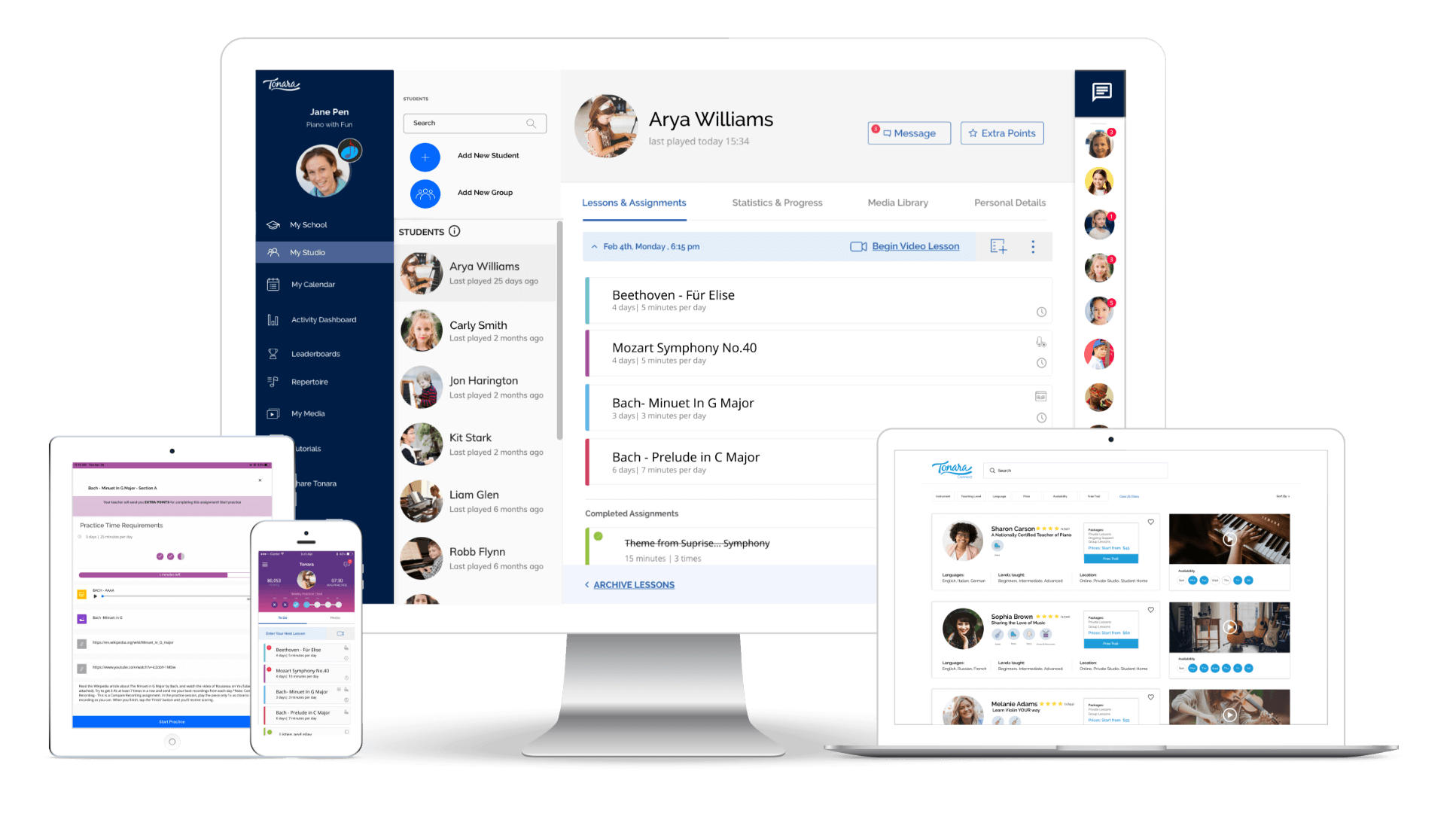

Tonara is a music-practice app designed to keep students working between lessons. Teachers assign practice, track progress, and communicate through the system while students log practice, review feedback, and keep up with their routine. It is less about musical invention and more about habit, accountability, and follow-through.
Tonara has focused developmental strength worth knowing about. It builds persistence, connection. The main growth opportunity: tonara is weak for creativity. It manages practice more than it supports original making.
Strengths & gaps
Strengths
- ● Tonara is strongest for persistence. It is built to help students keep showing up to practice.
- ● Tonara also has a real connection signal because teacher feedback and accountability sit at the center of the experience.
Gaps
- ○ Tonara is weak for creativity. It manages practice more than it supports original making.
- ○ Agency stays moderate because the app's structure is mostly teacher-driven.
- ○ Public independent review coverage is thinner than ideal, so confidence is moderate rather than high.
Detailed scores
How Tonara performs on each of the 9 literacies in our framework.
Doing
— 1 of 3 Strong
Students do have to play their instrument. The work is real. But the assignments, expectations, and path usually come from the teacher, so Tonara is more guided than self-directed.
Tonara is designed to close the gap between weekly lessons. Reminders, progress tracking, and feedback all push the child back into deliberate practice. That makes persistence the clearest strength in the package.
Students can respond to feedback and try again. That's a real adjustment loop. The limitation is that the loop stays narrow and performance-focused rather than broadly strategic.
Thinking
— 0 of 3 Strong
Tonara may help students care more about a piece as they improve it. But curiosity is not the product's organizing principle. Practice discipline is.
Tonara is not a composing or improvising tool. It supports repertoire practice and lesson follow-through, which makes creativity peripheral.
Students need to hear when a performance is off and notice progress over time. Tonara's feedback and recording workflow can support that. The judgment remains fairly narrow and technical.
Being
— 1 of 3 Strong
Tonara extends the teacher relationship beyond the lesson itself. Messages, assignments, and visible progress all create a stronger human feedback loop than a solo practice timer would.
The app helps children build routine and tolerate delayed payoff. But because that structure is heavily supported by reminders and teacher oversight, it doesn't reach Strong.
Tonara can serve a larger musical purpose. The app itself doesn't define it.
Based on 4 sources
- Product tonara.com
- Product musically.com — tonara 360 takes a new spin on music education subscriptions
- Product play.google.com — search
- Product apps.apple.com — search
Reviewed by New Literacies
Scored by our research-derived framework · AI-assisted analysis with editorial review · 4 sources reviewed · Our methodology →
Personalization bridge
Not sure what your kid needs most?
Take the quiz to see which literacies matter most for your family, then get practical things to try at home.
Get your family profileExplore more
See other products strong in the same literacies: