
Ticket to Ride: First Journey
Ages 6-10 · paid · Product · daysofwonder.com ↗
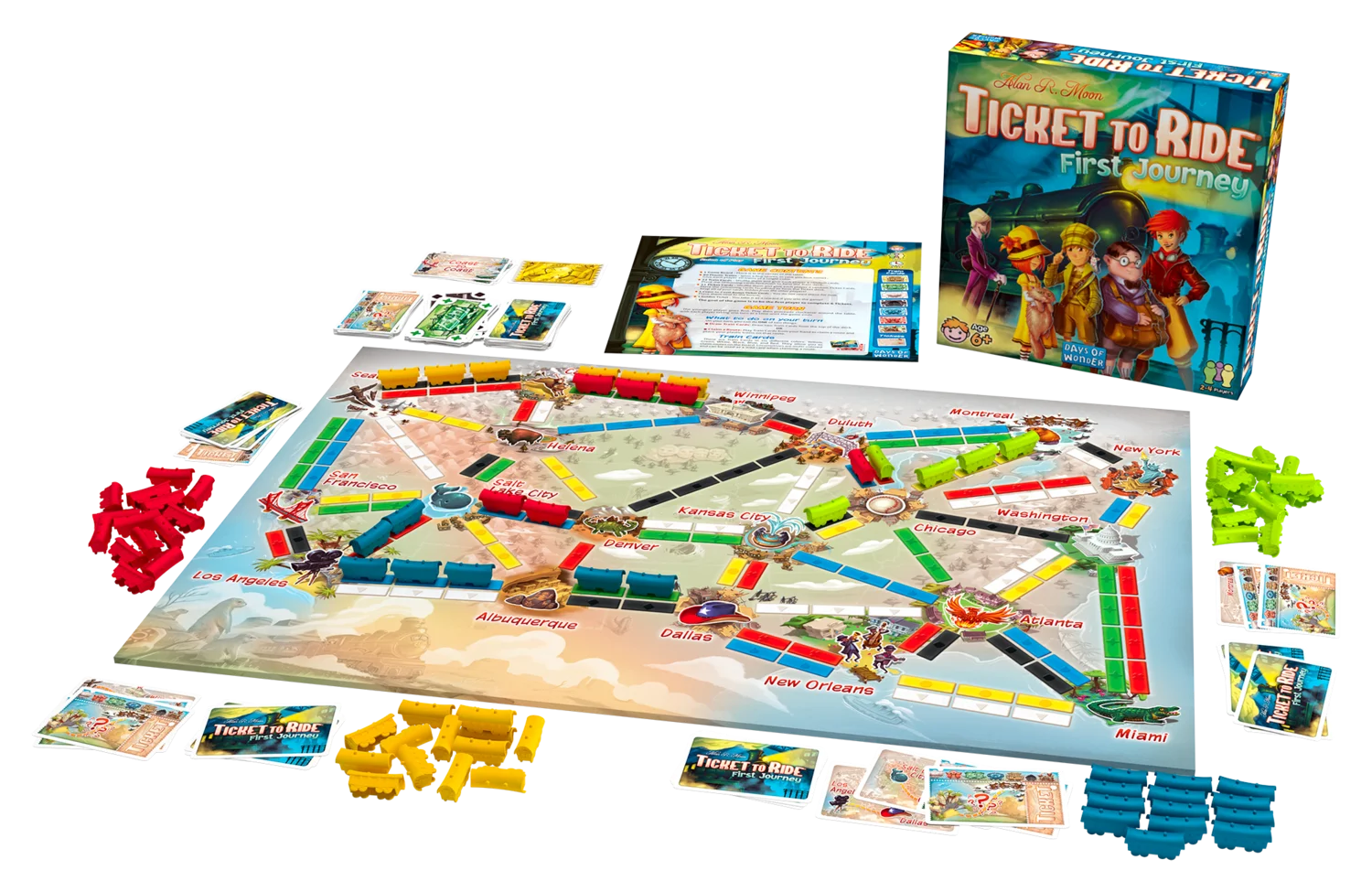
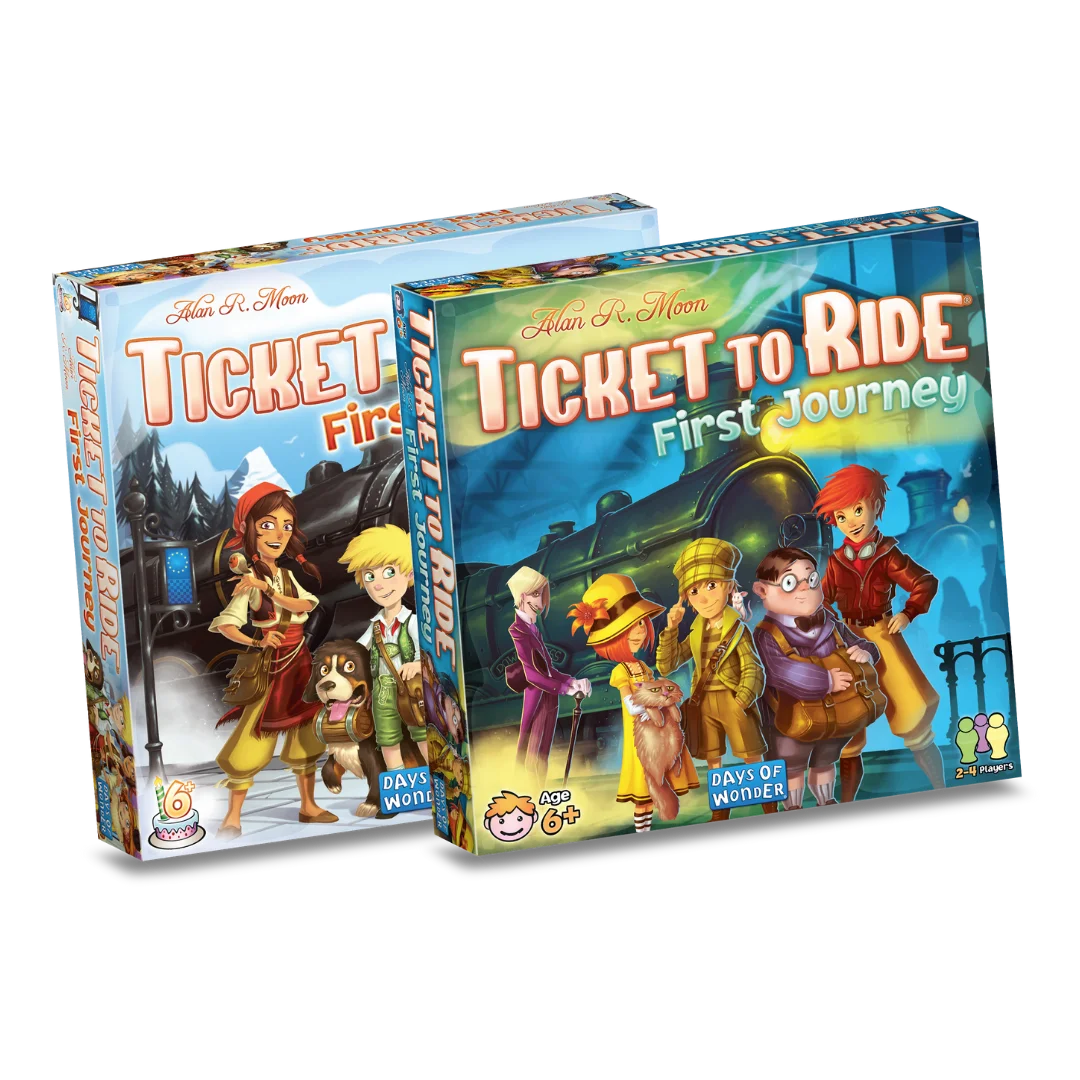
Ticket to Ride: First Journey is the kid-sized version of Ticket to Ride. Kids draw train cards, claim routes, and connect cities on a map until they finish enough tickets to win. The official page says the same core game exists in USA and Europe versions, and this package scores that shared First Journey line. It plays fast, the turns are simple, and the map does most of the teaching. Younger kids can handle it, but the game still asks them to think ahead.
Ticket to Ride: First Journey has focused developmental strength worth knowing about. It builds judgment. The main growth opportunity: it isn’t a creativity tool. Kids are solving a route puzzle, not making something original.
Full review
The NL Score measures developmental capacity-building, not product quality.
Strengths & gaps
Strengths
- ● Ticket to Ride: First Journey is strongest for Judgment. Every turn asks kids to pick the right route and manage limited cards.
- ● It also works as an accessible first strategy game. The rules are simple, the turns are short, and the map gives kids a clear target.
- ● The game helps kids think spatially. They have to read the board, notice connections, and plan ahead.
Gaps
- ○ It isn’t a creativity tool. Kids are solving a route puzzle, not making something original.
- ○ Connection is limited. The game can be played with family, but it doesn’t depend on communication or collaboration.
- ○ Purpose stays thin. The travel theme is charming, but it doesn’t connect play to identity or contribution.
Detailed scores
How Ticket to Ride: First Journey performs on each of the 9 literacies in our framework.
Doing
— 0 of 3 Strong
Ticket to Ride: First Journey gives kids real choices on every turn. They decide whether to draw cards or claim a route, and those decisions change how quickly tickets get completed. But the ticket goals and the map are already set, so the child is steering inside a fixed puzzle rather than authoring the game.
The game asks kids to keep working toward tickets even when the right card doesn’t appear yet. That gives them some practice with sticking with a plan and returning to the board after setbacks. Still, the rounds are short and forgiving, so it doesn’t create deep productive struggle.
Routes can get blocked, and that forces kids to change tactics. The player has to notice when one path won’t work and shift to another city connection or ticket target. The puzzle changes shape as the board fills, but the underlying task stays the same.
Thinking
— 1 of 3 Strong
The map naturally pulls kids into city-to-city questions. They start noticing where places sit, how routes connect, and which ticket pairs are worth chasing. That sparks interest, but the game doesn’t open a broader path of exploration beyond the route network.
The game is about planning and placement, not making original content. Kids aren’t inventing characters, stories, or artifacts. They’re choosing paths through a fixed system, which is a different skill.
Judgment is the clearest strength here. Kids have to decide when to spend cards, when to wait, and which routes are worth claiming before someone else blocks them. The game rewards reading the board and balancing short-term moves against ticket completion.
Being
— 0 of 3 Strong
It is a family game, but the design doesn’t require conversation, cooperation, or shared interpretation the way a true connection game does. Players can enjoy it together, yet each turn is still mostly an individual route-planning decision. That makes connection incidental rather than central.
Kids have to wait their turn, tolerate blocked routes, and delay gratification when the cards don’t line up. That creates a little pressure to stay calm and keep going. But the game doesn’t teach coping routines or emotional language, so the regulation is practice without instruction.
The travel theme makes the game feel adventurous, but it doesn’t tie effort to values, service, or identity. The child is solving a map puzzle, not connecting play to a larger purpose. That keeps Purpose outside the observable scope.
Based on 7 sources
- Product daysofwonder.com — ticket to ride my first journey
- Product boardgamegeek.com — Ticket_to_Ride_series
- Product dicetower.com —
- Product thegamingreview.com — ticket to ride first journey family review
- Product usa.gametheory.ca — ticket to ride my first journey
- Product zatu.co.uk — ticket to ride first journey review
- Product business.walmart.com —
Reviewed by New Literacies
Scored by our research-derived framework · AI-assisted analysis with editorial review · 7 sources reviewed · Our methodology →
Personalization bridge
Not sure what your kid needs most?
Take the quiz to see which literacies matter most for your family, then get practical things to try at home.
Get your family profileExplore more
See other products strong in the same literacies: