ThinkFun Logic Games
Ages 5-14 · paid · Product · thinkfun.com ↗
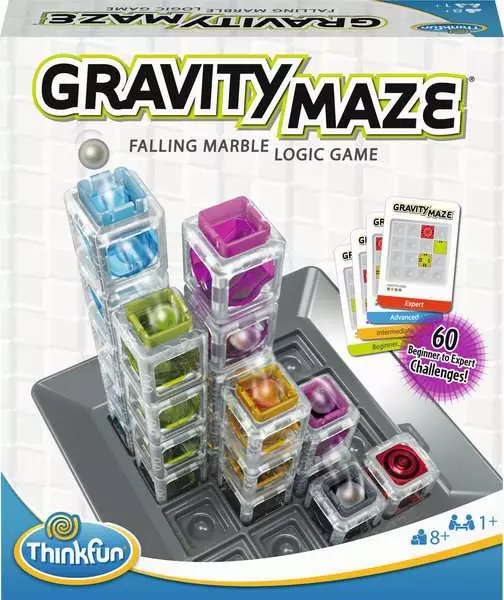
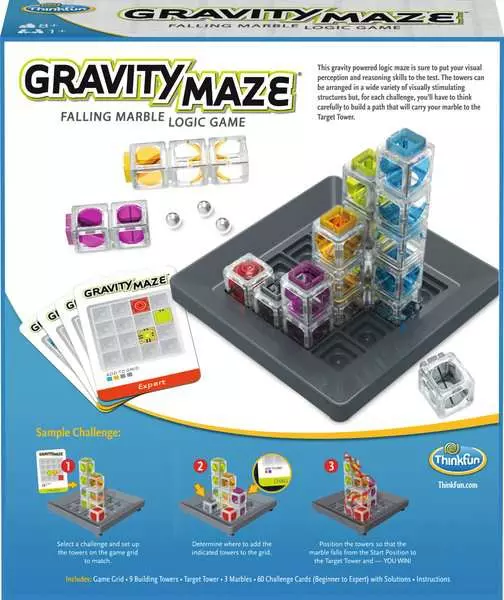
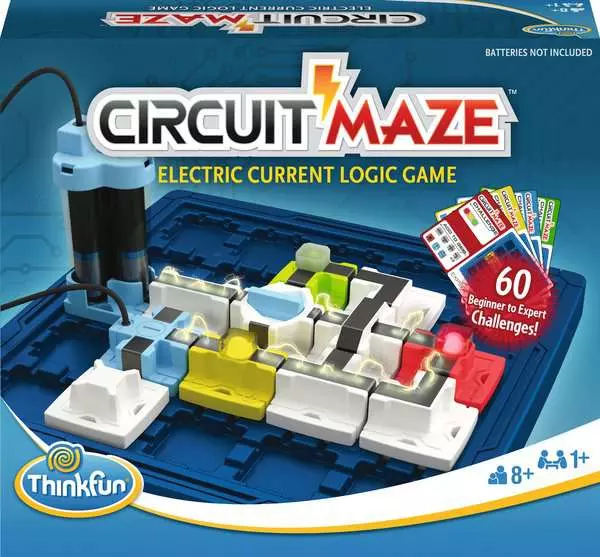
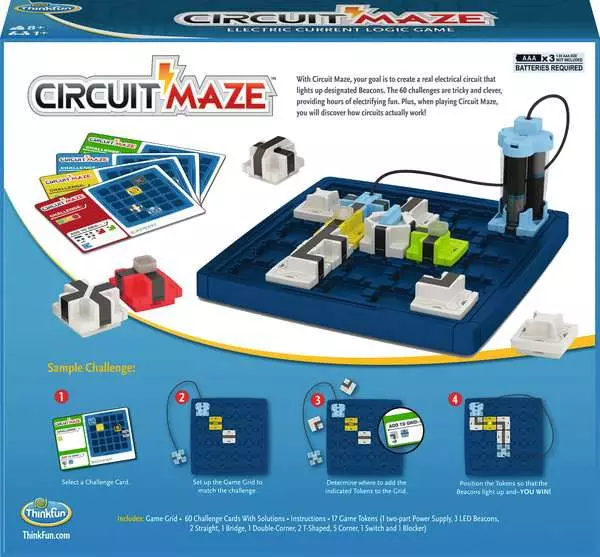
This package scores ThinkFun's single-player logic-maze line rather than the whole ThinkFun catalog. These games use challenge cards, physical pieces, and a clear solve/fail loop: set up the puzzle, test a path, hit a dead end, and try again.
ThinkFun Logic Games stands out for developmental impact across multiple literacies. It builds persistence, cognitive skills. The main growth opportunity: creativity stays limited because the puzzles are authored.
Strengths & gaps
Strengths
- ● This line is strongest for Judgment. Kids are constantly comparing possible solutions.
- ● Persistence is also a clear spike because retry is not a side effect. It is the main loop.
Gaps
- ○ Creativity stays limited because the puzzles are authored.
- ○ Connection is outside the product design. These are mostly solitary challenges.
Detailed scores
How ThinkFun Logic Games performs on each of the 9 literacies in our framework.
Doing
— 1 of 3 Strong
The child chooses how to solve the puzzle. The game still defines what counts as solved.
These games expect mistakes. Kids hit dead ends, rework the setup, and keep going.
Different cards force different tactics. The overall problem family still stays tight and repeatable.
Thinking
— 2 of 3 Strong
The line rewards experimentation. Children change one variable and immediately see what it does.
The child is discovering a correct arrangement, not inventing a new artifact or system.
Good play depends on inference and eliminating bad options. That is real judgment work in a puzzle form.
Being
— 0 of 3 Strong
Any social play is added from outside. The games themselves are mostly solitary.
Some challenges are stubborn enough that patience matters. The games exercise self-regulation without directly teaching it.
Purpose is outside the scored scope here.
Based on 4 sources
Reviewed by New Literacies
Scored by our research-derived framework · AI-assisted analysis with editorial review · 4 sources reviewed · Our methodology →
Personalization bridge
Not sure what your kid needs most?
Take the quiz to see which literacies matter most for your family, then get practical things to try at home.
Get your family profileExplore more
See other products strong in the same literacies: