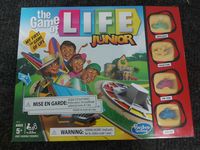
Game of Life Junior
Ages 5-8 · paid · Product · hasbro.com ↗
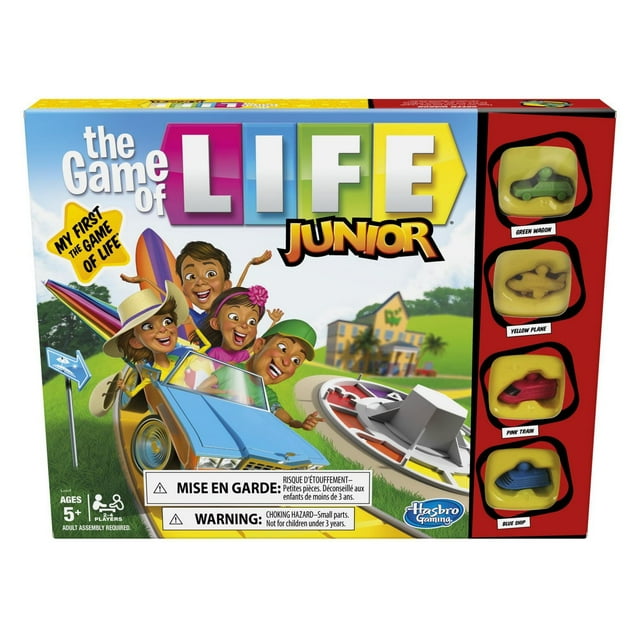
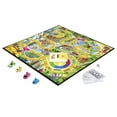
The Game of Life Junior is a simplified spinner-and-move board game for younger kids. Players drive around a short loop, visit kid-friendly destinations, collect stars, and count them at the end. It works more like an introductory family game than a strategy game.
We've reviewed Game of Life Junior against our 9-literacy developmental framework. The main growth opportunity: agency is weak. Most outcomes come from the spinner and the board, not from the child’s decisions.
Strengths & gaps
Strengths
- ● The Game of Life Junior works best as a first family board game. It gives younger kids a simple way to practice turn-taking and staying with the group.
- ● The rules are easy to follow. That lowers friction for five-year-olds who are still learning how structured game play works.
- ● The themed spaces keep the board friendly and approachable for younger children.
Gaps
- ○ Agency is weak. Most outcomes come from the spinner and the board, not from the child’s decisions.
- ○ Judgment and adaptability are also thin. There is not much real problem-solving or strategy here.
- ○ The game is pleasant, but narrow. It does not build standout developmental strengths.
Detailed scores
How Game of Life Junior performs on each of the 9 literacies in our framework.
Doing
— 0 of 3 Strong
The Game of Life Junior gives kids very little control over outcome. They spin, move, and do what the space tells them. That makes the experience easy to follow, but it also means the child is mostly reacting rather than directing. Agency is limited.
This game is not built around challenge. If a child loses stars or falls behind, the experience stays light and quickly moves on. There is not enough productive struggle or recovery work to score persistence meaningfully.
The child does respond to whatever space comes next, but response is not the same as adaptation. The game does not ask for strategy changes, reflection, or flexible problem-solving. Adaptability stays outside scope.
Thinking
— 0 of 3 Strong
The destinations add a bit of "what comes next?" energy for younger kids. That helps keep attention and interest alive. But the novelty is surface-level. The board does not open into deeper questions or exploration.
The Game of Life Junior is not a creation game. Kids are moving pieces through a preset loop, not inventing stories, solutions, or artifacts in any meaningful product-driven way.
Judgment needs tradeoffs. Here, there are not many. The game is driven mostly by chance and preset outcomes, so the child has too little decision-making room to support a real judgment score.
Being
— 0 of 3 Strong
This is a shared family-table game, and that matters. Kids practice taking turns, watching others, and participating in a simple group ritual. But the interaction is thin compared with games built around negotiation, cooperation, or conversation. Connection is present, just not deep.
For younger children, the basics matter. Waiting for turns, following rules, and handling luck-driven disappointment are real regulation tasks. The Game of Life Junior gives those basics repeated practice, though at a gentle level.
The Game of Life Junior does not connect play to identity, contribution, values, or service. It is a starter board game, not a purpose-building tool.
Based on 5 sources
Reviewed by New Literacies
Scored by our research-derived framework · AI-assisted analysis with editorial review · 5 sources reviewed · Our methodology →
Get the next guide before it goes live
One email when a new product review ships.
Free. No spam. Unsubscribe anytime.