
Swift Playgrounds
Ages 8-17 · free · Curriculum · apple.com ↗
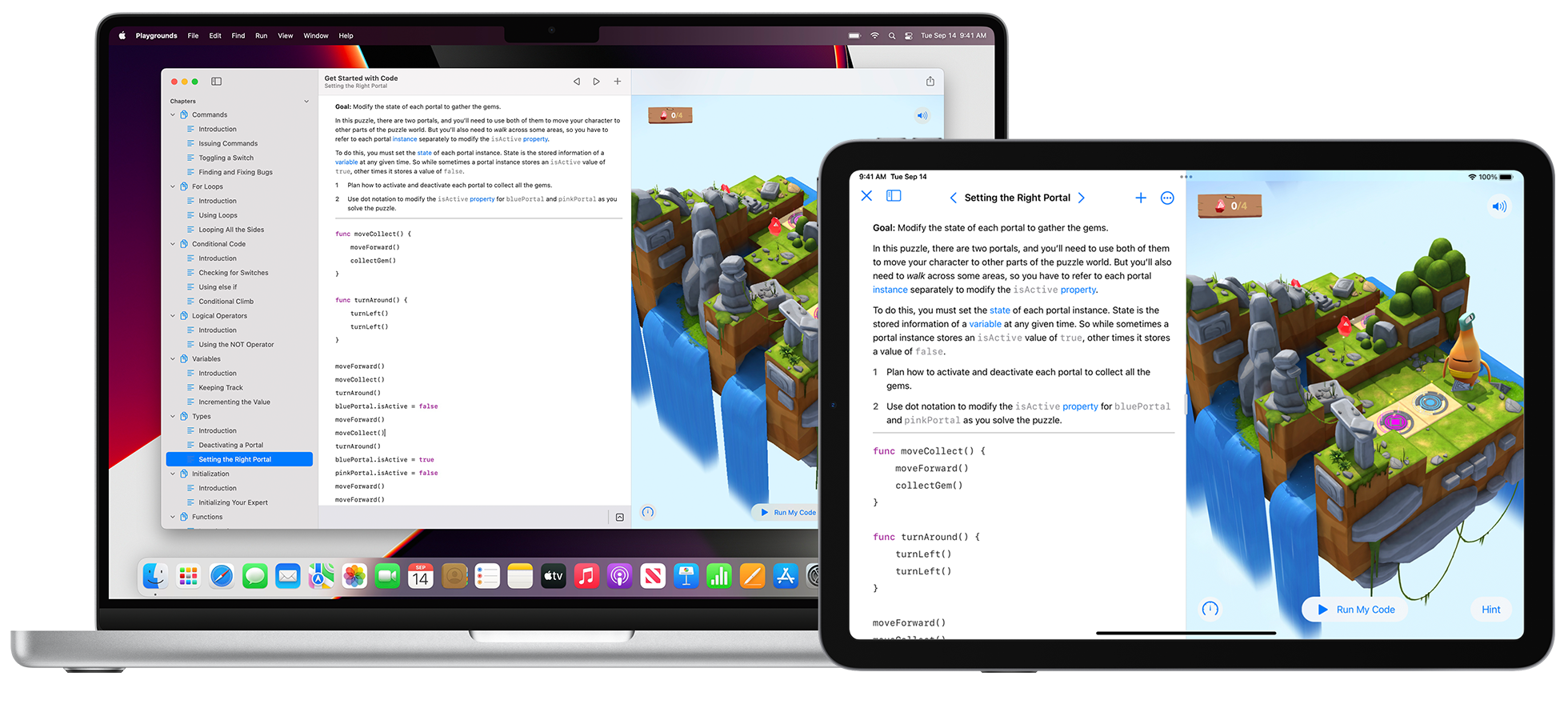
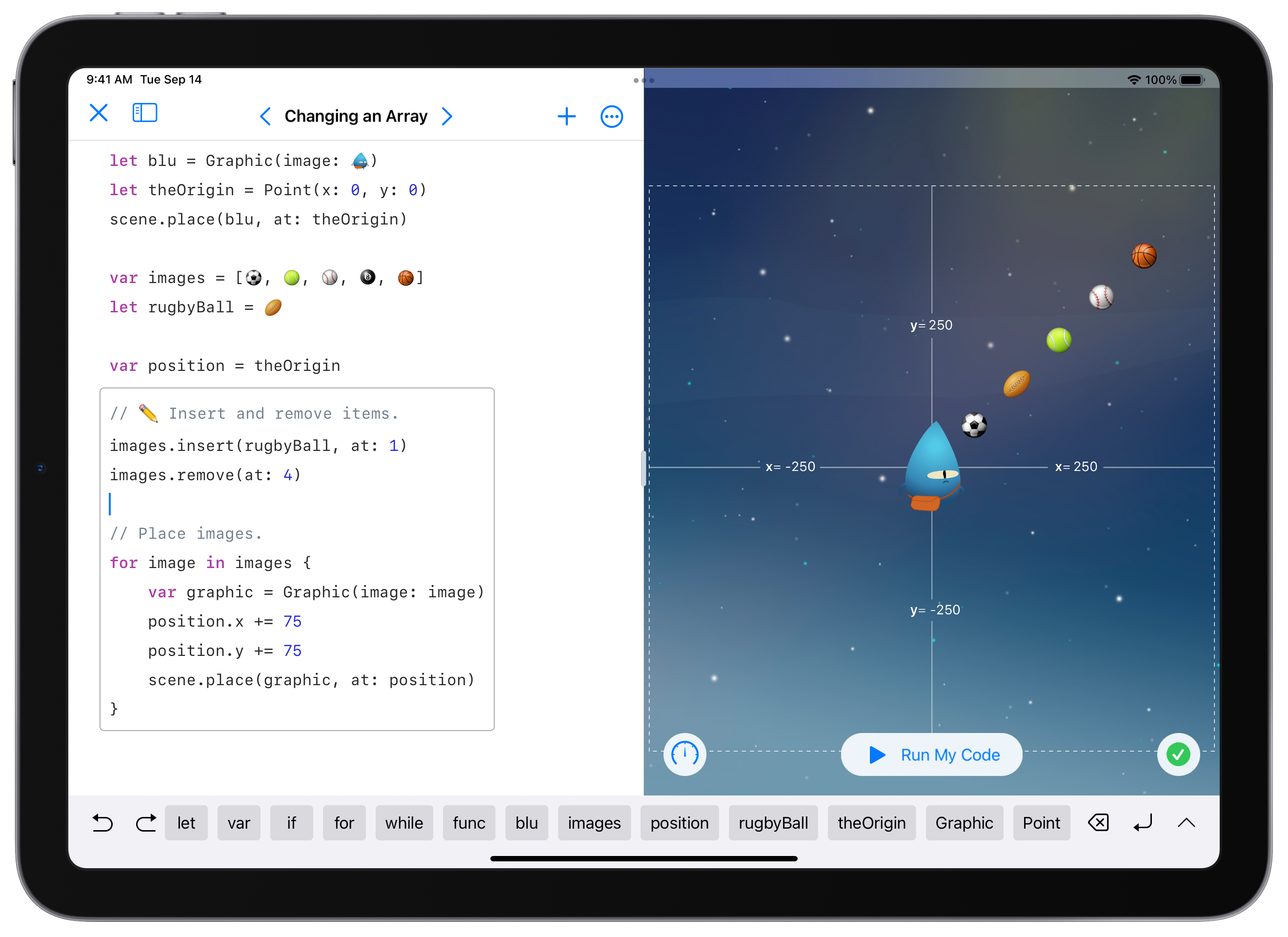
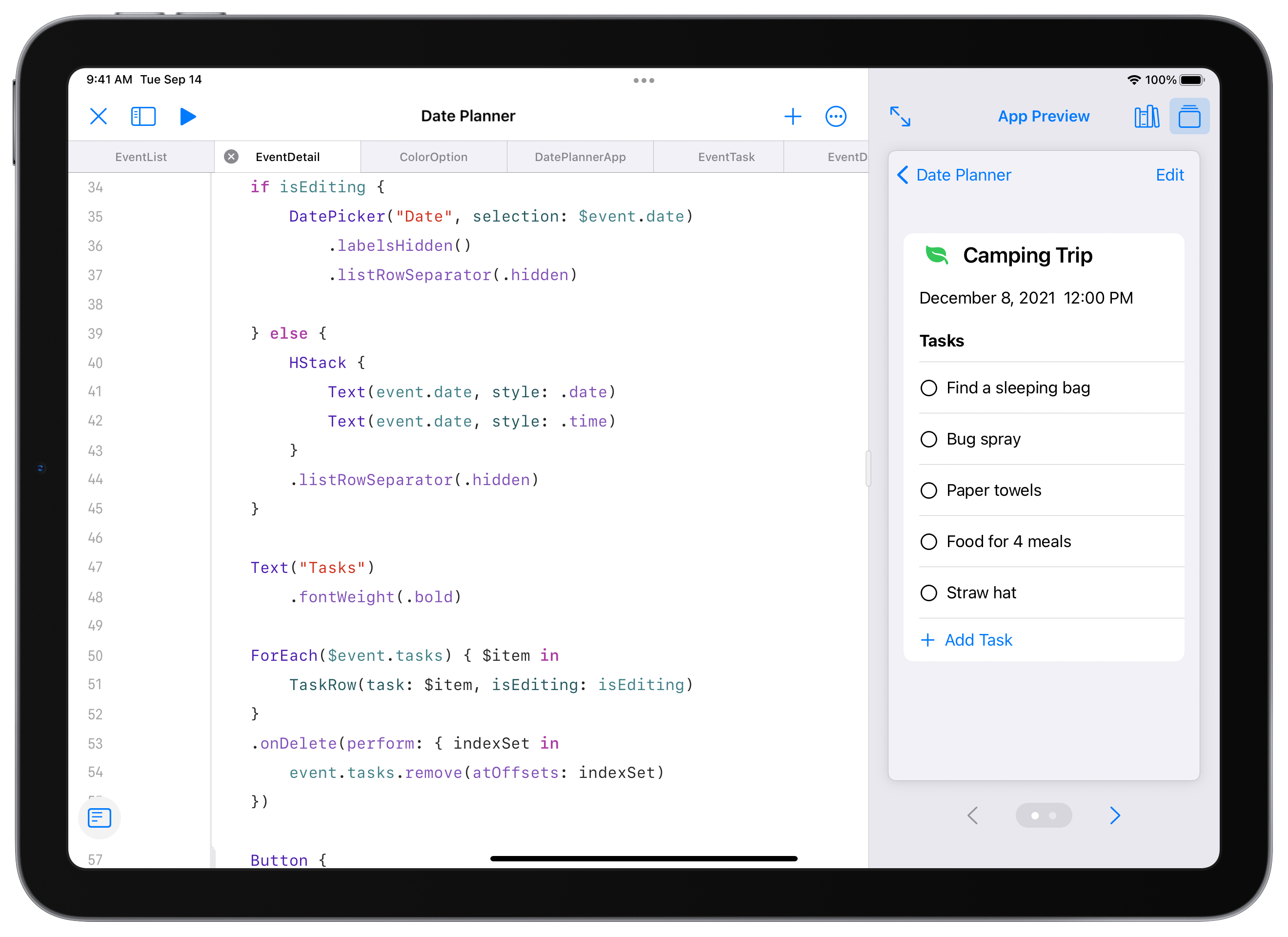
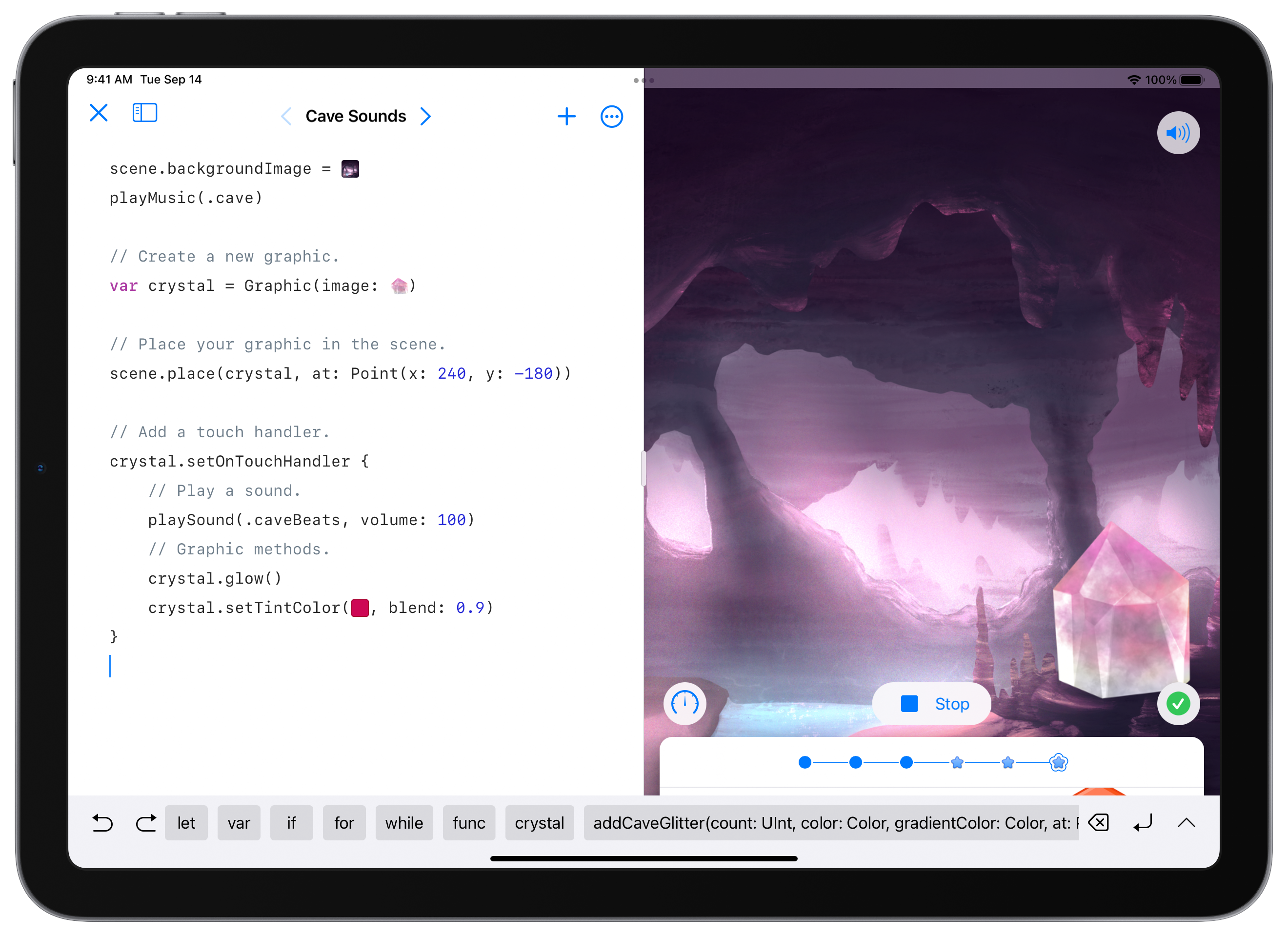
Swift Playgrounds is Apple's coding app for learning Swift through interactive puzzles and beginner projects. Kids guide characters through 3D worlds, test code, use hints when needed, and gradually move toward making richer projects with real Swift. It feels more like a polished coding game than a textbook.
Swift Playgrounds has focused developmental strength worth knowing about. It builds persistence. The main growth opportunity: swift Playgrounds is not especially strong for Agency early on. The first stretch is heavily puzzle-led.
Strengths & gaps
Strengths
- ● Swift Playgrounds is strong for Persistence. Students hit bugs, inspect what happened, and keep adjusting until the code works.
- ● The interface lowers the friction of learning real text-based code. That makes it easier for beginners to stay with a hard problem long enough to solve it.
Gaps
- ○ Swift Playgrounds is not especially strong for Agency early on. The first stretch is heavily puzzle-led.
- ○ Creativity expands later, but a lot of the product is still about solving Apple's challenge path rather than inventing your own direction from the start.
Detailed scores
How Swift Playgrounds performs on each of the 9 literacies in our framework.
Doing
— 1 of 3 Strong
Swift Playgrounds opens up over time. But at the start, kids mostly solve designed puzzles with designed outcomes. That gives them some room to choose how they code, not full ownership of what they are doing.
Persistence is where Swift Playgrounds shines. The product is built around writing code, running it, seeing what broke, and trying again. The hints support learners without removing the need to do the work.
Students do have to revise plans when code fails. More advanced learners can also go beyond suggested solutions. But many early challenges still point toward a fairly narrow answer shape.
Thinking
— 0 of 3 Strong
The app is inviting and visually polished, which helps kids want to poke around. Later projects widen the horizon further. But the curiosity loop mostly serves a curriculum path rather than open inquiry.
Swift Playgrounds includes richer project work and real-app ideas. Still, the dominant experience is scaffolded challenge solving. Creativity is present, but not the center of gravity.
Kids make real technical judgments: which code to try, when to lean on hints, and how to interpret failure. That matters. But the judgment stays mostly inside coding tasks.
Being
— 0 of 3 Strong
Teachers can pair students, and learners can share work. But those are surrounding practices, not built-in relational mechanics.
Swift Playgrounds asks learners to slow down and troubleshoot. That helps with frustration tolerance. It is structured enough to reduce chaos, but still demanding enough to require patience.
The app hints at a meaningful future by teaching real Swift. But it does not itself build a strong contribution or values frame into the day-to-day experience.
Based on 5 sources
- Review commonsensemedia.org — swift playgrounds
- Review commonsense.org — swift playgrounds
- Review commonsense.org —
- Product apple.com — playgrounds
- Product developer.apple.com — swift playground
Reviewed by New Literacies
Scored by our research-derived framework · AI-assisted analysis with editorial review · 5 sources reviewed · Our methodology →
Personalization bridge
Not sure what your kid needs most?
Take the quiz to see which literacies matter most for your family, then get practical things to try at home.
Get your family profileExplore more
See other products strong in the same literacies: