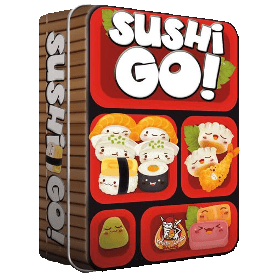
Sushi Go!
Ages 8-14 · paid · Product · gamewright.com ↗
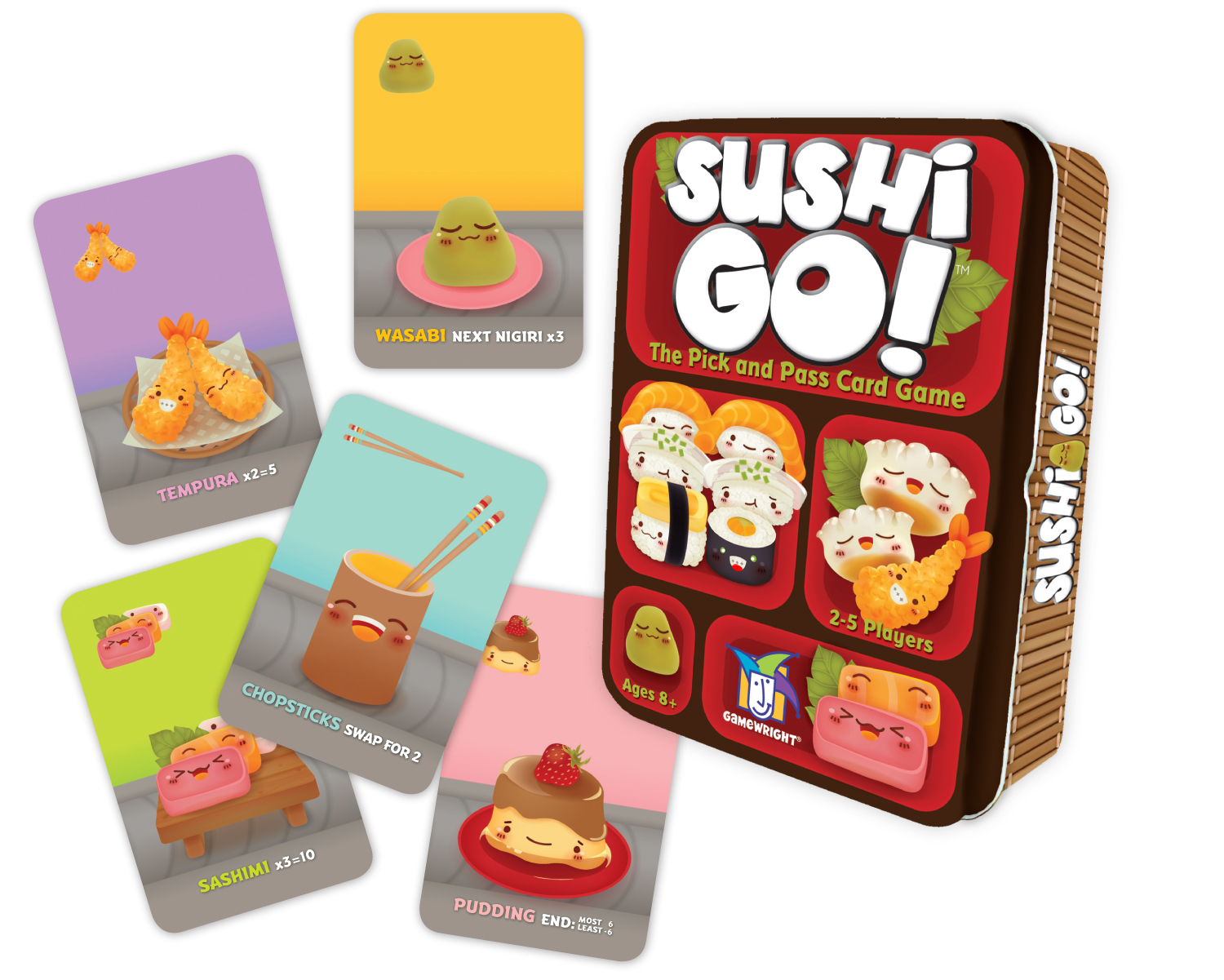
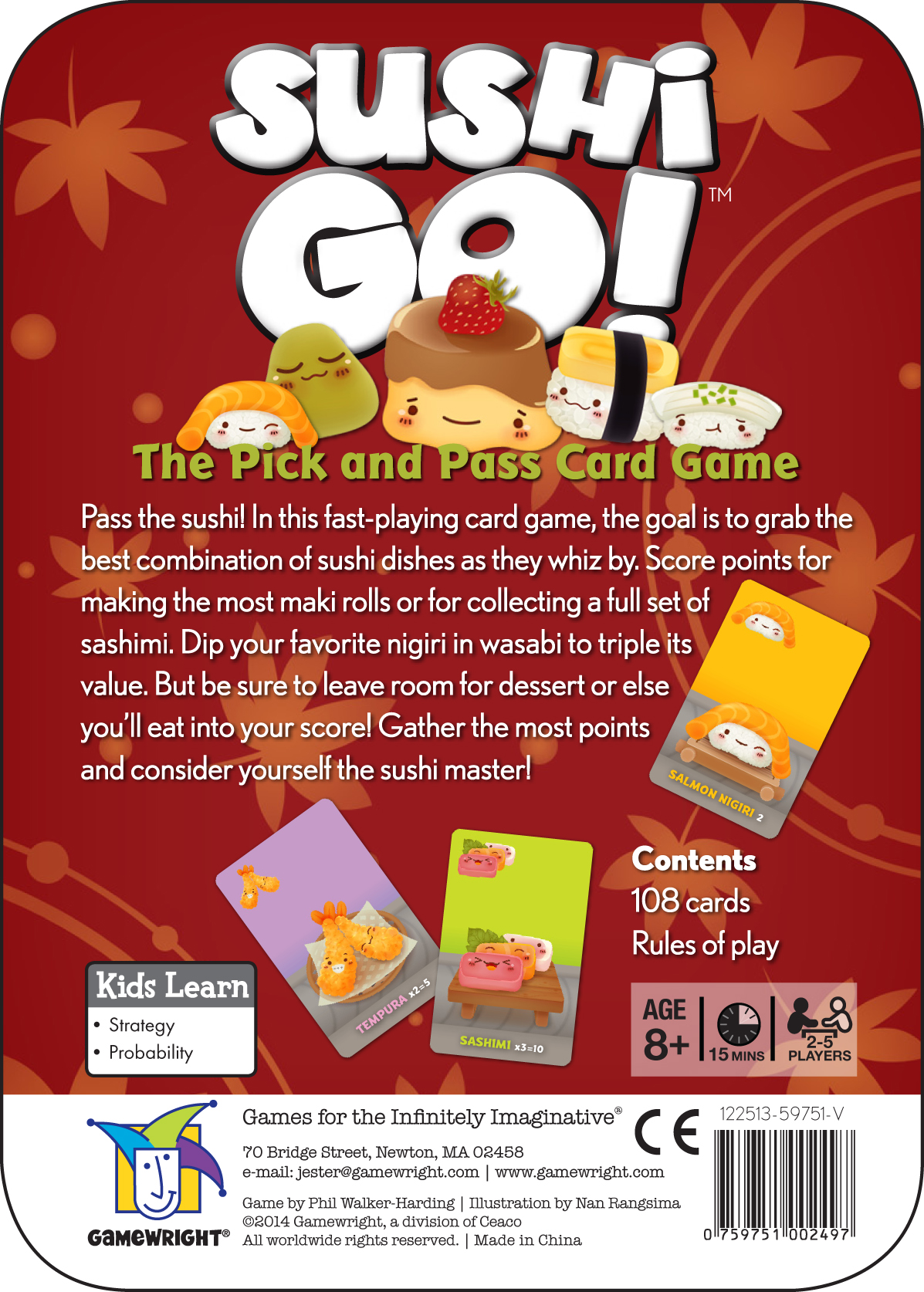
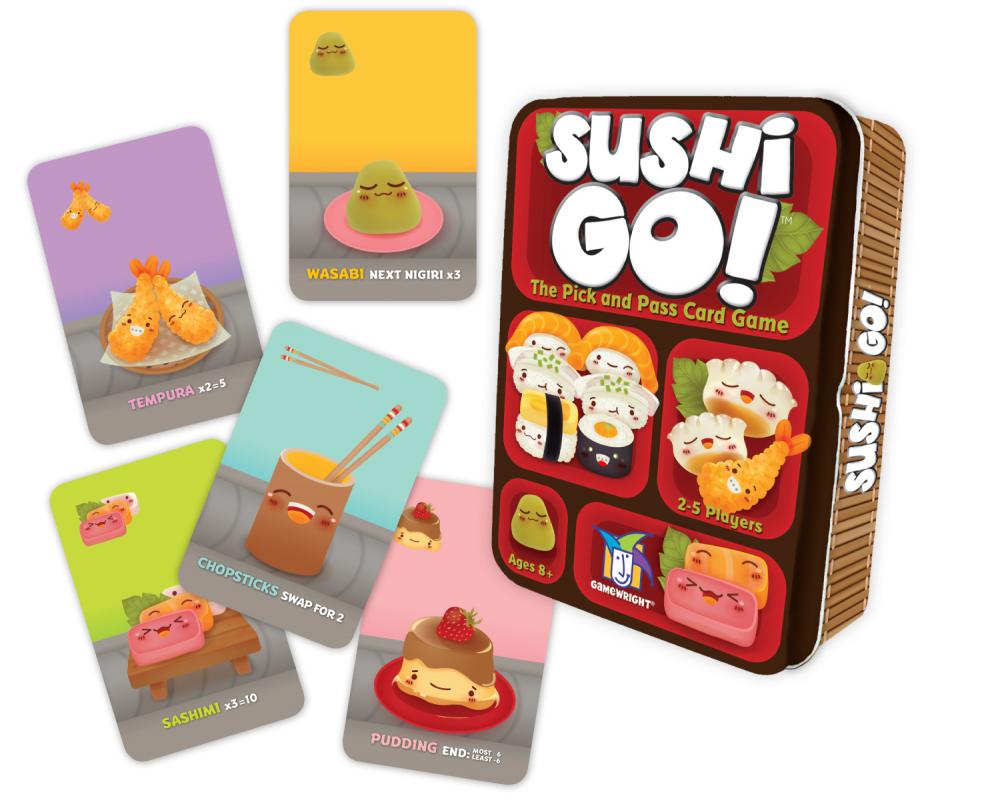
Sushi Go! is a fast card-drafting game where 2-5 players pick one sushi card from a hand, reveal it, then pass the remaining cards to the next player. Over three rounds, kids try to collect scoring combos — pairs of tempura, triples of sashimi, the most maki rolls — while watching what opponents are taking and deciding when to block. A full game takes about 15 minutes.
We've reviewed Sushi Go! against our 9-literacy developmental framework. The main growth opportunity: Sushi Go! is not trying to build creativity or curiosity.
Full review
What Parents Should Know
Sushi Go! is a clean family game about making small tradeoffs quickly. That is the point. The child is choosing among visible options, reading the table, and trying to build the best score from a limited hand.It is good at strategic reading and light probability thinking. It is not a creation game, and it is not a deep social game. The developmental ceiling is modest, which is fine for a 15-minute card game.
Strengths & gaps
Strengths
- ● Sushi Go! is strongest as a light judgment game. Kids repeatedly choose between immediate points and higher-value combos, so every turn has a clear tradeoff.
- ● The draft-and-pass structure creates real tactical adaptation. Children have to read what others might take and change plans fast.
- ● It works well at a family table. The game is short, readable, and easy to bring out without much setup.
Gaps
- ○ Sushi Go! is not trying to build creativity or curiosity. The child never creates anything or goes looking for hidden systems.
- ○ Agency is limited to card choice. The child cannot redefine the goal or shape the experience in a meaningful way.
- ○ Connection stays shallow. Players share the same table, but the game does not require cooperation or negotiation.
Detailed scores
How Sushi Go! performs on each of the 9 literacies in our framework.
Doing
— 0 of 3 Strong
Sushi Go! gives the child a choice each turn, but the goal is already fixed. Gamewright frames the game as grabbing the best combination of sushi dishes and scoring points through set collection. That is optimization inside a prescribed system, not self-directed goal setting.
The game lasts three short rounds, so kids have to stay engaged long enough to see their decisions pay off or fail. Pudding cards reward thinking across rounds, which adds a small delayed-gratification element. But the game is still light and quick, so it never becomes a real endurance test.
Draft-and-pass play forces the child to adjust when the table changes. A card that looked good a second ago may disappear, so the child has to pivot fast. That is real adaptation, just in a narrow and low-stakes form.
Thinking
— 0 of 3 Strong
Sushi Go! does not open up questions or hidden systems in a way that invites exploration. The rules and card set are fully visible. Curiosity sits outside the design.
The game does not ask the child to invent anything. It is about selecting and combining cards that already exist. That is a strategy problem, not a creative one.
Every turn asks the child to weigh options. A safe point now might be worse than a combo later, and blocking an opponent may matter more than maximizing your own immediate score. That is enough to build basic judgment, even though the decisions are simple.
Being
— 0 of 3 Strong
Sushi Go! is played face to face, and that matters. Kids watch one another, make guesses about what others want, and share a short experience together. But there is no negotiation or collaboration, so the social depth stays limited.
The game is too brief to create much frustration. A bad round is over quickly, and the next one starts soon after. That does not amount to meaningful regulation practice.
Sushi Go! is about points and combos, not values or contribution. It is entertaining, but it does not ask the child to connect effort to a bigger reason. Purpose is outside scope.
Based on 7 sources
- Product gamewright.com — Sushi Go
- Product gamewright.com — about
- Product boardgamegeek.com — sushi go
- Product gamesforyoungminds.com — sushi go
- Product fathergeek.com — sushi go
- Product engagedfamilygaming.com — board game review sushi go
- Product walmart.com — sushi go
Reviewed by New Literacies
Scored by our research-derived framework · AI-assisted analysis with editorial review · 7 sources reviewed · Our methodology →
Get the next guide before it goes live
One email when a new product review ships.
Free. No spam. Unsubscribe anytime.