
Strawbees
Ages 5-14 · paid · Product · strawbees.com ↗
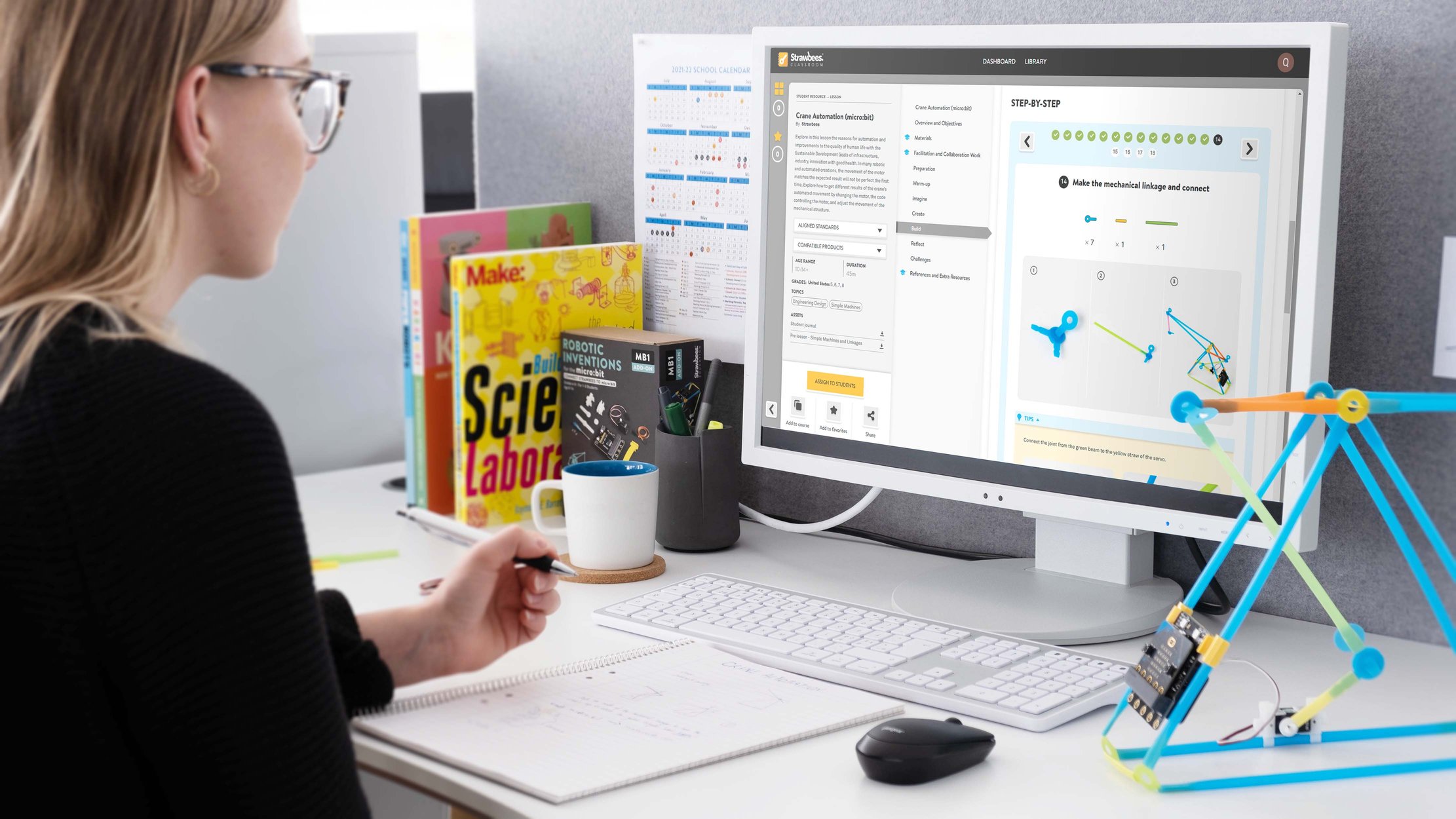
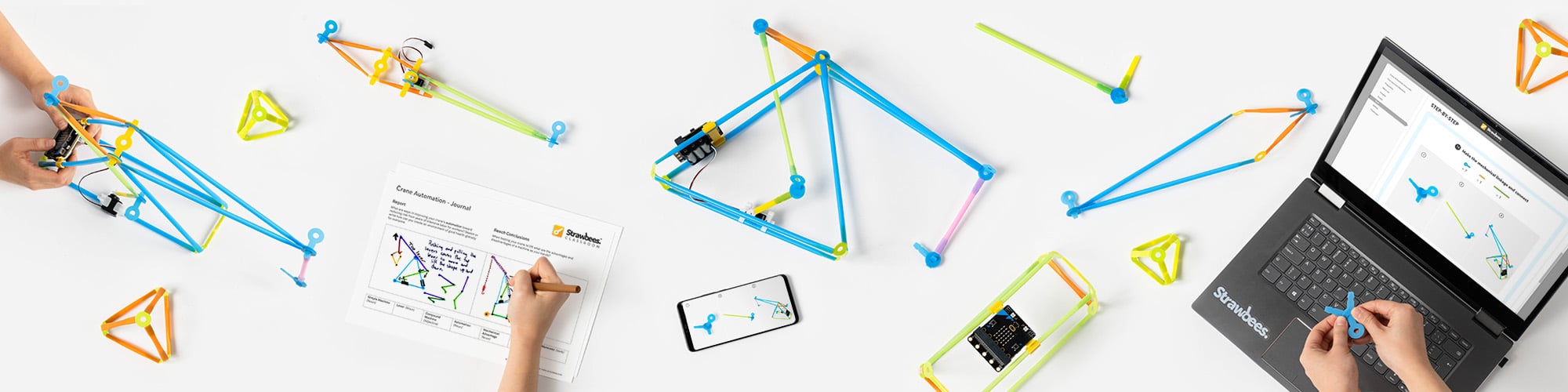
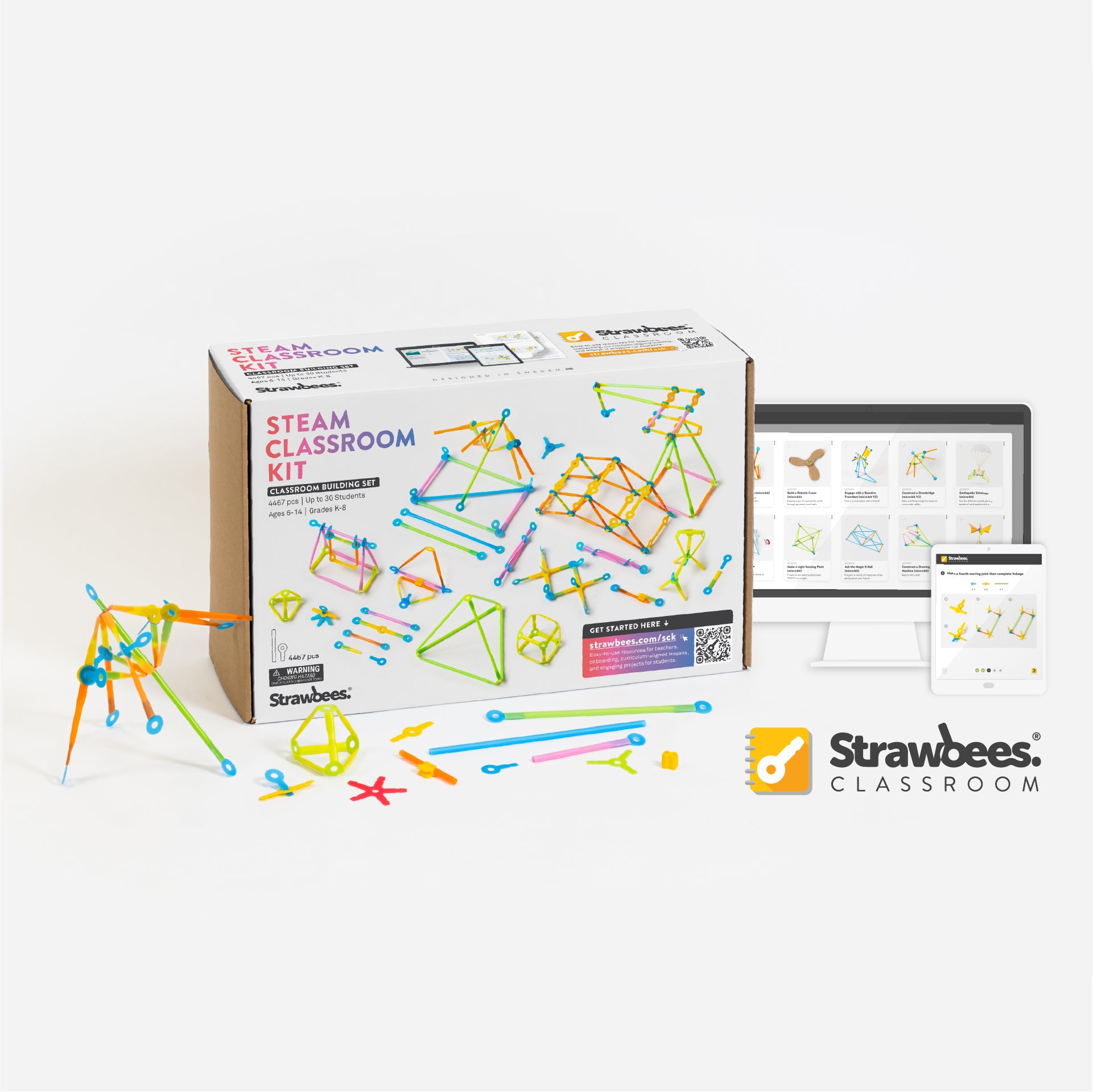
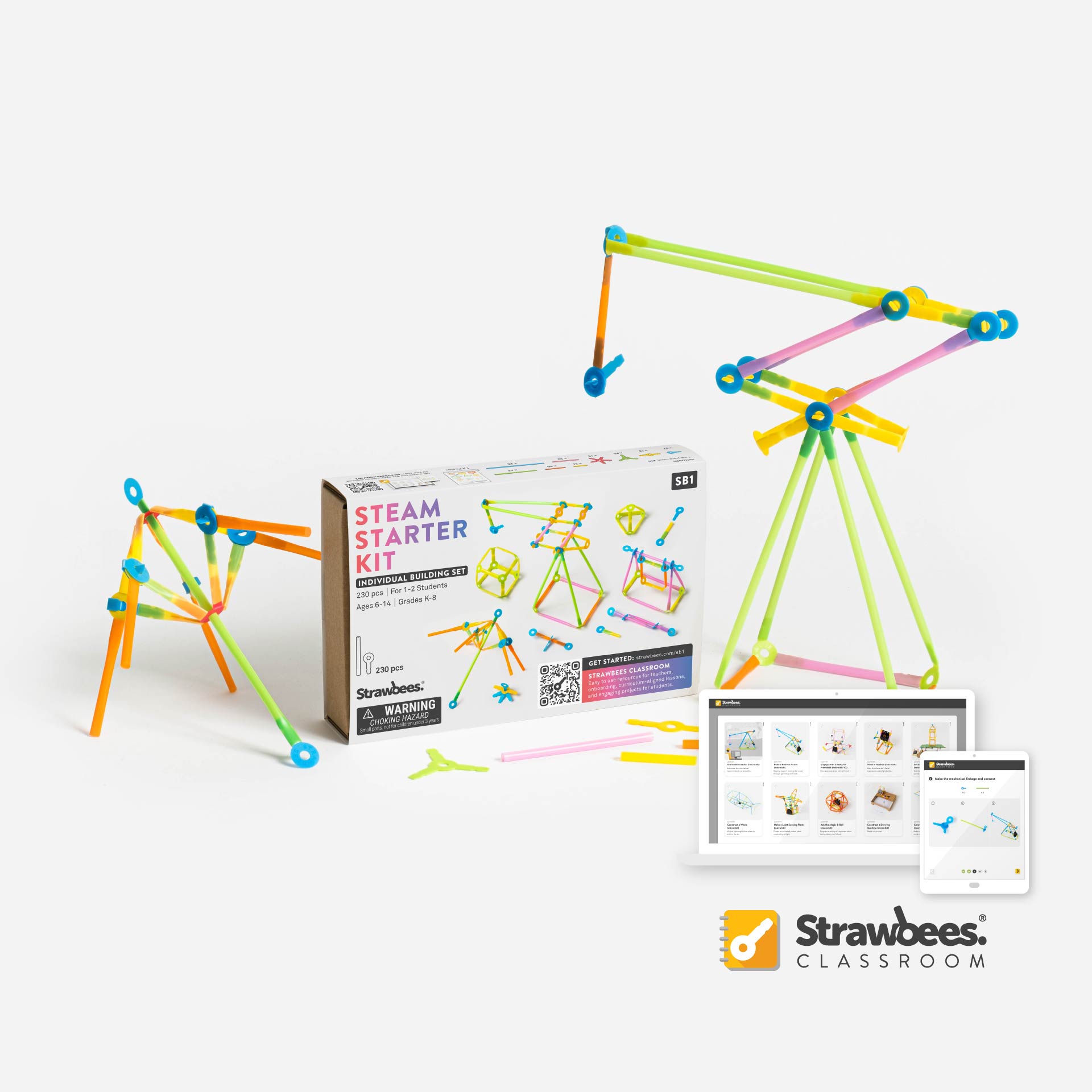
Strawbees is a modular building system made of straws, connectors, and classroom resources. Kids build structures, prototypes, and robotics projects, then test and revise them through Strawbees Classroom. The product is mostly hands-on, with digital support for lesson plans, coding cards, and classroom sharing.
Strawbees stands out for developmental impact across multiple literacies. It builds hands-on skills, cognitive skills. The main growth opportunity: it is still a kit, not a full SEL program. Self-regulation and purpose show up only if a teacher builds them in.
Strengths & gaps
Strengths
- ● Strawbees is strongest when a child starts with an idea and tries to make it stand up. The system gives real room for agency and creativity.
- ● The creative-learning spiral and open-ended project work push kids to test, revise, and keep going. That supports persistence and curiosity.
- ● Strawbees Classroom lowers the floor with guides, printable resources, and coding cards. It also makes classroom use easier.
Gaps
- ○ It is still a kit, not a full SEL program. Self-regulation and purpose show up only if a teacher builds them in.
- ○ Connection is real, but mostly context-dependent. The product supports collaboration, yet it does not create social interaction by itself.
- ○ The best evidence is company-authored or reseller-produced. Independent research specific to Strawbees is thin.
Detailed scores
How Strawbees performs on each of the 9 literacies in our framework.
Doing
— 2 of 3 Strong
Strawbees gives kids real control over what they build and how they adjust it. The official site says there are no rules, restrictions, or wrong turns, and the MIT-inspired learning framework asks children to make projects that reflect their own ideas. That is genuine ownership, not just following steps.
Strawbees is built around trying, failing, and trying again. The about page frames learning as building, exploring, testing, and experimenting, and the classroom framework says children should play with a project, reflect on it, and return with new ideas. The product expects iteration instead of treating failure as the end of the task.
Kids do have to change strategy when a structure collapses or a micro:bit build needs another pass. That is real adaptability practice. But the work mostly stays in one engineering lane, so the transfer is narrower than a broad adaptability tool would need.
Thinking
— 2 of 3 Strong
Strawbees keeps asking the child to explore what happens next. The classroom page emphasizes open-ended exploration, coding cards, and project-based learning, and the MIT-inspired white paper says children should imagine, make, share, and reflect in a spiral. That supports question-asking, not just answer-following.
This is a creative construction system by design. Strawbees says it builds creative confidence, rapid prototyping, and projects that reflect the child's ideas, and Wired described the kit as open-ended and architectural in scale. The child is making something new every time.
The child has to judge balance, fit, and whether a design will hold together. In micro:bit projects, they also decide whether code and hardware are working well enough to keep going. That builds practical judgment, but it stays close to the materials rather than extending into broader evidence or ethics.
Being
— 0 of 3 Strong
Strawbees Classroom is built for classroom sharing, student assignment, and collaborative work. BirdBrain and Strawbees both frame the product as something teachers use with groups of students. Still, the product does not itself create deep peer interaction or require a social identity.
The work creates healthy frustration because builds fail and need to be reworked. That gives kids a chance to stay with discomfort and keep going. But Strawbees does not explicitly teach coping, calming, or emotion labeling, so the regulation practice is indirect.
Strawbees connects projects to real-world making, coding, and classroom change, and the brand talks about helping kids create the change our world needs. That makes the work feel outward-facing, especially when teachers tie it to accessibility or engineering problems. Even so, the purpose is mostly teacher-shaped rather than fully child-directed.
Based on 12 sources
- Product wired.com — straw based construction kit doesnt suck
- Product strawbees.com
- Product strawbees.com — about
- Product strawbees.com — strawbees classroom.html
- Product strawbees.com — steam classroom kit
- Product strawbees.com — teacher support.html
- Product strawbees.com — steam starter kit.html
- Product strawbees.com — downloads.html
- Product birdbraintechnologies.com — strawbees highly commended for best primary product at 2025 global edtech awards
- Product studentcenteredworld.com — strawbees
- Product teq.com — strawbees
- Product trustpilot.com — strawbees.com
Reviewed by New Literacies
Scored by our research-derived framework · AI-assisted analysis with editorial review · 12 sources reviewed · Our methodology →
Get the next guide before it goes live
One email when a new product review ships.
Free. No spam. Unsubscribe anytime.
See other products strong in the same literacies: