
Stardew Valley
Ages 8-14 · paid · Product · stardewvalley.net ↗
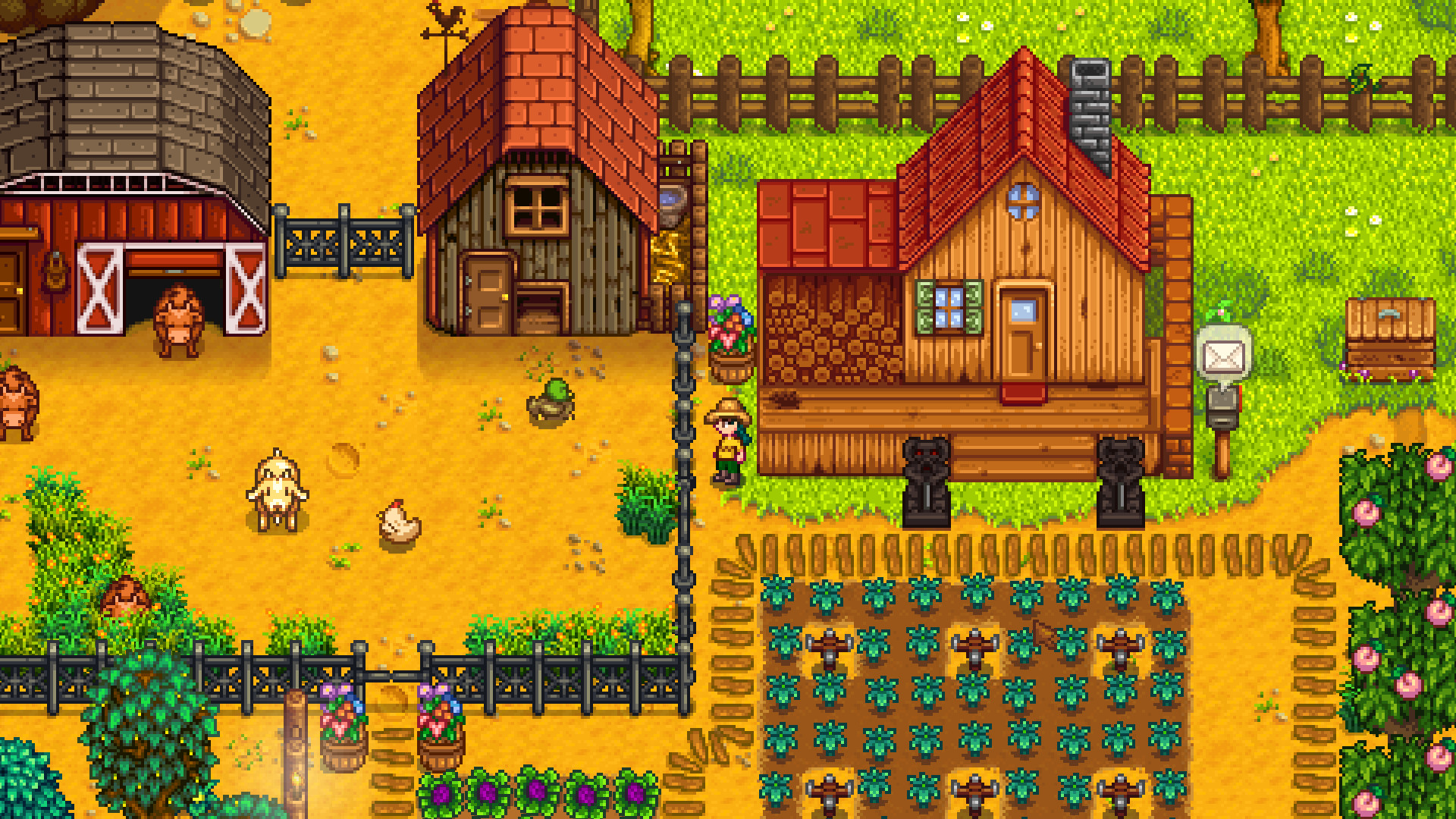
Stardew Valley is an open-ended farm and life sim where the child inherits a run-down farm and decides how to rebuild it. A typical session might include planting crops, fishing, mining, crafting, talking with villagers, or rearranging the farm. The game also supports co-op, which turns the farm into a shared long-term project.
Stardew Valley is one of the strongest developmental products we've reviewed. It builds action and persistence, cognitive skills, connection. The main growth opportunity: creativity is real but bounded. The child shapes a farm, not a blank canvas.
Strengths & gaps
Strengths
- ● Stardew Valley is unusually strong for Agency. The child decides what this life is going to be.
- ● Persistence is built into the structure. Crops, upgrades, relationships, and exploration all pay off slowly.
- ● Judgment and Connection both matter. The child has to manage tradeoffs while also becoming part of a community.
Gaps
- ○ Creativity is real but bounded. The child shapes a farm, not a blank canvas.
- ○ Self-regulation is practiced more than taught. The game rewards patience, but it does not scaffold emotional coping.
- ○ Mature social themes mean this lands better for older kids than the database age floor suggests.
Detailed scores
How Stardew Valley performs on each of the 9 literacies in our framework.
Doing
— 3 of 3 Strong
Stardew Valley gives the child real ownership of direction. There is no single required task and no narrow mission rail. The child decides whether today is about crops, caves, fishing, friendships, or money.
Progress in Stardew Valley is slow on purpose. Better tools, stronger farms, deeper relationships, and richer harvests all come from showing up over time. The game keeps paying off steady effort.
The game constantly changes what makes sense. Seasons shift, money runs out, tools need upgrades, and different goals compete for the same day. The child has to adjust rather than repeat one routine forever.
Thinking
— 2 of 3 Strong
Stardew Valley keeps opening new layers. Villagers have stories, mines hide danger and rewards, and the town changes with time and seasons. The game rewards poking around to see what happens next.
The farm can absolutely feel personal. Layout, decoration, and the overall shape of a life are expressive choices. But the child is still creating inside a fairly fixed simulation system.
Stardew Valley is full of tradeoffs. Time, energy, money, gifts, weather, and long-term goals all compete. Good play comes from deciding what matters most today and what can wait.
Being
— 1 of 3 Strong
This is not just a farming spreadsheet. The town matters. Villager relationships, help requests, festivals, and co-op play all push the child toward social investment.
The game rewards patience and pacing. You cannot rush every outcome, and frustration is part of the loop when plans go wrong. But the game does not directly teach regulation tools.
Restoring a neglected farm and helping a struggling town can feel meaningful. The child can feel that their effort adds up to a life they built. But purpose stays inside the fiction rather than being explicitly framed.
Based on 5 sources
- Review commonsensemedia.org — stardew valley
- Review commonsensemedia.org — adult
- Review commonsensemedia.org — child
- Product stardewvalley.net
- Product store.steampowered.com — Stardew_Valley
Reviewed by New Literacies
Scored by our research-derived framework · AI-assisted analysis with editorial review · 5 sources reviewed · Our methodology →
Get the next guide before it goes live
One email when a new product review ships.
Free. No spam. Unsubscribe anytime.
See other products strong in the same literacies: