
Spot It! (Dobble)
Ages 4-10 · paid · Product · asmodee.us ↗
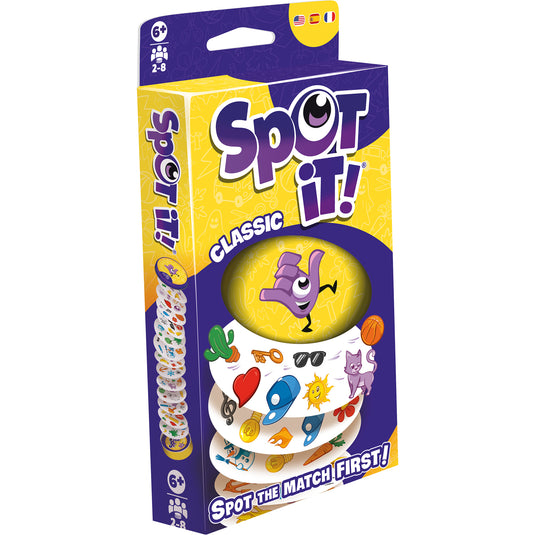
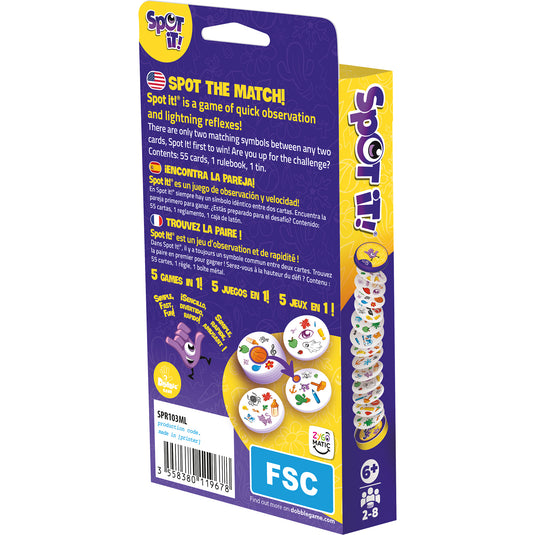

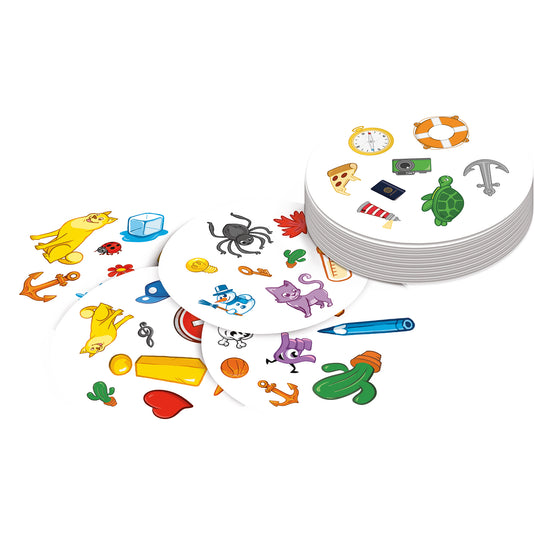
Spot It! Classic is a fast matching card game where players race to find the one symbol shared by two cards. The eco blister edition includes 55 cards and five short variants, so the same deck can play a few different ways. It is a physical family game, not an app or a curriculum.
We've reviewed Spot It! (Dobble) against our 9-literacy developmental framework. The main growth opportunity: it doesn't build much agency or creativity. The child is reacting, not making.
Strengths & gaps
Strengths
- ● Spot It! Classic is a clean family filler. The deck is simple to teach, fast to reset, and easy to bring to the table.
- ● It works across ages. Reviewers keep noting that kids can beat adults, which keeps the game lively.
- ● The five variants stretch a small deck without changing what makes it work.
Gaps
- ○ It doesn't build much agency or creativity. The child is reacting, not making.
- ○ The speed race can be frustrating for slower processors or kids who don't like being crowded.
- ○ Purpose is absent. The game stays inside the table.
Detailed scores
How Spot It! (Dobble) performs on each of the 9 literacies in our framework.
Doing
— 0 of 3 Strong
Spot It! Classic gives the child almost no real decision space. The task is fixed: find the match and call it out fast. The variants change the rhythm, but they do not give the child a meaningful goal of their own.
The game does reward repetition. Kids often get better as they learn to scan faster and keep up under pressure. But each round is short, so it builds practice more than endurance.
The child is doing the same thing over and over: compare, find, call, repeat. The layout changes, but the strategy does not. That is practice, not adaptability in the rubric sense.
Thinking
— 0 of 3 Strong
Spot It! Classic doesn't create a broader question or invite a rabbit hole. The child is trying to identify the shared symbol, not investigate anything beyond the card pair. The game closes the loop as soon as the match is found.
There is no blank canvas here. The child isn't generating ideas, building artifacts, or revising work over time. Even the optional variants are rule changes, not creative output.
The player does make a quick judgment about which symbol is the match, but the decision space is tiny. The reviews emphasize fast recognition, not weighing options or reading tradeoffs. That keeps the capacity below Moderate.
Being
— 0 of 3 Strong
Spot It! Classic works well at a family table because everyone plays at once and reacts to the same cards. Reviewers describe kids beating adults and the whole table getting loud around close calls. That creates connection, but mostly through competition rather than collaboration.
The speed race creates real pressure. Kids have to slow themselves enough to see the match, then manage the frustration of losing a round or missing one by a fraction. The game doesn't teach coping tools, but it does create low-stakes regulation practice.
Spot It! Classic is about spotting symbols as fast as possible. It does not connect play to identity, values, or contribution beyond the game. Purpose is outside the design.
Based on 6 sources
Reviewed by New Literacies
Scored by our research-derived framework · AI-assisted analysis with editorial review · 6 sources reviewed · Our methodology →
Get the next guide before it goes live
One email when a new product review ships.
Free. No spam. Unsubscribe anytime.