
Social Thinking
Ages 4-18 · paid · Curriculum · socialthinking.com ↗
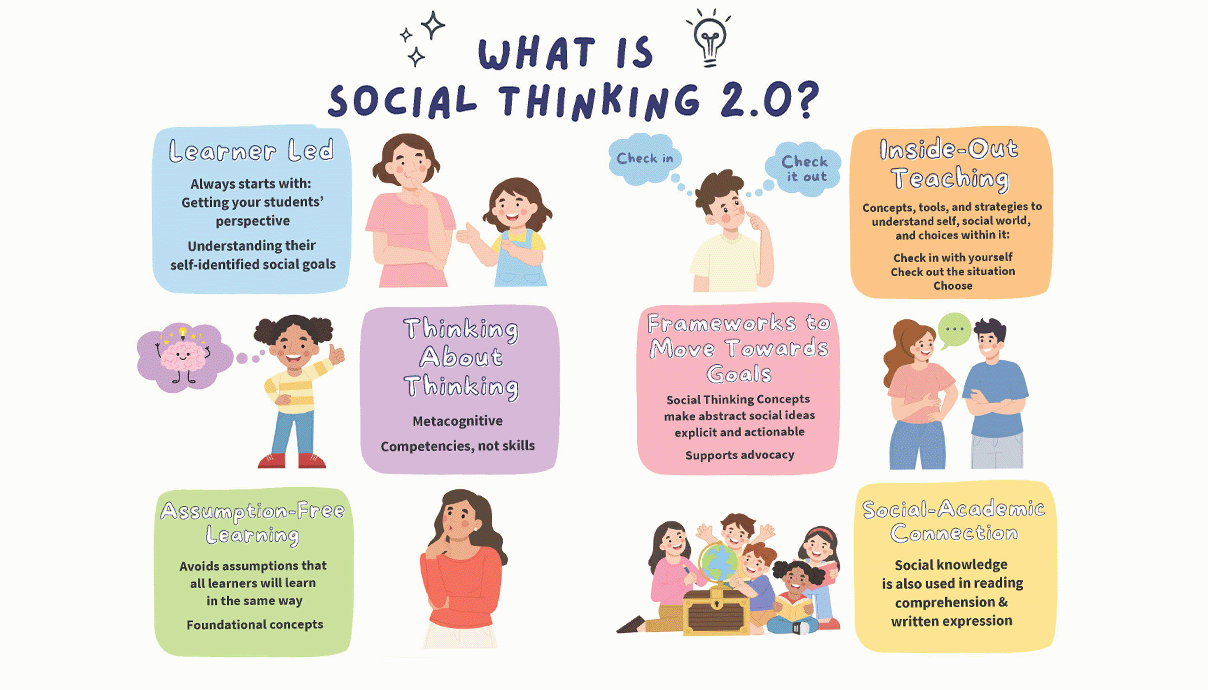

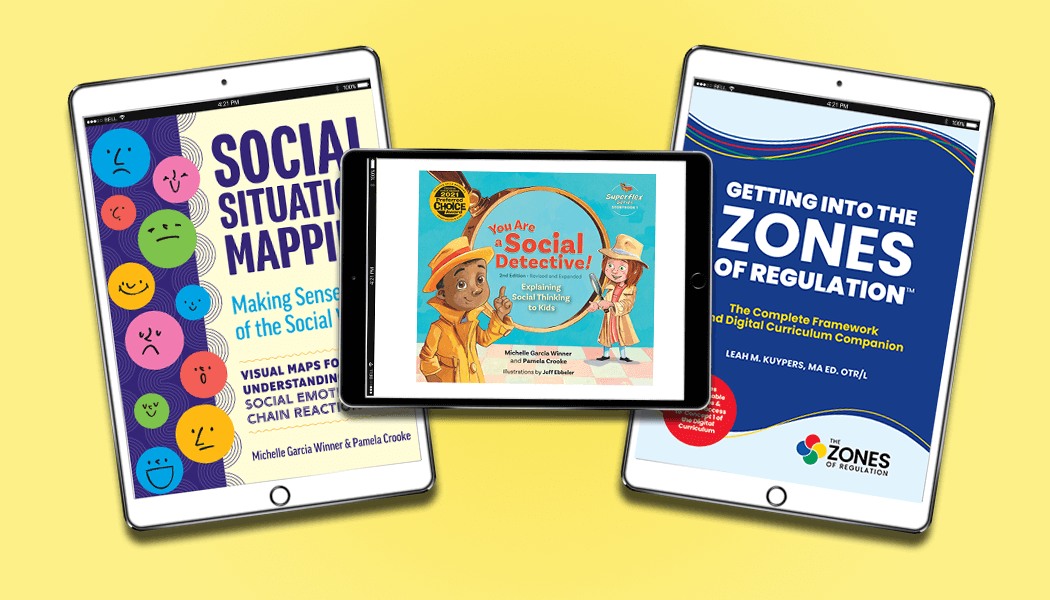
Social Thinking is a long-running social-cognitive teaching approach developed by Michelle Garcia Winner and Pamela Crooke. Kids aren't just told what behavior to use. They learn how to read context, notice other people's perspectives, and adjust their responses across classrooms, friendships, and everyday group situations.
Social Thinking stands out for developmental impact across multiple literacies. It builds adaptability, judgment, interpersonal skills. The main growth opportunity: The evidence base is mixed.
Strengths & gaps
Strengths
- ● Social Thinking is strongest where social life gets messy. It teaches children to read a room, consider other perspectives, and change course when a first response isn't working.
- ● Connection is a real design target, not a side effect. The whole method is built around joining groups, maintaining relationships, and understanding what other people may be thinking or feeling.
- ● Self-regulation is taught in context. Instead of abstract advice, Social Thinking uses common vocabulary and live coaching around behavior, attention, and social problem solving.
Gaps
- ○ The evidence base is mixed. There is a clear conceptual framework, but the branded methodology has less strong outcome research than larger SEL programs like RULER, PATHS, or MindUP.
- ○ Creativity and purpose sit outside the main scope. Social Thinking is about social interpretation and response, not making, identity, or contribution.
Detailed scores
How Social Thinking performs on each of the 9 literacies in our framework.
Doing
— 1 of 3 Strong
Social Thinking gives children some voice because the method starts from the learner's goals and real social challenges. But adults usually choose the materials, frame the lessons, and guide the practice. Agency is present inside the work, not in the overall structure.
Social Thinking can demand persistence because social repair is uncomfortable and slow. Kids have to try again after missed cues, awkward moments, or failed interactions. But the methodology is not built around challenge endurance in the way a robotics kit or hard puzzle game is.
Adaptability is one of Social Thinking's clearest strengths. Children are taught that behavior depends on context, perspective, and the hidden thoughts of other people. That makes flexible thinking part of the core experience rather than an optional extra.
Thinking
— 1 of 3 Strong
Social Thinking asks children to notice more than they first see. That can widen attention to other minds and motives. But it doesn't mainly build curiosity in the broader sense of self-directed questioning or exploration.
Social Thinking isn't a creativity product. Kids may improvise different social responses, but the curriculum does not center ideation, making, or revision of original work.
Judgment is a strong fit here. Kids practice interpreting cues, weighing what is expected, and predicting how their behavior will land with others. That's real social judgment, not just rule following.
Being
— 2 of 3 Strong
Connection is the point of the product. Social Thinking exists to help children participate in groups, build friendships, and understand how relationships work. Few products in the database aim so directly at this capacity.
Social Thinking treats regulation as part of social competence. Shared vocabulary and in-the-moment coaching help children notice behavior, feelings, and impact before trying a different move. That is more developmentally useful than simple behavior correction.
Social Thinking helps children function better with other people. It does not do much to connect that work to identity, values, or contribution beyond everyday social success.
Based on 8 sources
- Product socialthinking.com
- Product socialthinking.com — about
- Product socialthinking.com — social thinking methodology
- Product socialthinking.com — theory of mind
- Product socialthinking.com — using social thinking in the classroom
- Product socialthinking.com — developmental treatment approach students learning issues
- Product pmc.ncbi.nlm.nih.gov — PMC
- Product centrevillelayton.org — social thinking
Reviewed by New Literacies
Scored by our research-derived framework · AI-assisted analysis with editorial review · 8 sources reviewed · Our methodology →
Get the next guide before it goes live
One email when a new product review ships.
Free. No spam. Unsubscribe anytime.
See other products strong in the same literacies: