
Snap Circuits
Ages 6-12 · paid · Product · elenco.com ↗
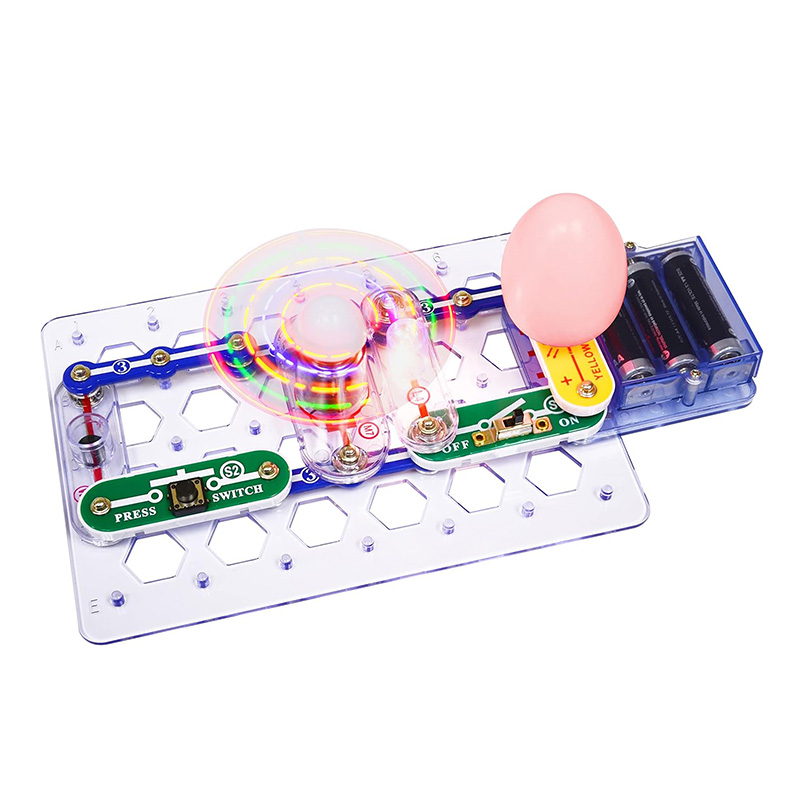

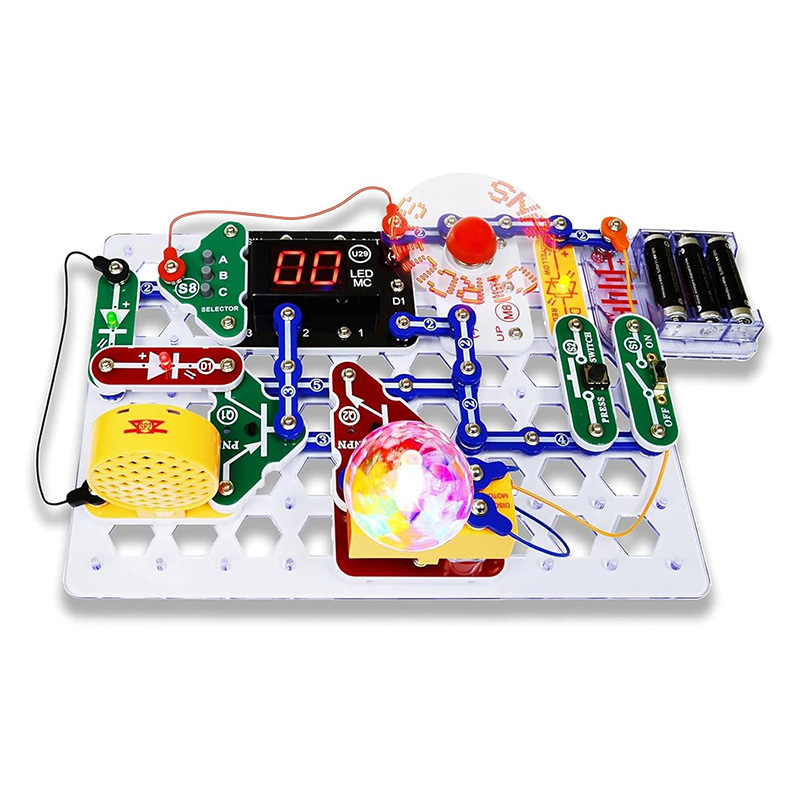
Snap Circuits is a physical electronics kit where kids snap together labeled components — resistors, switches, motors, LEDs, speakers — on a plastic grid to build working circuits. An illustrated manual walks through projects like FM radios, burglar alarms, fans, and arcade games, and the circuit either works or it doesn't, so kids debug by checking their wiring. Kits range from beginner sets (ages 5+) to advanced boxes with hundreds of parts, and there's no app or screen required.
Snap Circuits stands out for developmental impact across multiple literacies. It builds hands-on skills, curiosity. The main growth opportunity: snap Circuits stays pretty instruction-first. Off-manual invention is possible, but it is not the main experience.
Strengths & gaps
Strengths
- ● Snap Circuits is strong for Agency and Persistence. Kids put the pieces together, see the result, and then have to fix it when the circuit fails.
- ● Curiosity comes from the parts themselves. Resistors, switches, motors, and lights all raise the same question: what happens if I change this?
- ● The manuals help kids understand the science instead of just copying steps. That gives the kit real educational weight.
Gaps
- ○ Snap Circuits stays pretty instruction-first. Off-manual invention is possible, but it is not the main experience.
- ○ Purpose is weak. The kit teaches electronics, but it does not connect that learning to identity, service, or community.
- ○ Connection is not built in. A parent can join, but the product does not require collaboration.
Detailed scores
How Snap Circuits performs on each of the 9 literacies in our framework.
Doing
— 2 of 3 Strong
Snap Circuits gives the child a real build to own. The child chooses the project, places the parts, and sees the result in a working circuit. Tech Age Kids shows a child doing this independently after the first few builds, which is exactly the kind of ownership this rubric rewards.
Snap Circuits is honest about failure. If the light does not turn on or the sound does not work, the child has to trace the problem and try again. That visible debugging loop makes persistence part of the experience, not an add-on.
Snap Circuits does ask kids to switch tactics when a circuit fails. They can swap parts, check the diagram, or rebuild the layout. But the basic challenge stays the same, so the product does not push broad strategy transfer.
Thinking
— 1 of 3 Strong
Snap Circuits keeps creating new questions. The parts manual explains what the components do, and the child can test how a change in one part changes the whole circuit. That is strong curiosity work because the product rewards investigation instead of closing it off.
Snap Circuits can be creative, especially when a child moves beyond the manual and builds something like a spin-art machine. But most of the experience is still guided by illustrated projects. That makes creativity real, but secondary.
The child has to think about cause and effect. A circuit can be right or wrong, and the manuals explain why. But Snap Circuits does not ask kids to compare viewpoints, weigh sources, or make broader tradeoffs.
Being
— 0 of 3 Strong
Snap Circuits is mainly a solo kit. A parent or sibling can build alongside the child, but that is outside the product itself. The kit does not create a social requirement.
When a circuit fails, the child has to stay with the problem long enough to fix it. That is real practice in managing frustration and delayed gratification. Still, the kit does not teach coping strategies directly.
Snap Circuits teaches a useful skill, but it stops there. It does not connect electronics to values, identity, or contribution. The child learns how circuits work, not why that work matters beyond the project.
Based on 9 sources
- Research engineering.purdue.edu — gifts for ages 8
- Product thesnapcircuit.com
- Product thesnapcircuit.com — contact
- Product elenco.com — Elenco SNAP CIRCUITS 2024 Catalog.pdf
- Product elenco.com — Catalog39WEB.pdf
- Product techagekids.com — snap circuits review.html
- Product smarterlearningguide.com — snap circuits review
- Product tinkerlab.com — snap circuits review and a diy spin art machine
- Product walmart.com —
Reviewed by New Literacies
Scored by our research-derived framework · AI-assisted analysis with editorial review · 9 sources reviewed · Our methodology →
Get the next guide before it goes live
One email when a new product review ships.
Free. No spam. Unsubscribe anytime.
See other products strong in the same literacies: