
SET
Ages 6-14 · paid · Product · setgame.com ↗
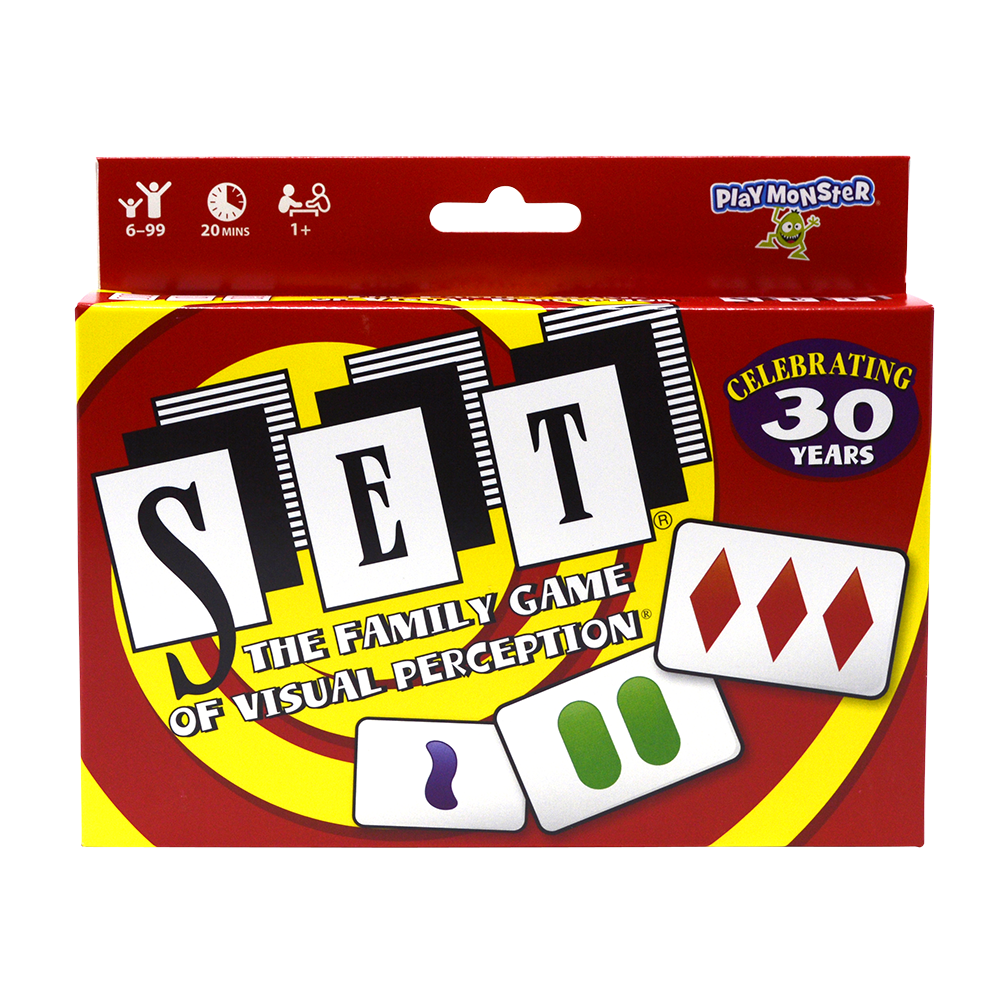
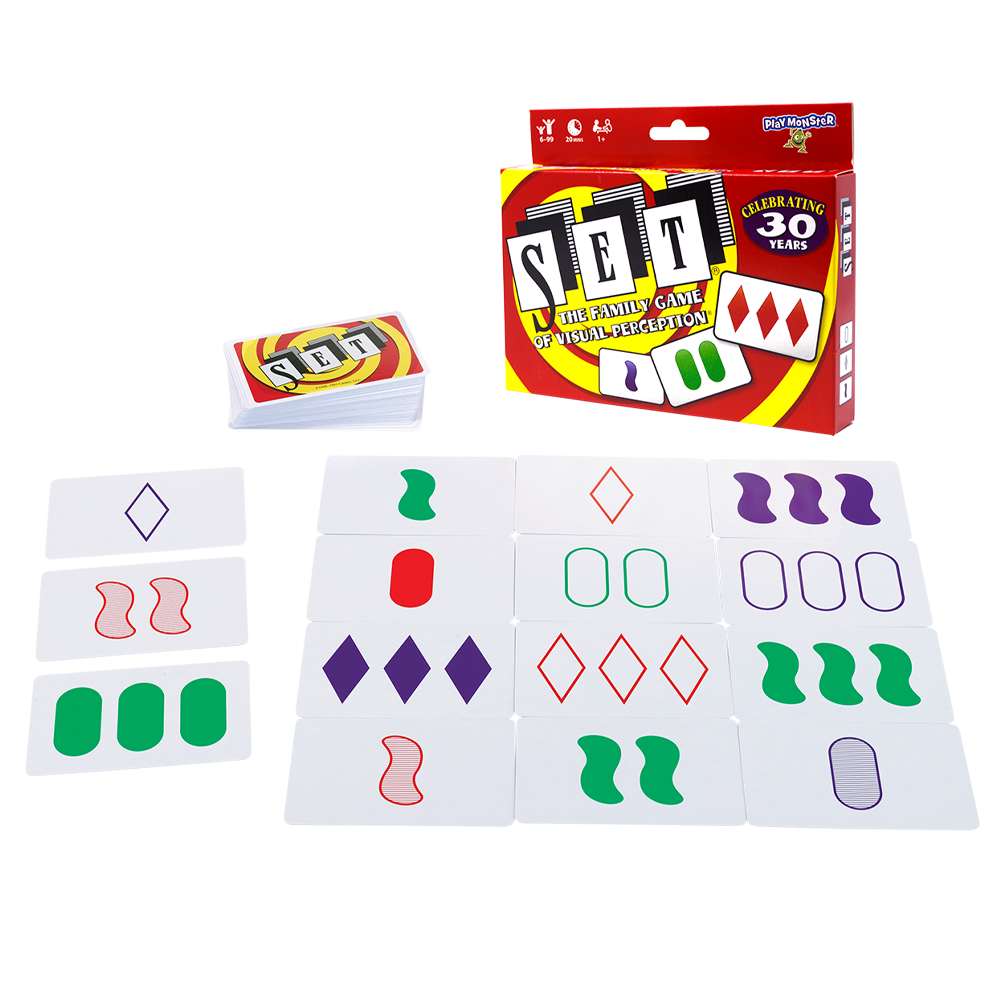

SET is a fast card game where kids scan 12 face-up cards and race to find three-card sets. Each set has to match or differ across four features: color, shape, number, and shading. The official product page says there are no turns and no luck, so everyone is searching at once. The base deck has 81 cards, and the game can be played solo or with a group. It works as a quick table game, a classroom challenge, or a brain-teaser a child can return to again and again.
SET has focused developmental strength worth knowing about. It builds judgment. The main growth opportunity: creativity is narrow. SET asks the child to solve a pattern, not make something new.
Strengths & gaps
Strengths
- ● SET is best for Judgment. The child has to compare four features at once and make a valid call under pressure.
- ● It also builds Adaptability. The board changes after every claim, so the child has to reset fast.
- ● The game is clean and low-friction. There are no turns, no luck, and no long setup.
Gaps
- ○ Creativity is narrow. SET asks the child to solve a pattern, not make something new.
- ○ Purpose is absent. The game stays on the table and never connects play to values or contribution.
- ○ Connection depends on the setting. The game can be social, but it is still mostly competitive.
Detailed scores
How SET performs on each of the 9 literacies in our framework.
Doing
— 0 of 3 Strong
SET gives the child real choice in the moment. They decide where to search, which cards look promising, and when to call `SET!`. But the goal is prescribed, so this is bounded agency rather than self-directed play.
SET keeps the child scanning and rescanning the table. The official guides say repetition reinforces the skills the game exercises, which gives it real practice value. Still, the rounds are short, so it never becomes a deep struggle game.
SET forces constant resets. If another player claims a set first, the child has to drop that plan and find a new one. The official teacher guide explicitly frames the game as a way to practice cognitive flexibility and adaptability.
Thinking
— 1 of 3 Strong
Each layout creates a simple question: where is the set hiding? That makes the child investigate the board instead of passively waiting for a turn. But SET does not open up a larger exploratory loop, so Moderate fits better than Strong.
The child can invent a search strategy, but they are still solving a closed puzzle. SET does not ask for original ideas, artifact-making, or revision over time. That keeps creativity Limited.
SET's core move is judgment. The child has to inspect four features at once, compare cards, and decide whether the rule is truly satisfied. The official guides call this analytical skill, critical thinking, and peer review, which makes this the clearest Strong capacity in the package.
Being
— 0 of 3 Strong
SET can absolutely be a shared table game. PlayMonster's teaching guides describe collaborative learning, cooperative learning, social learning, and teamwork as valid ways to use it. But the default format is still competition, so it doesn't reach the relational depth needed for Strong.
SET creates real pressure because everyone is searching at once. The child has to manage frustration when another player spots a set first and keep attention on the table while the layout keeps changing. The game creates regulation practice, but it does not teach coping skills directly.
SET is a puzzle about pattern finding. It does not connect effort to identity, values, or contribution beyond the game. Purpose is outside the product's scope.
Based on 9 sources
- Product playmonster.com — set
- Product setgame.com — 2017 11 07%20 %20SET%20Skill%20Connections%20for%20Teachers.pdf
- Product exploratoriumstore.com — set
- Product boardgamegeek.com — set
- Product geekyhobbies.com — set card game review
- Product theboardgamefamily.com — set card game review
- Product learnrichly.com — set card game rich classic review
- Product rainbowresource.com —
- Product playmonster.com — set
Reviewed by New Literacies
Scored by our research-derived framework · AI-assisted analysis with editorial review · 9 sources reviewed · Our methodology →
Get the next guide before it goes live
One email when a new product review ships.
Free. No spam. Unsubscribe anytime.
See other products strong in the same literacies: