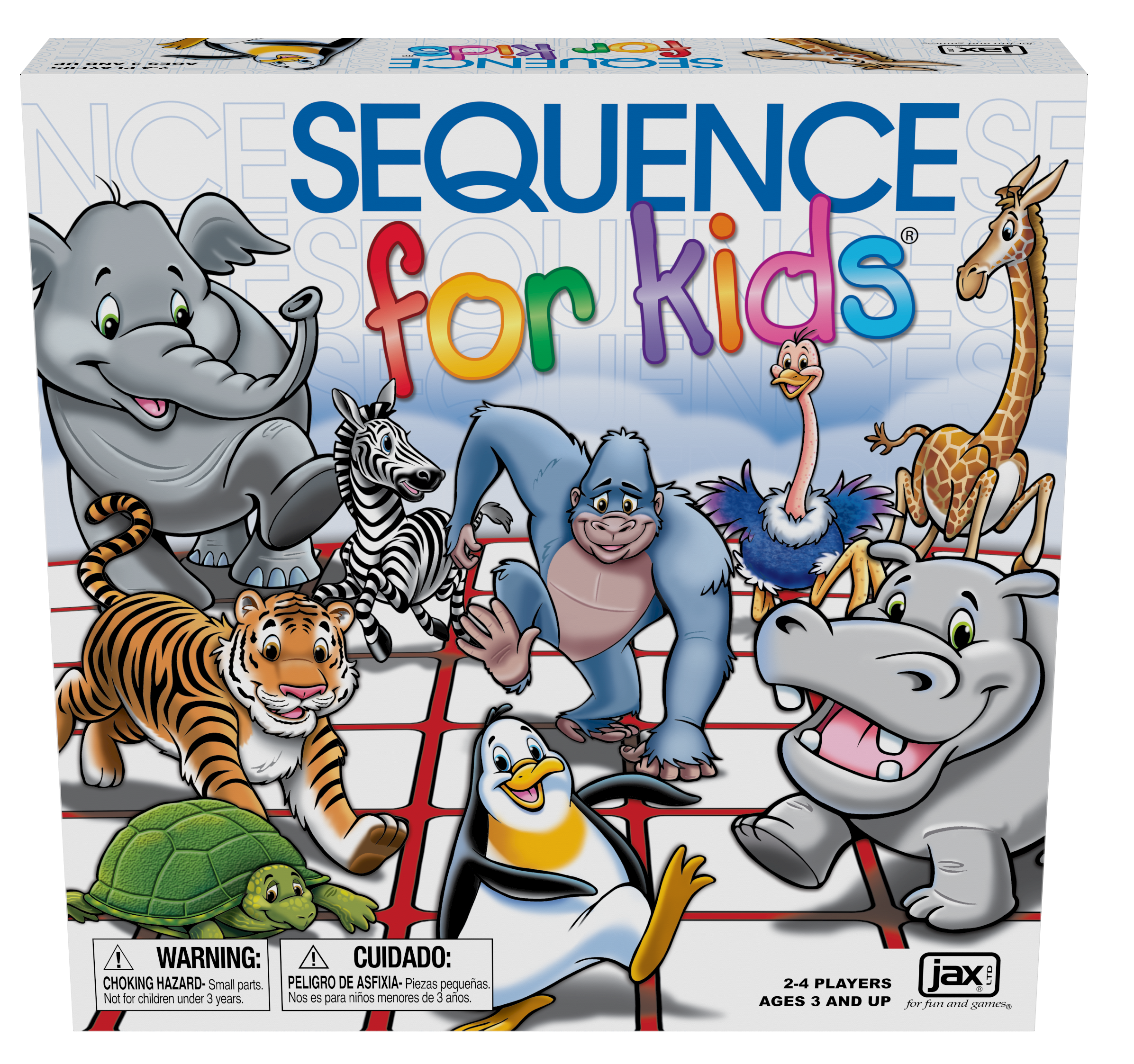
Sequence for Kids
Ages 3-6 · paid · Product · goliathgames.us ↗
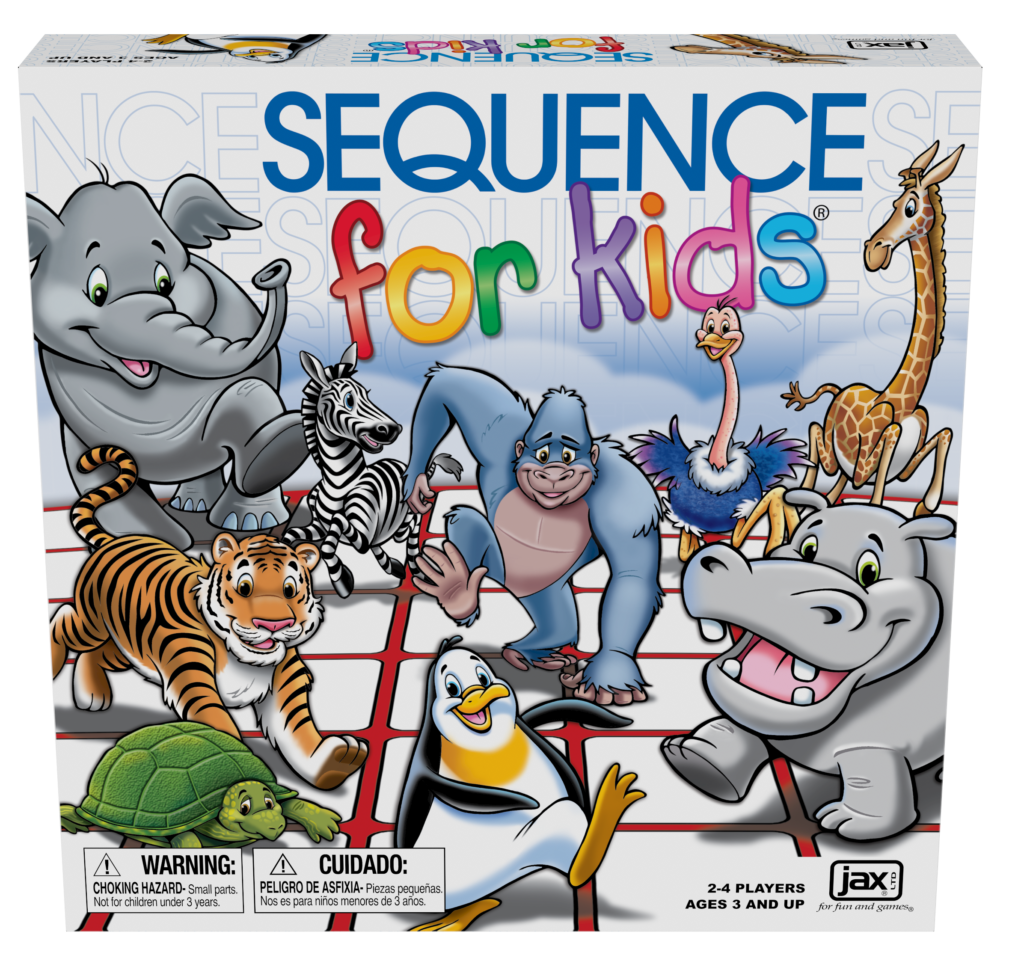
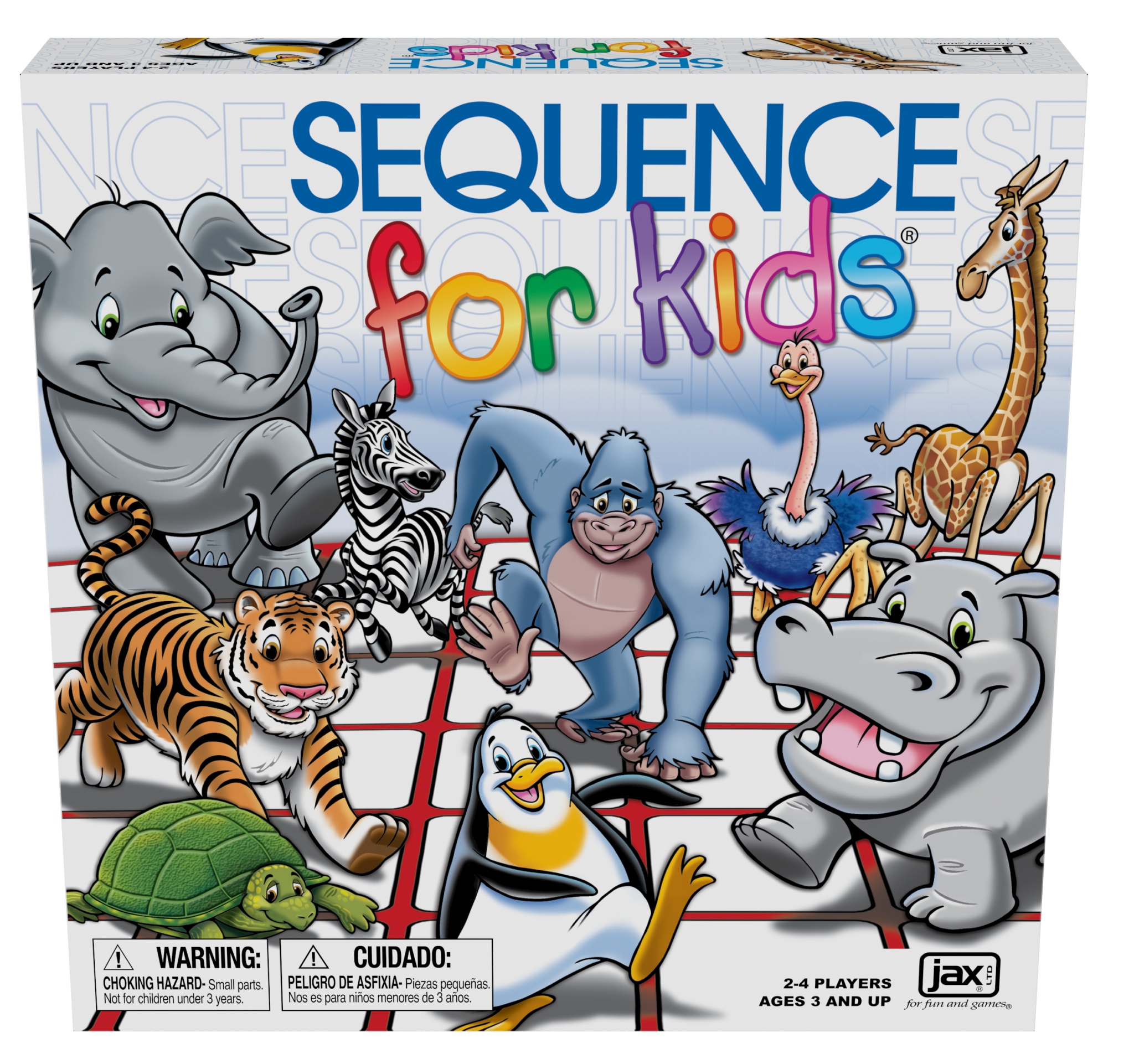
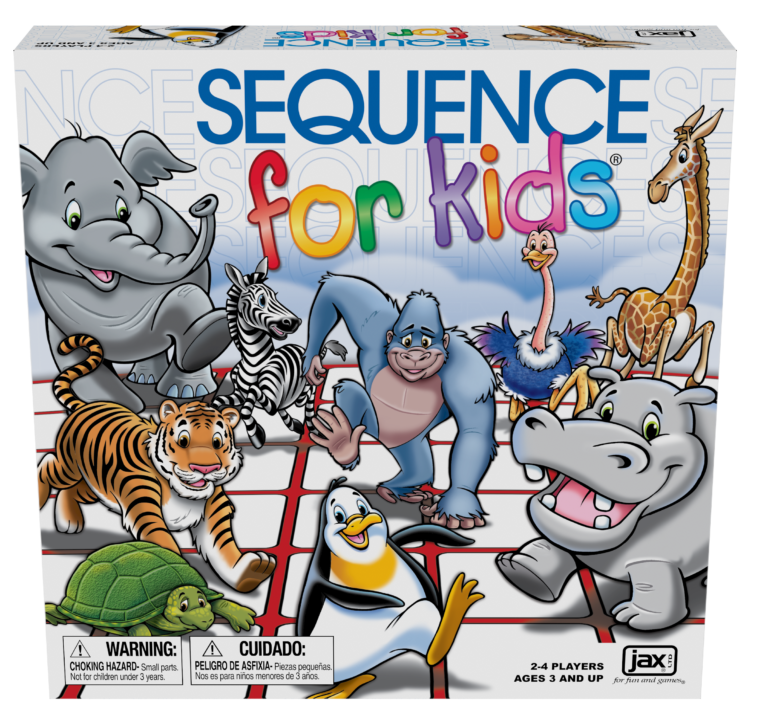
Sequence for Kids is a no-reading-needed version of Sequence built around animal cards and a smaller win condition. Kids match animals from their hand to spaces on the board and try to make four in a row before anyone else. Special cards let them place anywhere or knock out an opponent chip, which adds just enough disruption to matter.
Sequence for Kids has focused developmental strength worth knowing about. It builds judgment. The main growth opportunity: the strategy layer is still small. This is an entry-level tactical game, not a deep planning game.
Strengths & gaps
Strengths
- ● Sequence for Kids is strongest for Judgment. Young children get a real introduction to planning ahead and blocking an opponent.
- ● The no-reading format matters. It lets preschool and early-elementary kids practice strategy without literacy becoming the bottleneck.
- ● Special cards keep the board from feeling static. Kids learn that plans can change and still be recoverable.
Gaps
- ○ The strategy layer is still small. This is an entry-level tactical game, not a deep planning game.
- ○ Creativity is basically absent. Kids are making placement choices, not inventing or expressing ideas.
- ○ Connection stays moderate because the interaction is positional more than relational.
Detailed scores
How Sequence for Kids performs on each of the 9 literacies in our framework.
Doing
— 0 of 3 Strong
Sequence for Kids gives children meaningful placement choices. They can extend a line, protect a space, or block someone else when the board calls for it. But the hand they draw limits what is possible, and the overall goal is fixed. Agency is present, but bounded.
The game asks young kids to keep a simple plan alive across several turns. Sometimes that means waiting for the right card. Sometimes it means recovering after an opponent breaks the line. That is useful early persistence practice, though the challenge stays light.
The board does not stay still. Opponent moves and special cards can change the best plan quickly, so kids have to notice and respond. That is real tactical flexibility. But the game’s total strategy space is small, which keeps the score at Moderate.
Thinking
— 1 of 3 Strong
The animal board helps younger children stay interested, and the draw creates a little anticipation about what they might be able to do next. But the game does not create much deeper wondering or exploration. Curiosity is a light engagement effect, not a core strength.
Sequence for Kids is not a creation game. The child is choosing where to place a chip, not inventing clues, stories, or artifacts. Creativity stays outside scope.
Judgment is the standout. A young child has to notice visible patterns, think one or two moves ahead, and decide when stopping an opponent matters more than helping themselves. That is a meaningful early strategy exercise. Age-normalized for ages three to six, it is strong.
Being
— 0 of 3 Strong
Kids do have to track each other and react to each other, which gives the game a real social dimension. But the interaction is mostly about board position, not shared meaning or collaboration. Connection is there, but it is not the main developmental payoff.
Being blocked can be frustrating for a young child. Sequence for Kids gives repeated chances to absorb that feeling, wait for another turn, and keep playing. That is useful regulation practice at an early age, though still at a gentle level.
Sequence for Kids does not connect play to values, identity, service, or contribution. It is an early tactical game, not a purpose-building tool.
Based on 5 sources
- Product jax.com — sequence for kids
- Product ultraboardgames.com — kids.php
- Product boardgamegeek.com — sequence for kids
- Product familygameshelf.com — sequence for kids review
- Product boardgame.tips — sequence for kids
Reviewed by New Literacies
Scored by our research-derived framework · AI-assisted analysis with editorial review · 5 sources reviewed · Our methodology →
Get the next guide before it goes live
One email when a new product review ships.
Free. No spam. Unsubscribe anytime.
See other products strong in the same literacies: