
SchoolAI
Ages 5-17 · freemium · AI Product · schoolai.com ↗
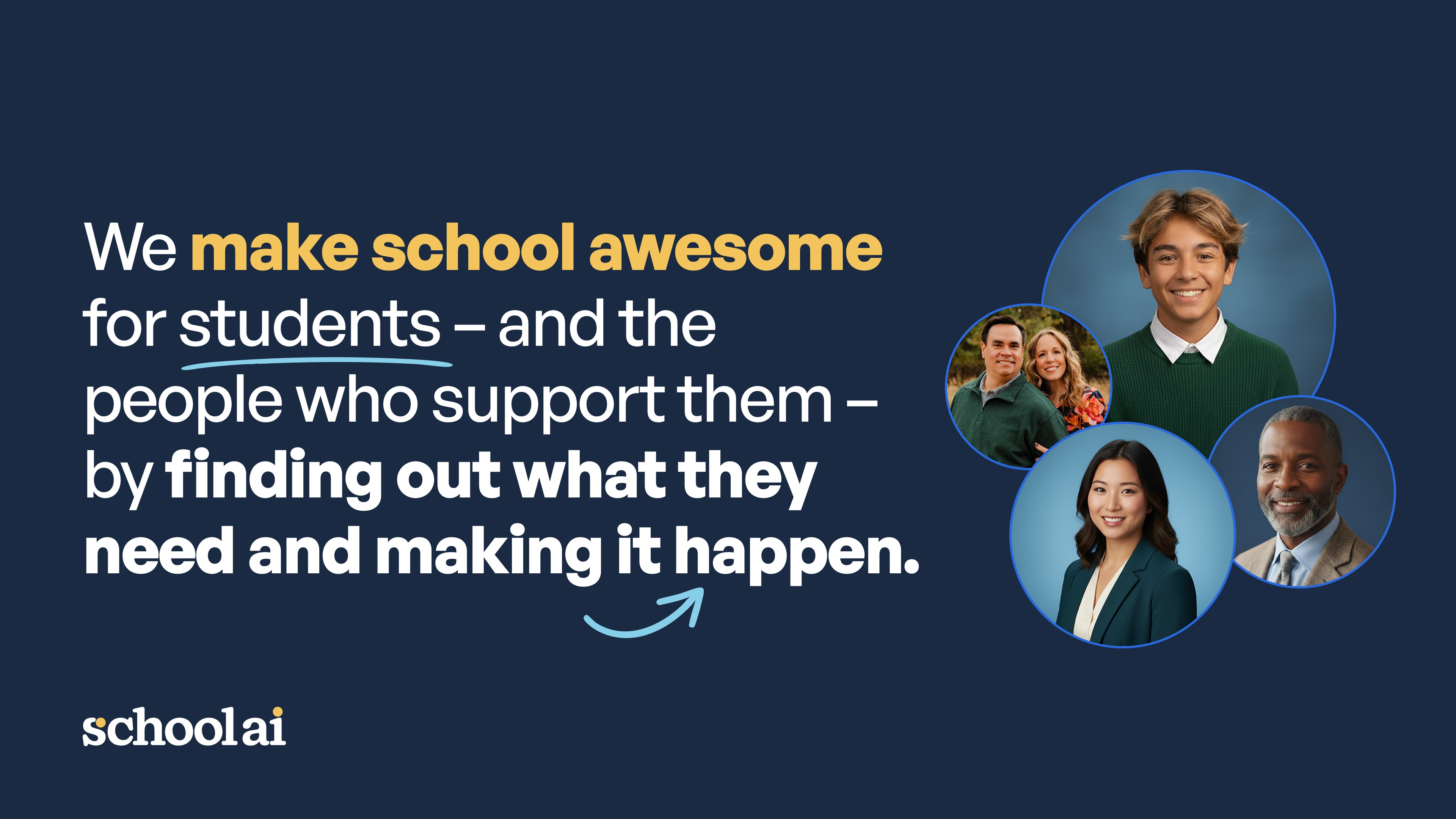



SchoolAI is a teacher-guided AI classroom platform. Teachers create Spaces, set the agenda, and watch student activity in Mission Control while students work with an AI sidekick by text or voice. It is built for school use, not as a general-purpose chatbot for kids.
We've reviewed SchoolAI against our 9-literacy developmental framework. The main growth opportunity: SchoolAI is more helpful than demanding.
Strengths & gaps
Strengths
- ● SchoolAI is strong as teacher infrastructure. Mission Control, student tracking, and the trust center give educators a lot of control and visibility.
- ● The best Spaces can make a lesson feel alive. Students can ask questions, role-play historical figures, and work through prompts without getting the answer handed to them.
- ● The platform is unusually explicit about privacy and safety. It says student data is not used to train models and advertises FERPA, COPPA, SOC 2, and 1EdTech alignment.
Gaps
- ○ SchoolAI is more helpful than demanding. It can keep students moving, but it does not naturally create deep productive struggle.
- ○ Connection and Purpose are mostly outside the design. The product helps a teacher manage learning, but it does not create belonging or meaning on its own.
- ○ Many of the strongest uses depend on teacher design. A weak Space can turn the experience shallow fast.
Detailed scores
How SchoolAI performs on each of the 9 literacies in our framework.
Doing
— 0 of 3 Strong
SchoolAI gives students some choice inside a fixed frame. In Spaces, they can ask questions, respond by text or voice, and work through prompts at their own pace, but the teacher still sets the agenda. That is meaningful choice, not full ownership.
SchoolAI can keep students moving with step-by-step prompts and guided follow-up. Common Sense says students are not handed answers outright, which supports effort through the task. But the product is built to make learning smoother and more responsive, not to create the kind of productive struggle that would justify Strong.
SchoolAI personalizes content to what students know, where they need help, and what they are interested in. That means the student sees adjusted support, feedback, and pacing. The weak spot is that the system is doing most of the adapting for them.
Thinking
— 0 of 3 Strong
The strongest SchoolAI Spaces can make a topic feel like a live conversation. Tech & Learning notes that students can explore information, ask questions, and even chat with historical figures. But the exploration is still bounded by the teacher's Space, so it sparks curiosity more than it deepens self-directed inquiry.
SchoolAI can help students build on prompts, change tone, simplify text, and work through simulated activities. That gives them room to shape an output instead of just consume one. The creative move is still scaffolded, though, so this stays below Strong.
This is one of SchoolAI's clearer strengths. Multiple sources say students are encouraged to analyze, refine, and verify ideas, while teachers can monitor conversations and progress in real time. That builds judgment inside the classroom task, even if it does not reach the broader tradeoff-making that Strong would require.
Being
— 0 of 3 Strong
SchoolAI helps teachers see students more clearly, and the company says it is designed to extend human connection rather than replace it. But the child experience is still mediated through an AI tool, not through peer interaction or mutual human bonds. That keeps Connection outside the scored scope.
SchoolAI uses guardrails, teacher monitoring, and step-by-step support to keep students on task. Those features can help a child stay with a task and manage learning friction. But the product does not directly teach coping strategies, emotion labeling, or delay of gratification.
SchoolAI personalizes learning, but it does not connect effort to identity, values, or contribution. The student is asked to learn, not to locate a deeper reason for why the work matters. That keeps Purpose outside the design.
Based on 10 sources
- Review commonsense.org — schoolai
- Review commonsense.org —
- Review commonsense.org —
- Product schoolai.com — about
- Product schoolai.com — spaces
- Product schoolai.com — mission control
- Product schoolai.com — trust
- Product help.schoolai.com — 11525798 use the lesson plan tool
- Product techlearning.com — schoolai how to use it to teach
- Product cultofpedagogy.com — 6 ed tech tools
Reviewed by New Literacies
Scored by our research-derived framework · AI-assisted analysis with editorial review · 10 sources reviewed · Our methodology →
Get the next guide before it goes live
One email when a new product review ships.
Free. No spam. Unsubscribe anytime.