
RULER
Ages 4-18 · paid · Curriculum · rulerapproach.org ↗

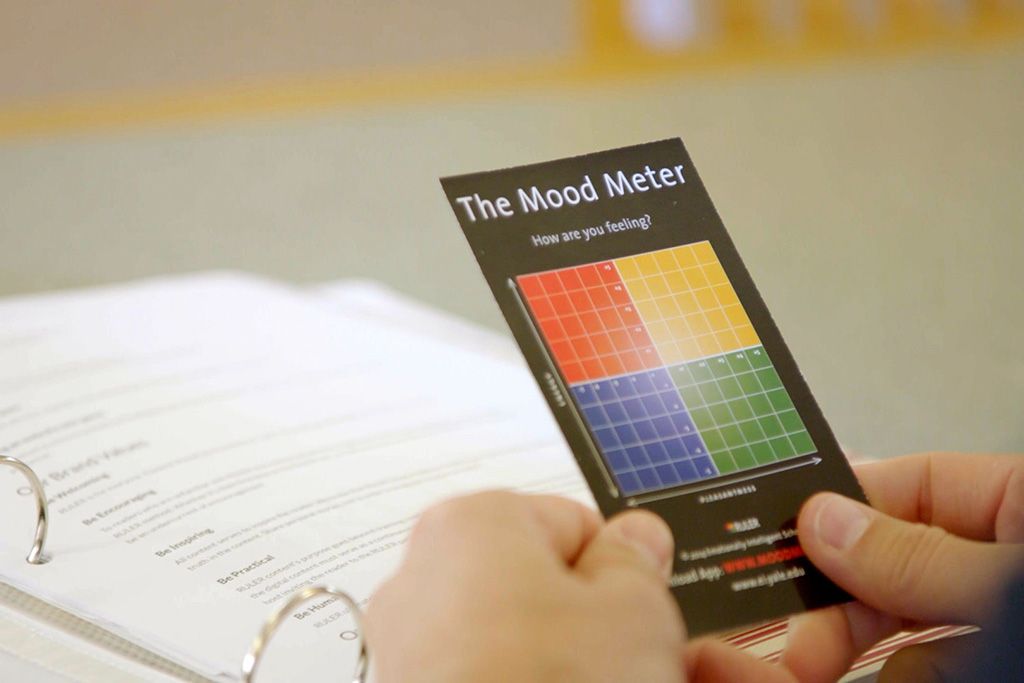


RULER is Yale's whole-school SEL approach built around emotional intelligence. Kids and adults use shared tools like the Mood Meter, Meta-Moment, Blueprint, and classroom Charter to notice feelings, think through conflict, and regulate behavior in the middle of real school life.
RULER stands out for developmental impact across multiple literacies. It builds judgment, interpersonal skills. The main growth opportunity: RULER is school-structured.
Strengths & gaps
Strengths
- ● RULER is strongest where children need better judgment under emotional pressure. The tools don't just ask kids to calm down. They ask them to interpret what happened, consider perspective, and choose a response.
- ● Self-regulation is explicit. Meta-Moment and Mood Meter give students a repeatable process for naming state and interrupting impulsive behavior.
- ● Connection is another clear strength. Classroom Charters and Blueprints are designed to build shared norms, empathy, and conflict repair.
Gaps
- ○ RULER is school-structured. Children practice agency inside the tools, but they do not set the overall goals or shape of the experience.
- ○ Creativity is mostly outside scope. This is a relationship and regulation program, not a creative one.
Detailed scores
How RULER performs on each of the 9 literacies in our framework.
Doing
— 0 of 3 Strong
RULER helps children choose responses more deliberately instead of acting on raw emotion. That's meaningful agency. But the overall system is imposed at the classroom and school level, so the product doesn't score as strongly on self-directed initiation.
RULER can help children bounce back after frustration, conflict, or emotional overload. That matters for staying with school and relationships. But persistence is not the product's central developmental claim.
RULER includes perspective shifting and emotional flexibility. Students learn that the same situation can feel different to different people. But adaptability is still secondary to the program's stronger emphasis on judgment, connection, and self-regulation.
Thinking
— 1 of 3 Strong
RULER can make children more observant about emotions, motives, and patterns in social life. But it doesn't mainly build curiosity through open exploration or self-directed questions. The inquiry stays inside a structured SEL frame.
RULER is not meant to build creativity. The core work is emotional analysis, communication, and regulation.
Judgment is one of RULER's best fits. The Blueprint in particular asks students to slow down, consider other perspectives, and think through consequences before reacting. That is strong developmental work in everyday school conflict.
Being
— 2 of 3 Strong
Connection is built into the product. Shared feeling language, class charters, and conflict-repair routines all exist to improve relationships and belonging. RULER is trying to change how people live together in a school community.
Self-regulation is explicit and practical here. RULER gives children concrete tools for noticing state, pausing, and choosing a better move. That is much stronger than vague advice to use self-control.
RULER gives behavior some communal meaning because classrooms define how they want to feel together and how they will get there. But the product does not go especially deep on identity, contribution, or long-horizon purpose.
Based on 7 sources
- Product pubmed.ncbi.nlm.nih.gov —
- Product rulerapproach.org
- Product rulerapproach.org — what is ruler
- Product rulerapproach.org — what is the evidence
- Product rulerapproach.org — ruler tools
- Product rulerapproach.org — stories
- Product psycnet.apa.org — 2012 20343
Reviewed by New Literacies
Scored by our research-derived framework · AI-assisted analysis with editorial review · 7 sources reviewed · Our methodology →
Personalization bridge
Not sure what your kid needs most?
Take the quiz to see which literacies matter most for your family, then get practical things to try at home.
Get your family profileExplore more
See other products strong in the same literacies: