
Raddish Kids
Ages 4-14 · paid · Product · raddishkids.com ↗
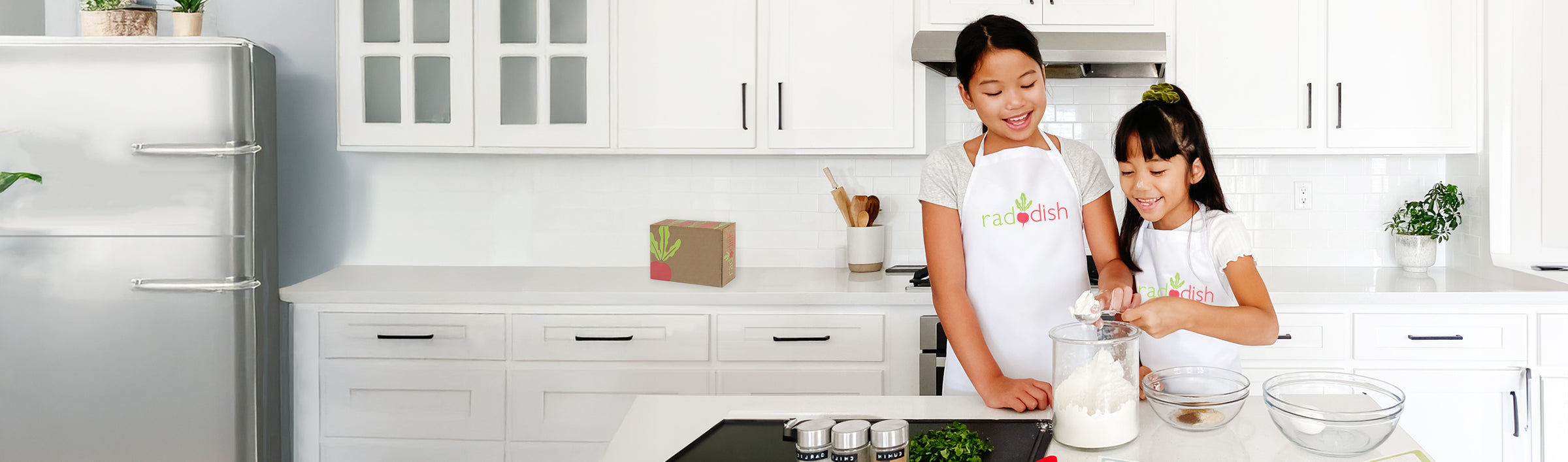
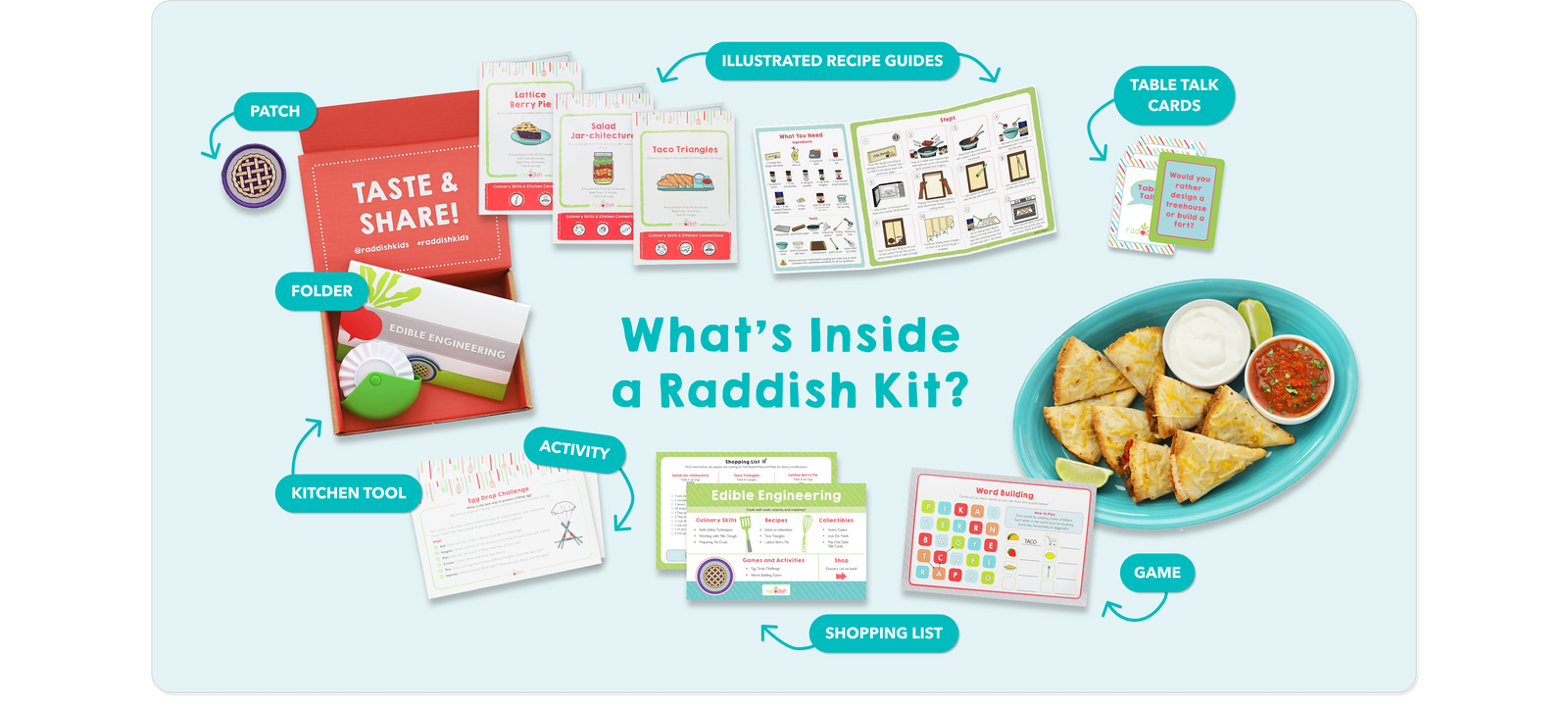
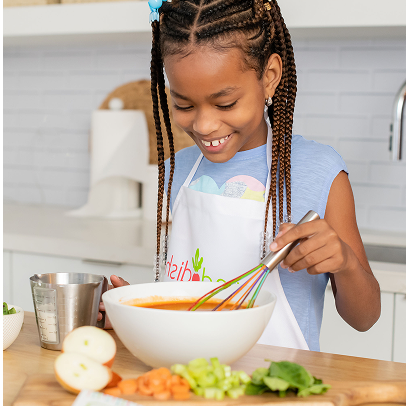
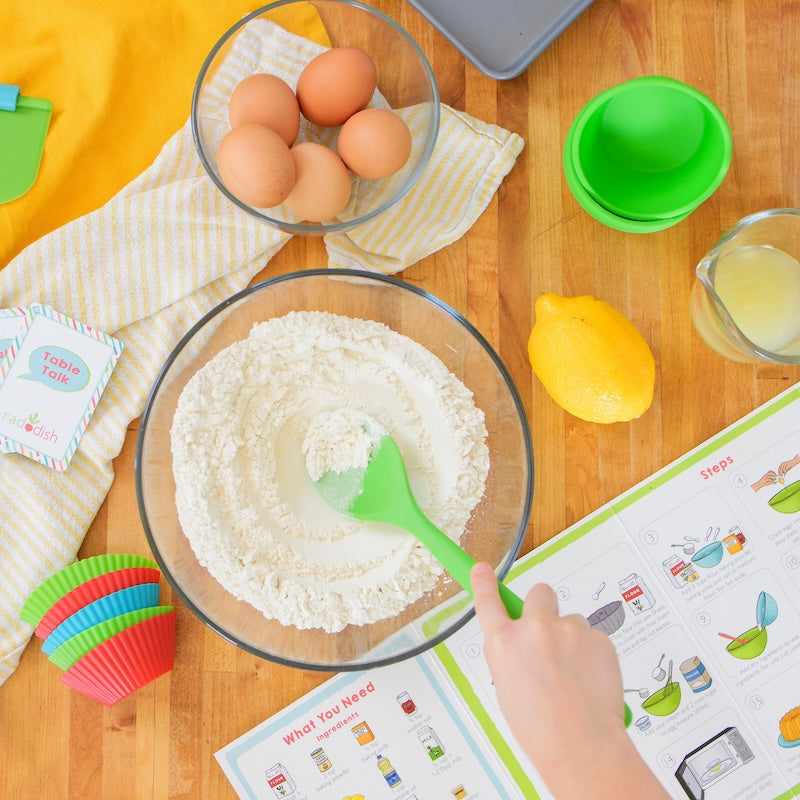
Raddish Kids sends a themed cooking kit each month with three illustrated recipe cards, a kitchen tool, an apron patch, conversation cards for the dinner table, and a grocery list. Kids cook real food — apple cider doughnuts, herb-roasted chicken, sweet potato gnocchi — using laminated recipe cards with step-by-step illustrations. Ingredients aren't included, so families shop together before cooking. The finished meal is dinner.
Raddish Kids has focused developmental strength worth knowing about. It builds agency, connection. The main growth opportunity: Raddish Kids doesn't build Adaptability.
Strengths & gaps
Strengths
- ● Raddish Kids builds Agency through real-world cooking. An 8-year-old completed an entire cooking process from start to finish. Children shop for ingredients, execute recipes, and serve meals to their family. That's genuine ownership of a real outcome.
- ● Connection is built into the product's DNA. Table talk cards spark family conversation during meals. The shared cooking experience pulled children away from screens for family time. The meal itself is a shared family ritual.
- ● The product develops real life skills. Knife work, measuring, kitchen safety, and multi-step recipe execution are practical competencies children carry forward.
Gaps
- ○ Raddish Kids doesn't build Adaptability. Each recipe follows specific steps. When dietary substitutions are needed, Raddish provides them online rather than asking the child to figure it out.
- ○ Creativity is secondary to instruction-following. The recipes are prescribed. Creative expression lives in the kitchen projects and food presentation, not in the core cooking experience.
Detailed scores
How Raddish Kids performs on each of the 9 literacies in our framework.
Doing
— 1 of 3 Strong
Raddish Kids gives children genuine ownership of a real-world process. One reviewer's youngest child "had the recipe card in hand as we walked and shopped together." An 8-year-old completed the entire cooking process independently. Children take pride in presenting their creations and willingly eat food they cooked themselves. This isn't simulated agency. The child shops, cooks, and serves real food to real people.
Multi-step recipes take 30-60+ minutes and require sustained concentration. Knife skills, timing, and technique mastery involve real difficulty. But adult supervision is expected throughout, which means children rarely face sustained difficulty alone. The persistence is real but buffered.
Different monthly themes require learning new techniques, and dietary substitutions are available online. But each recipe follows specific steps with specific outcomes. The child doesn't need to recognize when their approach isn't working.
Thinking
— 0 of 3 Strong
Educational mini-lessons are embedded in recipes. The doughnut recipe taught about Newton and gravity. Cross-cultural themes introduce new cuisines and traditions. But the child follows recipes rather than investigating their own questions about food or cooking.
Each kit includes a creative kitchen project alongside the recipes. Food presentation allows personal expression, and children take visible pride in how their dishes look. But the core experience is following specific recipe instructions.
Cooking involves some real-time decisions (is this done? is the consistency right?). But the recipe cards tell children exactly what to do and when. Judgment in the broader sense of evaluating competing information or weighing tradeoffs isn't a focus.
Being
— 1 of 3 Strong
Raddish Kids is a family connection product. Conversation cards spark real dialogue during shared meals. Cooking together is inherently collaborative. One parent noted the subscription "pulled children away from screens" for meaningful family time. The shared meal is the culminating experience, and it happens every month.
Cooking requires patience (waiting for dough, waiting for food to cook) and safety awareness around hot surfaces and sharp tools. But Raddish Kids doesn't teach emotion identification or coping strategies. Self-regulation is a side effect, not a design goal.
Creating food for family is inherently contribution-focused. Children develop practical life skills that build toward real-world independence. But there's no explicit values exploration or identity reflection built into the experience.
Based on 5 sources
Reviewed by New Literacies
Scored by our research-derived framework · AI-assisted analysis with editorial review · 5 sources reviewed · Our methodology →
Get the next guide before it goes live
One email when a new product review ships.
Free. No spam. Unsubscribe anytime.
See other products strong in the same literacies: