
Qustodio (AI features)
All ages · paid · AI Product · qustodio.com ↗
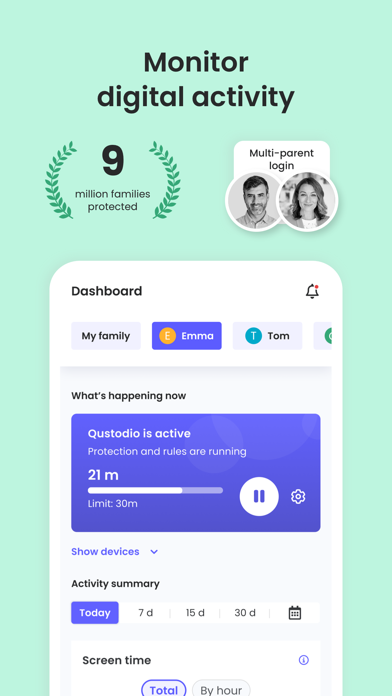
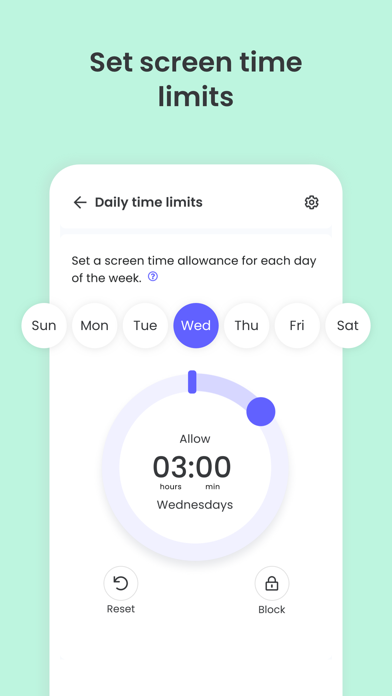
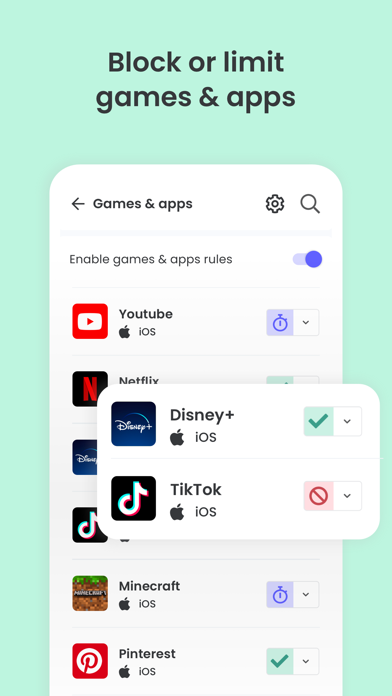
Qustodio is a parent control dashboard that tracks screen time, blocks apps and websites, logs activity, and now uses AI-powered alerts to flag concerning messages on services like WhatsApp and Instagram. In higher tiers, parents can also read SMS content and receive snippets from flagged conversations. The child experience is a supervised device environment shaped by adult rules and automated monitoring.
We've reviewed Qustodio (AI features) against our 9-literacy developmental framework. The main growth opportunity: Qustodio builds almost no internal capacities in the child.
Strengths & gaps
Strengths
- ● Qustodio gives adults broad visibility across devices. For families that want tighter supervision, that can be genuinely useful.
- ● The interface and coverage get strong marks in professional reviews. Qustodio is better understood as a family-management tool than a child-development tool.
Gaps
- ○ Qustodio builds almost no internal capacities in the child. It shifts the important decisions to parent settings, filters, and AI alerts.
- ○ Self-regulation is especially weak. The child is stopped by rules rather than practicing how to stop themselves.
- ○ Message monitoring raises a trust cost. Reading texts and DM snippets may help adults intervene, but it also changes how safe honest communication feels.
Detailed scores
How Qustodio (AI features) performs on each of the 9 literacies in our framework.
Doing
— 0 of 3 Strong
Qustodio is built around parent control. Adults decide the rules, the app enforces them, and the child works inside those boundaries. That supports supervision, but it doesn't give the child much authorship.
Qustodio doesn't present hard tasks, productive struggle, or mastery loops. It's an oversight system around other products and activities. Persistence is outside its child-facing experience.
The child is not asked to test strategies or reflect on what's working. Monitoring and enforcement happen around them, not through them. That leaves Adaptability outside scope.
Thinking
— 0 of 3 Strong
Qustodio filters and monitors by design. A family may want those limits, but they still narrow what the child can explore and which digital rabbit holes are available. That's a constrained curiosity environment, not an expansive one.
Qustodio has no creative workflow. It doesn't offer tools for making, experimenting, or revising work. Creativity simply isn't in the product.
Qustodio decides what looks risky and pushes that information to adults. The child isn't being asked to judge source quality, weigh ambiguity, or make nuanced tradeoffs themselves. The product removes that practice rather than building it.
Being
— 0 of 3 Strong
Qustodio may prompt important family conversations after an alert. But monitoring private texts and DMs can also make children less candid. That tension keeps Connection weak.
Qustodio uses screen limits, app blocking, and filtering to control behavior externally. That can be effective as management. It is not the same as teaching the child to notice impulses, pause, and choose differently on their own.
Qustodio is about safety settings and visibility. It doesn't help children connect digital choices to identity, values, or contribution in any direct way.
Based on 6 sources
- Product qustodio.com — get started
- Product qustodio.com — introducing social monitoring
- Product help.qustodio.com — 360005217117 Can I read the content of messages sent and received with Qustodio
- Product techradar.com — qustodio parental control software
- Product tomsguide.com — qustodio
- Product security.org — qustodio
Reviewed by New Literacies
Scored by our research-derived framework · AI-assisted analysis with editorial review · 6 sources reviewed · Our methodology →
Get the next guide before it goes live
One email when a new product review ships.
Free. No spam. Unsubscribe anytime.