Positive Action
Ages 4-18 · paid · Curriculum · positiveaction.net ↗

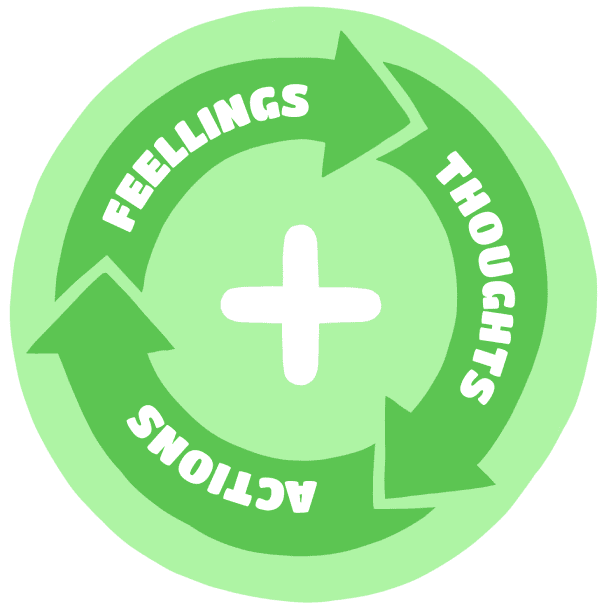
Positive Action is a school SEL and character program built around a simple idea: thoughts lead to actions, actions lead to feelings, and that cycle can spiral up or down. Kids work through a sequenced curriculum on self-concept, managing themselves, treating others well, honesty, and self-improvement, while schools also use broader climate supports.
Positive Action stands out for developmental impact across multiple literacies. It builds agency, judgment, social-emotional development. The main growth opportunity: The product is still school-structured.
Strengths & gaps
Strengths
- ● Positive Action is unusually broad for an SEL curriculum. It goes beyond calming or empathy and pushes into agency, judgment, and purpose through a clear moral-development frame.
- ● The evidence base is strong. Multiple studies report better discipline, lower bullying and violence-related behavior, and better emotional health.
Gaps
- ○ The product is still school-structured. Students practice agency and values, but the curriculum is not child-directed in the way open creative or maker tools are.
- ○ Curiosity and creativity are present only at a moderate level. They are part of the language, not the main mechanism.
Detailed scores
How Positive Action performs on each of the 9 literacies in our framework.
Doing
— 1 of 3 Strong
Positive Action explicitly teaches students to manage themselves, set goals, and improve over time. That gives children more than advice. It gives them a framework for acting on their own growth.
The self-improvement unit clearly values sticking with goals. But the program is not built around repeated hard challenge in the way a demanding game, instrument, or robotics kit might be.
The Thoughts-Actions-Feelings model can help students choose a different move when a pattern is not working. That supports adaptability. It just is not one of the curriculum's clearest standout capacities.
Thinking
— 1 of 3 Strong
Positive Action includes intellectual growth and excitement about ideas. But it does not really build curiosity through exploration or knowledge gaps. Moderate is enough.
Creative thinking appears in the lesson language. Still, Positive Action is not a creative production environment. It is a character-and-behavior curriculum first.
Judgment is a strong fit because the program repeatedly asks students to connect choices to consequences. Honesty, self-concept, and action cycles all push children toward better everyday evaluation.
Being
— 3 of 3 Strong
Connection is central. Positive Action does not treat relationships as an afterthought. One of its main units is explicitly about how to treat other people, and the research literature shows movement on bullying and school climate.
Self-regulation is also central. Managing feelings, time, actions, and impulses is named directly in the curriculum. The behavioral outcome studies reinforce that this is not just marketing language.
Positive Action has a clearer purpose frame than most school SEL products. The combination of self-concept, values, and continual self-improvement gives behavior a bigger why. That is enough for a Strong.
Based on 9 sources
- Product pubmed.ncbi.nlm.nih.gov —
- Product pubmed.ncbi.nlm.nih.gov —
- Product pubmed.ncbi.nlm.nih.gov —
- Product pubmed.ncbi.nlm.nih.gov —
- Product positiveaction.net
- Product positiveaction.net — introduction
- Product positiveaction.net — rti programs
- Product positiveaction.net — about us
- Product sciencedirect.com — S1054139X
Reviewed by New Literacies
Scored by our research-derived framework · AI-assisted analysis with editorial review · 9 sources reviewed · Our methodology →
Get the next guide before it goes live
One email when a new product review ships.
Free. No spam. Unsubscribe anytime.
See other products strong in the same literacies: