
PinwheelGPT
Ages 7-12 · freemium · AI Product · pinwheel.com ↗

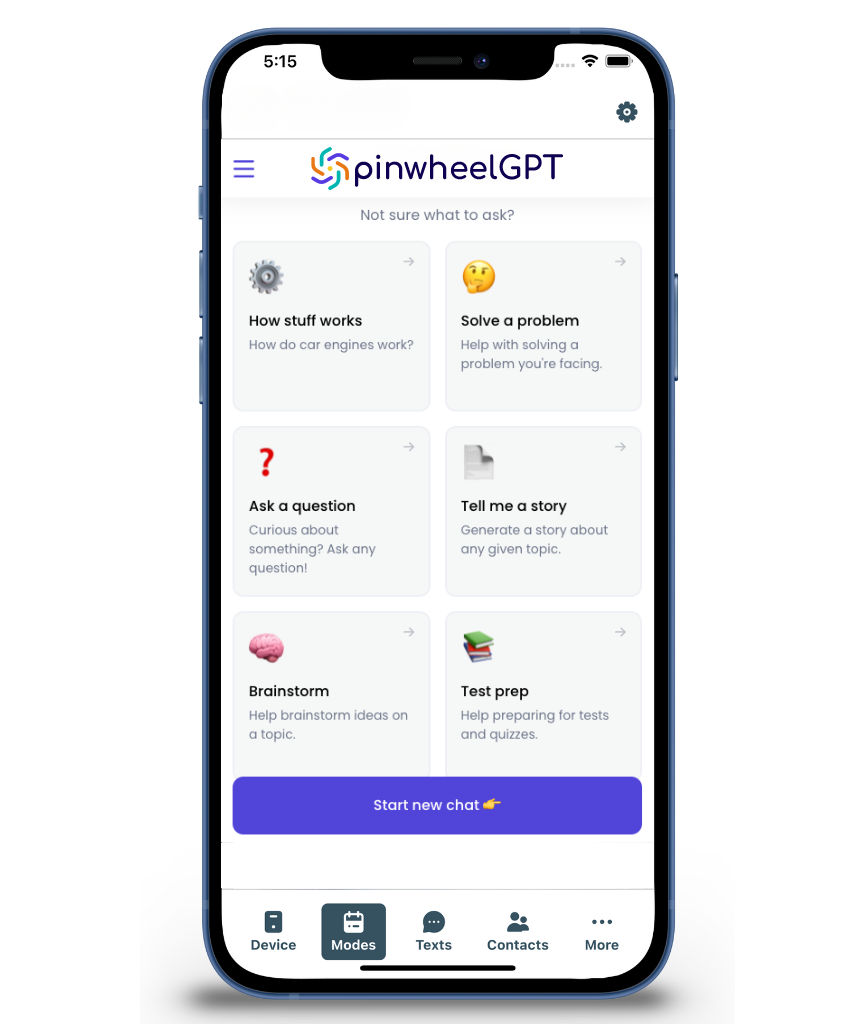
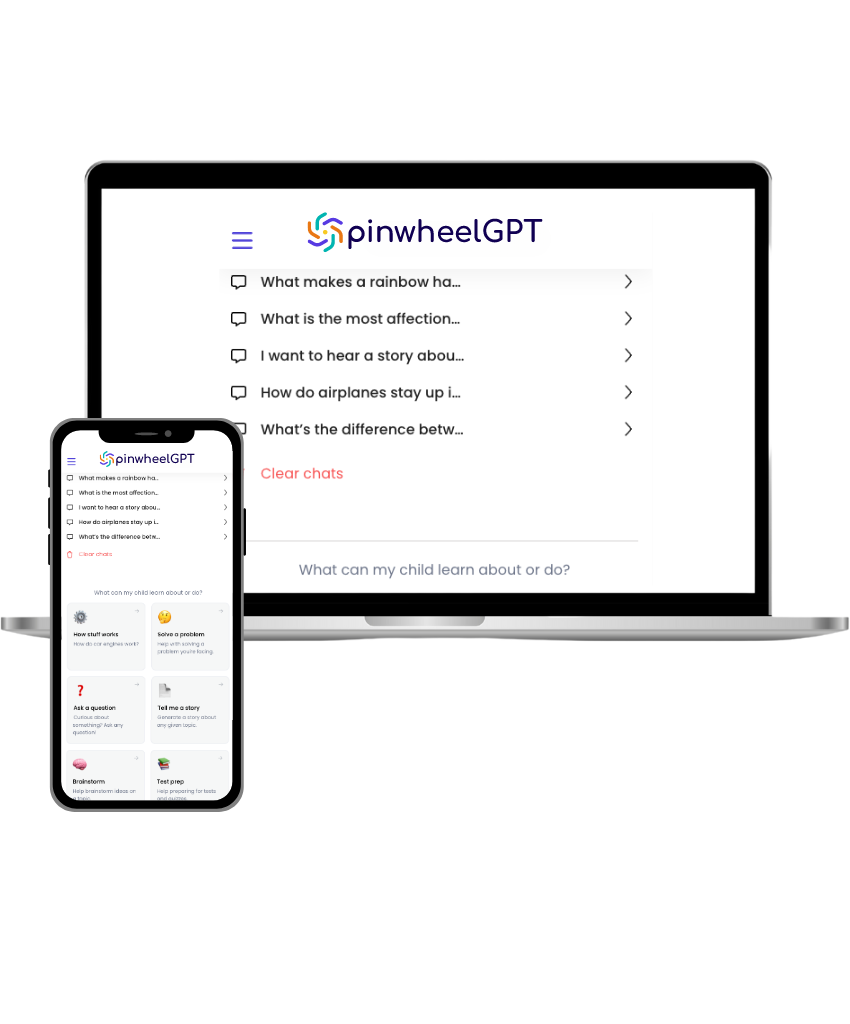
PinwheelGPT is a kid-safe GPT wrapper with parental monitoring. A child asks questions in a filtered chat interface, and a parent can review the conversation, correct bad answers, and help the child use AI more responsibly. The product is intentionally narrow. It is trying to make chat safer, not turn chat into a companion or creative studio.
We've reviewed PinwheelGPT against our 9-literacy developmental framework. The main growth opportunity: this is still mostly an answer machine. It does not give children much reason to persist, build, or create.
Full review
The NL Score measures developmental capacity-building, not product quality.
Strengths & gaps
Strengths
- ● PinwheelGPT is stronger on guardrails than on raw capability. That is the point, and for families with younger children it is a meaningful design choice.
- ● The parent-monitoring layer matters. It gives families a chance to turn AI use into conversation instead of private dependence.
- ● The product also avoids anthropomorphic "AI friend" framing, which is a real positive.
Gaps
- ○ This is still mostly an answer machine. It does not give children much reason to persist, build, or create.
- ○ Most evidence is first-party. I did not find robust independent review coverage in this pass.
- ○ Judgment support comes mainly from the parent layer, not from strong built-in child reasoning prompts.
Detailed scores
How PinwheelGPT performs on each of the 9 literacies in our framework.
Doing
— 0 of 3 Strong
PinwheelGPT gives the child some real initiative because the child decides what to ask. That matters. But once the question is entered, the AI handles most of the cognitive work, so agency stays limited in scope.
PinwheelGPT is built to make help easy. That is often useful, but it does not train children to stay with difficulty on their own. The faster and smoother the answer loop gets, the weaker the persistence signal becomes.
Children can ask follow-up questions and approach a topic from different angles. That creates some room to adapt. But the AI still does most of the adaptation work.
Thinking
— 0 of 3 Strong
The product can make children more willing to ask questions because it feels safer and more age-appropriate than a general chatbot. That is a real curiosity benefit. But the tool still tends to close loops quickly with answers.
PinwheelGPT can support playful questions or story ideas, but it is not designed around child-made artifacts. The core experience is still prompt and response.
The monitoring structure helps because parents can review conversations and correct inaccurate answers. Pinwheel also explicitly says the AI may be wrong. That is healthier than pretending the system is always right, even if the product does not deeply teach source evaluation itself.
Being
— 0 of 3 Strong
Pinwheel is careful not to position the AI as a friend. That is a wise design choice. It also means Connection is outside the product's intended role.
PinwheelGPT adds friction in the right places by limiting risky features and giving parents visibility. That can support healthier AI habits and co-regulation. It is not full self-regulation training, but it is more supportive than an unrestricted chatbot.
The product helps a child ask questions and get safe answers. It does not connect that activity to deeper values, identity, or service.
Based on 4 sources
Reviewed by New Literacies
Scored by our research-derived framework · AI-assisted analysis with editorial review · 4 sources reviewed · Our methodology →
Get the next guide before it goes live
One email when a new product review ships.
Free. No spam. Unsubscribe anytime.