
Outschool
Ages 3-18 · paid · Curriculum · outschool.com ↗


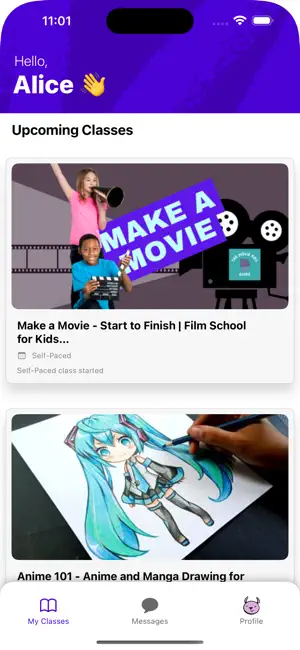
Outschool is a marketplace of live online classes and clubs for kids. Families pick from a huge catalog of topics, teachers, and formats, from one-time workshops to recurring social groups and self-paced courses. That means the child's experience depends as much on class selection as on the platform itself.
Outschool has focused developmental strength worth knowing about. It builds agency, curiosity. The main growth opportunity: outschool is extremely variable. One class can be rich and social; another can be thin and forgettable.
Full review
The NL Score measures developmental capacity-building, not product quality.
Strengths & gaps
Strengths
- ● Outschool's clearest strengths are Agency and Curiosity. The platform makes it easy for a child to say, "I want to learn that," even when school would never offer it.
- ● The breadth matters. Kids can test interests quickly, then go deeper when something sticks.
Gaps
- ○ Outschool is extremely variable. One class can be rich and social; another can be thin and forgettable.
- ○ Because it is a marketplace, many developmental signals live at the class level rather than the platform level.
Detailed scores
How Outschool performs on each of the 9 literacies in our framework.
Doing
— 1 of 3 Strong
Outschool gives children more say over what they spend time on than most school systems or all-in-one learning apps. Topic choice is the feature. That makes Agency the cleanest platform-wide strength.
Some Outschool classes absolutely require sustained effort. Others do not. Since the platform supports both, Persistence lands in the middle rather than at either extreme.
Kids can shift interests, try new subjects, and move across formats easily. That supports experimentation. But the deeper adaptability signal depends on individual teachers and class design.
Thinking
— 1 of 3 Strong
Curiosity is where Outschool shines. The catalog lets children follow interests that are oddly specific, deeply niche, or socially motivated in ways standard school schedules rarely allow.
The platform contains many creative experiences. But it also contains many classes that are not especially creative. That keeps Creativity at Moderate for the marketplace as a whole.
There is some judgment in choosing among classes and teachers, and some classes clearly demand reasoning. Still, judgment is not structurally built into the platform itself in a consistent way.
Being
— 0 of 3 Strong
Live classes and clubs can create real peer interaction, especially recurring groups. But connection is uneven because class size, teacher style, and topic all matter.
The platform does not present a clear, consistent regulation structure. Some classes may ask a lot of attention and follow-through. Others may not. That is too mixed to score cleanly.
Some Outschool classes may connect strongly to values or contribution. But the marketplace itself does not organize around that outcome, so Purpose stays outside the reliable core signal.
Based on 6 sources
- Review commonsensemedia.org — outschool
- Product support.outschool.com — 11973443 signing up for classes
- Product outschool.com
- Product whattoexpect.com — outschool review
- Product weareteachers.com — what is outschool
- Product outschool.com — online classes
Reviewed by New Literacies
Scored by our research-derived framework · AI-assisted analysis with editorial review · 6 sources reviewed · Our methodology →
Get the next guide before it goes live
One email when a new product review ships.
Free. No spam. Unsubscribe anytime.
See other products strong in the same literacies: