Nintendo Labo
Ages 6-12 · paid · Product · labo.nintendo.com ↗
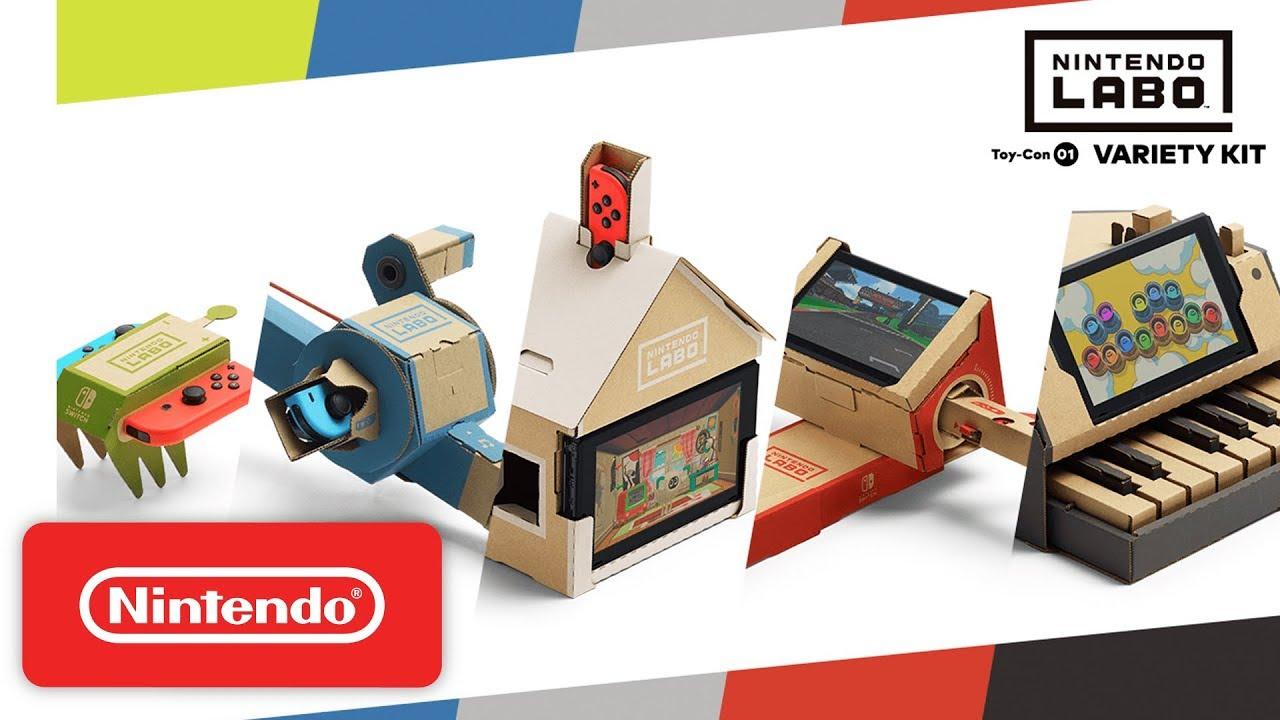

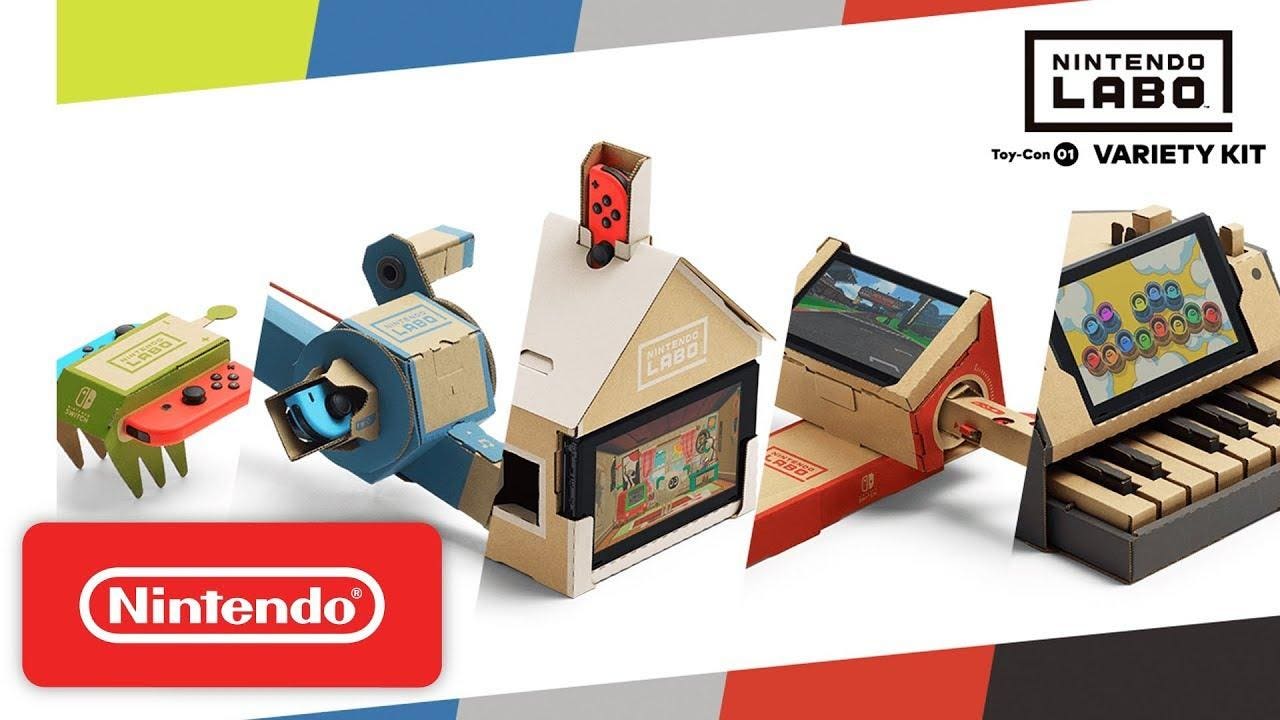
Nintendo Labo is a series of cardboard construction kits for the Nintendo Switch. Kids fold, assemble, and build physical controllers called Toy-Cons: a piano, a fishing rod, a robot suit, a motorbike, and more. Each Toy-Con takes 1-3 hours to build from flat cardboard sheets, then plugs into the Switch to become a working interactive controller. A hidden Garage mode lets kids program their own Toy-Con behaviors using a visual block-based coding language. The product was discontinued due to incompatibility with newer Switch hardware.
Nintendo Labo stands out for developmental impact across multiple literacies. It builds persistence, cognitive skills. The main growth opportunity: Nintendo Labo is discontinued and only works on the original Nintendo Switch.
Strengths & gaps
Strengths
- ● Nintendo Labo is a Curiosity machine. When a child folds flat cardboard into a working piano that plays real notes through IR sensors, that's a genuine "how does this work?" moment. The design reveals invisible technology: infrared sensors, gyroscopes, vibration feedback. EdSurge found classroom use developed STEM skills.
- ● Garage mode unlocks genuine Creativity. Kids can program entirely new Toy-Con behaviors using visual block-based coding. The constraint of cardboard-as-medium sparks invention that unconstrained tools don't.
- ● Multi-hour builds develop real Persistence. Building a Toy-Con piano takes 2-3 hours of sustained focus. When cardboard tears or folds misalign, the child must problem-solve and recover.
Gaps
- ○ Nintendo Labo is discontinued and only works on the original Nintendo Switch. New purchases require the secondary market, and compatibility is limited.
- ○ Replay value was a common concern. Reviewers noted kids "remember the building long after they've forgotten what they did with the software." The play experience after construction is less engaging than the construction itself.
Detailed scores
How Nintendo Labo performs on each of the 9 literacies in our framework.
Doing
— 1 of 3 Strong
The building phase is heavily guided: follow step-by-step instructions to fold cardboard precisely. But Garage mode flips this completely, offering open-ended creation where kids set their own goals. The physical Toy-Con at the end is something the child can point to and say "I built that."
Building a Toy-Con from flat cardboard is a 1-3 hour commitment requiring sustained attention and fine motor precision. When cardboard tears or folds don't align, the child must recover and problem-solve. Nintendo Life noted "kids will remember the building long after they've forgotten what they did with the software." That's because the build itself is the developmental experience.
Garage mode requires genuine debugging: if a cause-and-effect chain doesn't work, the child must identify the problem and try a different approach. The building phase follows fixed instructions with minimal adaptation. The product averages to Moderate across both experiences.
Thinking
— 2 of 3 Strong
Nintendo Labo's design is built around making the invisible visible. A child folds cardboard into a piano and it plays notes. How? IR sensors detect which keys are pressed. Each Toy-Con is an "aha" moment about how technology works. An academic study found positive learning experiences through the make-and-play cycle. This is curiosity by design, not accident.
Garage mode is the key. Kids don't just follow instructions; they invent. The visual programming language lets them link input nodes (button press, motion, tilt) to output nodes (sound, vibration, screen display) to create behaviors no one designed. Cardboard as a medium adds a maker dimension: the physical constraint of "what can I build from this?" sparks genuine invention.
Garage mode debugging involves basic evaluation: "this isn't working, why?" But the building phase is pure instruction-following with no evaluation, tradeoffs, or perspective-taking required.
Being
— 0 of 3 Strong
Building a Toy-Con together with a parent or sibling creates genuine collaborative construction and shared discovery. The Institute of Play's classroom curriculum added structured collaboration. But Labo works equally well solo, and the social element depends on context, not product design.
Multi-hour builds create real frustration when cardboard tears or folds misalign. The payoff comes only after sustained effort. Kids must manage impatience and recover from mistakes. But Labo doesn't explicitly teach regulation strategies.
No identity, values, or contribution component. Purpose is outside Labo's scope.
Based on 5 sources
- Review commonsensemedia.org — nintendo labo toy con variety kit
- Product edsurge.com — 2019 02 01 for today s kids playing nintendo in the classroom isn t just a dream
- Product redalyc.org — html
- Product nintendolife.com — nintendo_labo_toy con_01_variety_kit
- Product mrhillmusings.com — nintendo labo where gaming meets stem education
Reviewed by New Literacies
Scored by our research-derived framework · AI-assisted analysis with editorial review · 5 sources reviewed · Our methodology →
Get the next guide before it goes live
One email when a new product review ships.
Free. No spam. Unsubscribe anytime.
See other products strong in the same literacies: