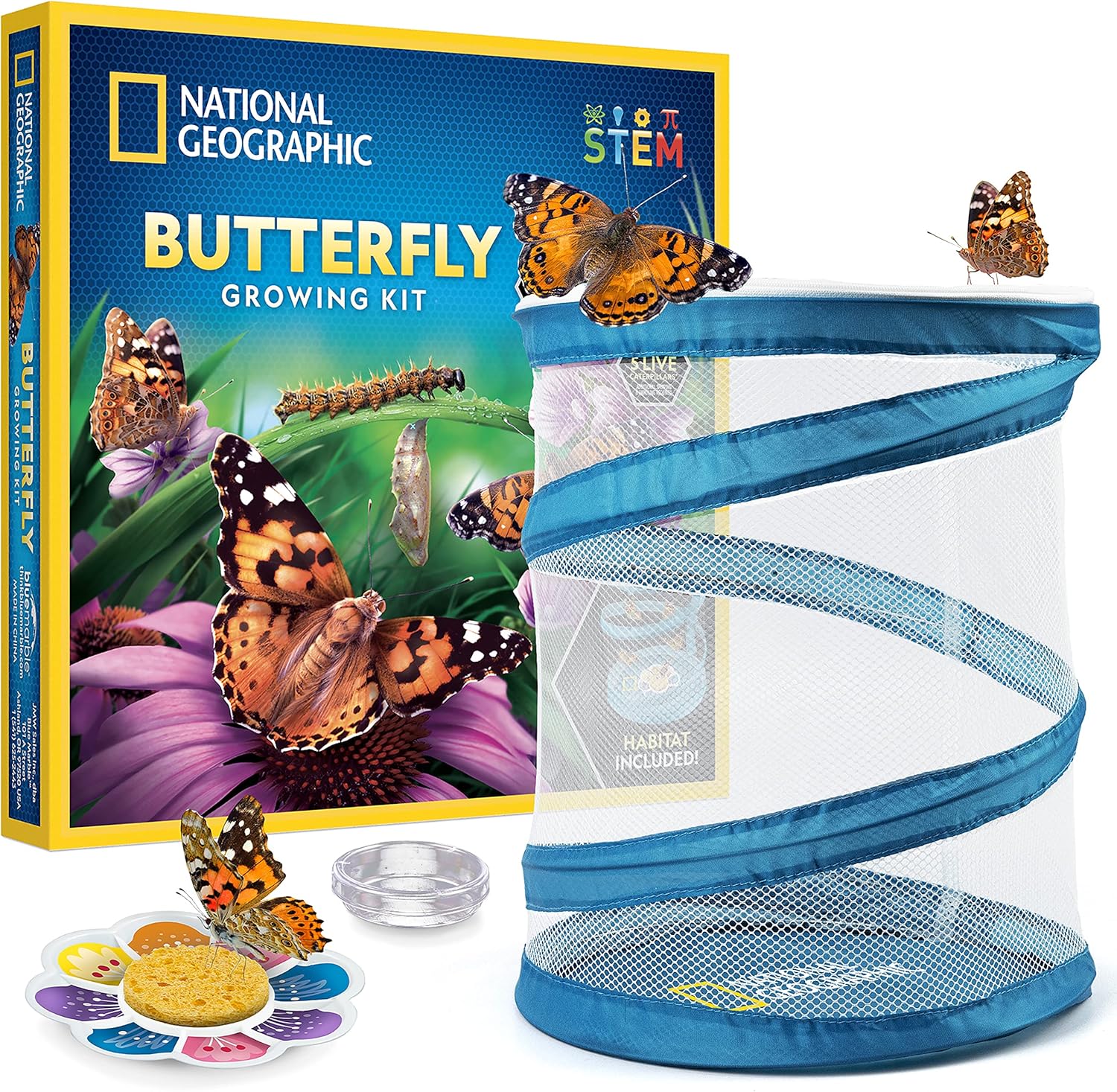
National Geographic Butterfly Garden
Ages 4-10 · paid · experience · amazon.com ↗
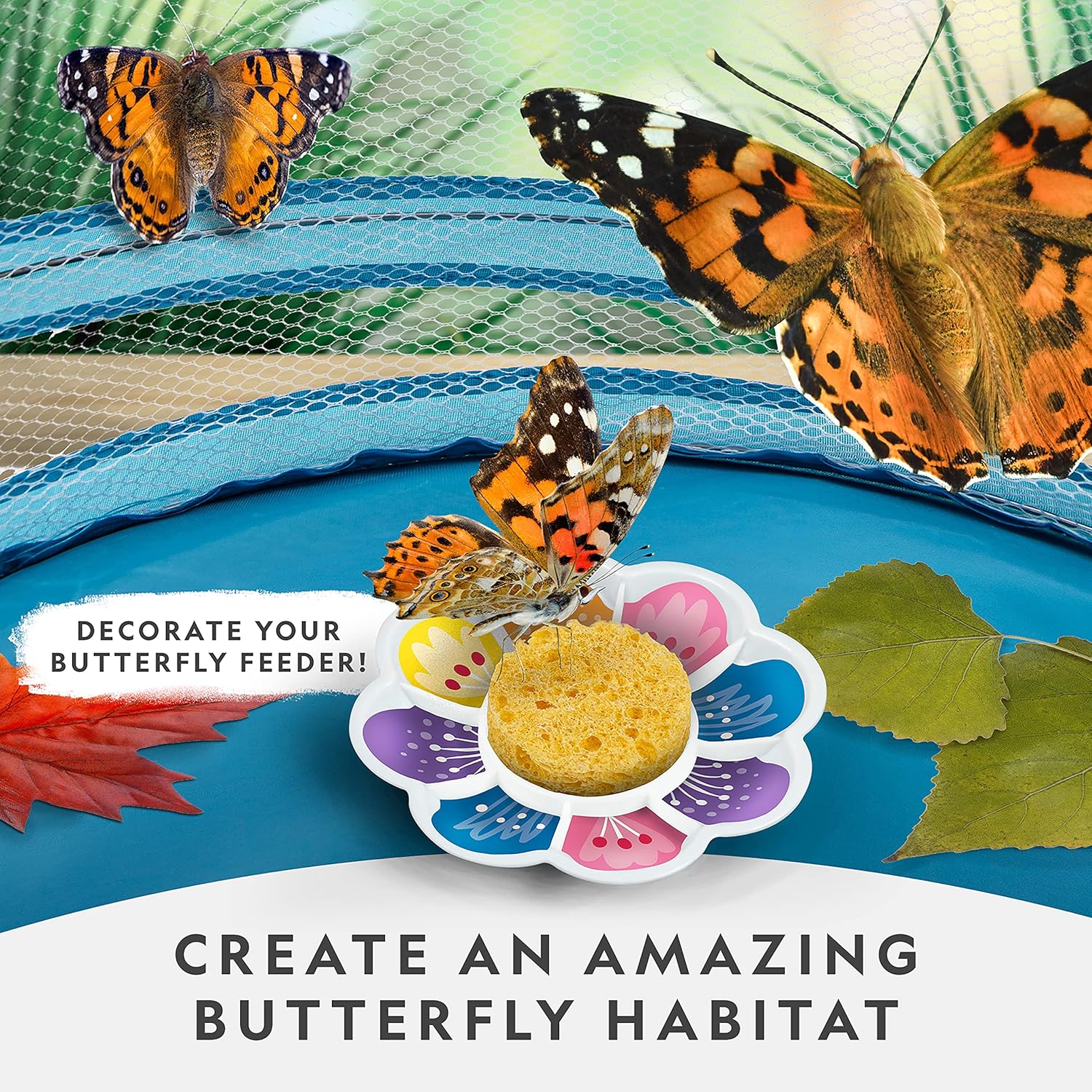
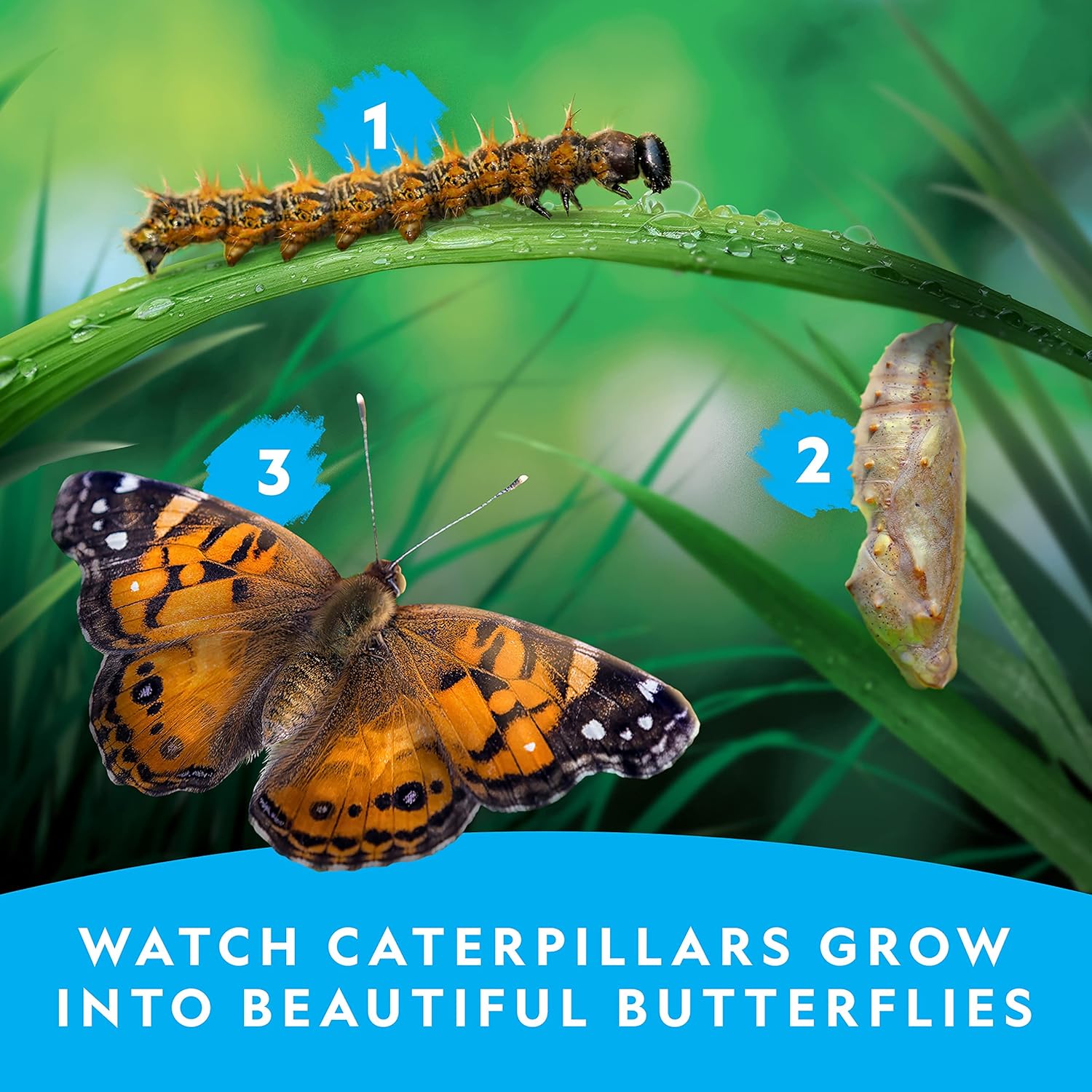
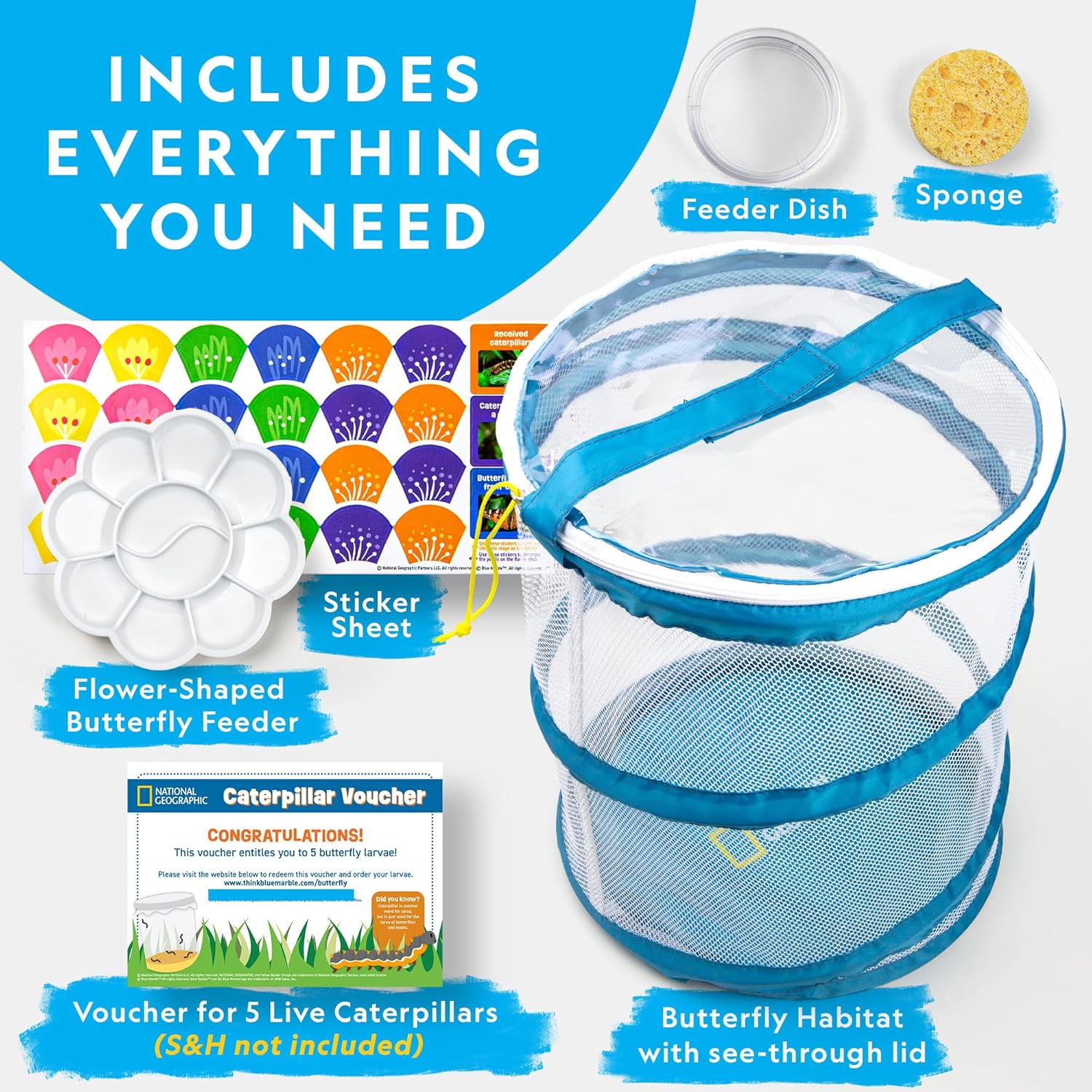
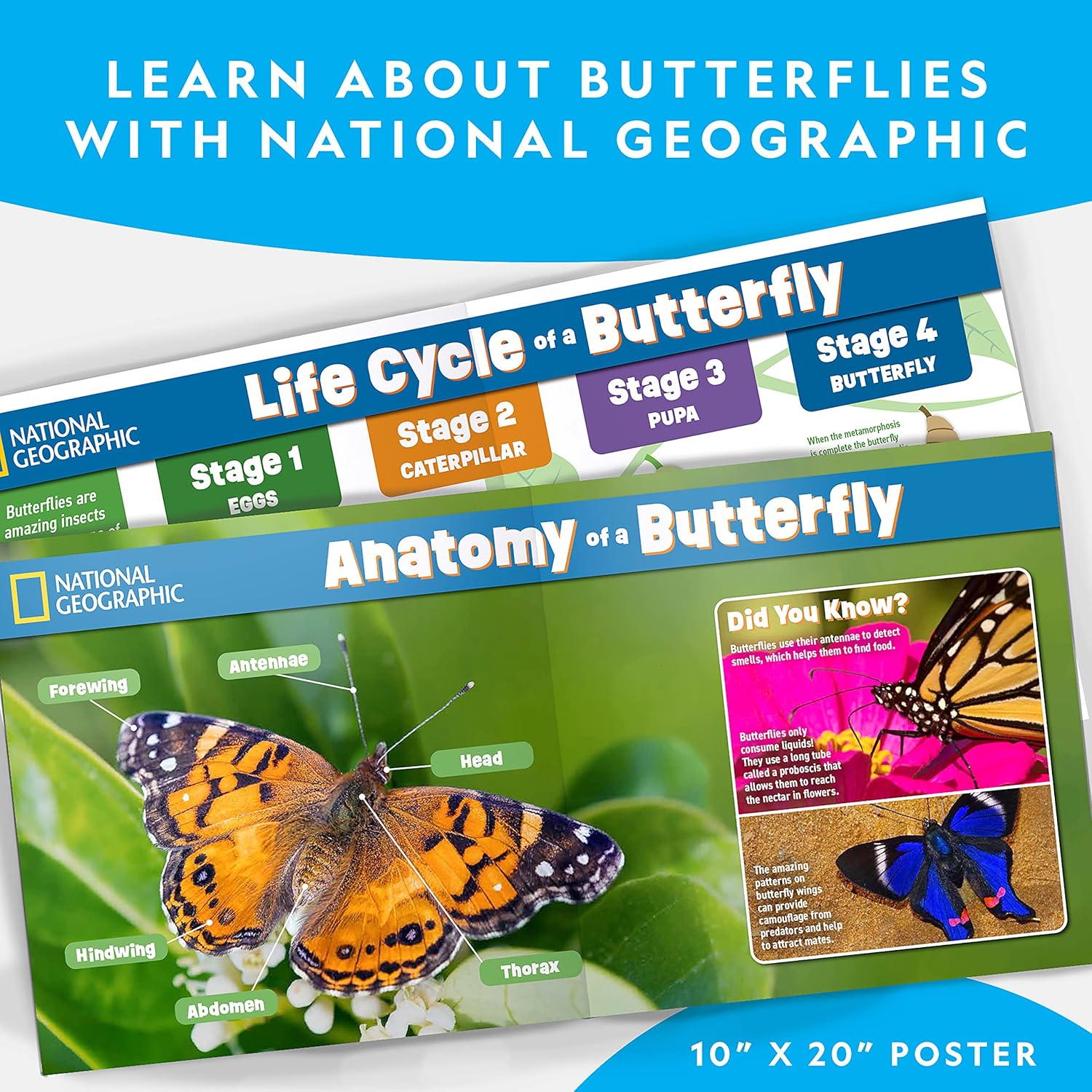
The National Geographic Butterfly Growing Kit is a live science experience. Kids receive 5 caterpillars through the mail, place them in a mesh habitat, and observe the complete metamorphosis process over 2-3 weeks: caterpillar to chrysalis to Painted Lady butterfly. A full-color learning guide explains the life cycle, anatomy poster tracks each stage, and at the end, kids release the butterflies outdoors. No screens, no batteries, no app.
National Geographic Butterfly Garden has focused developmental strength worth knowing about. It builds curiosity. The main growth opportunity: No creative expression or adaptability.
Strengths & gaps
Strengths
- ● The Butterfly Garden's standout is Curiosity. Live metamorphosis creates daily observation moments that drive genuine scientific wonder. The child watches a caterpillar dissolve into goo inside a chrysalis and reassemble as a butterfly. You can't Google what your caterpillar will look like tomorrow.
- ● The butterfly release connects effort to environmental contribution. Two-to-three weeks of care results in living butterflies released into the wild. This is a genuine Purpose moment for young children.
- ● Multi-week timeline builds patience. The biological process can't be rushed. Daily observation with no visible changes some days requires genuine delayed gratification.
Gaps
- ○ No creative expression or adaptability. The child observes a fixed biological process. There's nothing to build, create, or strategically adjust.
- ○ Low replay value. Once the butterflies are released, the experience is over. You can order more caterpillars, but the process is identical each time.
Detailed scores
How National Geographic Butterfly Garden performs on each of the 9 literacies in our framework.
Doing
— 0 of 3 Strong
The child doesn't control the biological process. Metamorphosis follows its own timeline. But kids choose how to observe, when to check, and how to document changes. Amazon reviewers report kids naming individual caterpillars and developing personal investment. The learning guide encourages active tracking rather than passive watching.
The 2-3 week timeline requires sustained attention. Some days nothing visible changes. The child must maintain interest and daily care even when progress seems stalled. But the difficulty is about patience, not problem-solving or effort.
The biological process follows a fixed sequence: caterpillar, chrysalis, butterfly. Each day's activity is the same: check the habitat, note changes. No strategy variation required.
Thinking
— 1 of 3 Strong
This is Curiosity by nature's design. Each morning the child checks: "What happened overnight? Did it start spinning? Is the chrysalis darker? Are the wings visible?" These are genuine information gaps created by biology, not by product design. The learning guide provides vocabulary and scientific framework. The transformation itself is one of nature's most visually dramatic processes.
The kit is about observation, not creation. Creativity is outside this product's scope.
Basic caretaking decisions exist: where to place the habitat, when to mist. But the biological process doesn't require evaluation, decision-making, or tradeoff analysis.
Being
— 0 of 3 Strong
The kit works best as a shared family experience. Checking the habitat together, naming caterpillars, and the butterfly release are natural bonding moments. Amazon reviewers describe kids excitedly sharing changes with siblings and parents. But the social dimension depends on family engagement, not product design.
The multi-week wait is genuine delayed gratification. Biology can't be fast-forwarded. If a caterpillar dies, the child must process real loss of something they cared for. This creates emotional experiences requiring regulation. But the kit doesn't teach coping strategies explicitly.
Releasing butterflies into the wild connects the child's 2-3 weeks of care to something beyond themselves. This is a small but genuine contribution to the local ecosystem. For ages 4-10, connecting personal effort to environmental impact is developmentally meaningful.
Based on 5 sources
- Product goodplayguide.com — national geographic butterfly growing kit
- Product simplybutterflies.org — national geographic butterfly growing kit review
- Product amazon.com — B0BSB9X5BW
- Product thinkbluemarble.com — national geographic butterfly growing kit
- Product kids.nationalgeographic.com — build a butterfly garden
Reviewed by New Literacies
Scored by our research-derived framework · AI-assisted analysis with editorial review · 5 sources reviewed · Our methodology →
Personalization bridge
Not sure what your kid needs most?
Take the quiz to see which literacies matter most for your family, then get practical things to try at home.
Get your family profileExplore more
See other products strong in the same literacies: