
Mondly Kids
Ages 5-12 · freemium · AI Product · mondly.com ↗
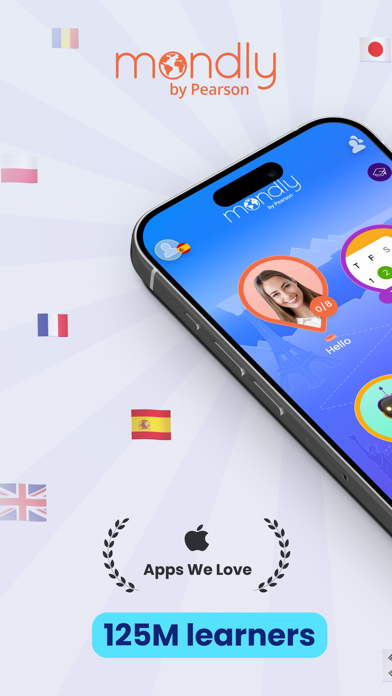
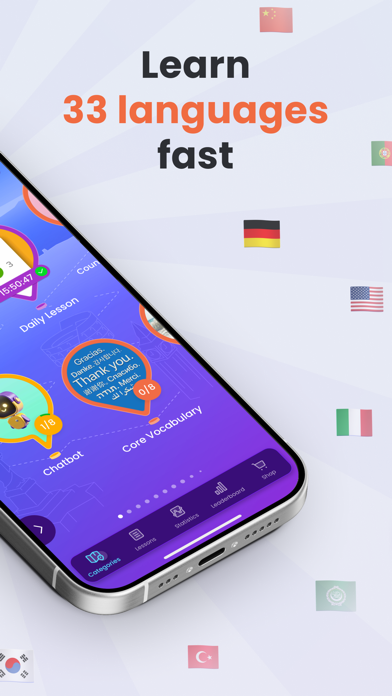
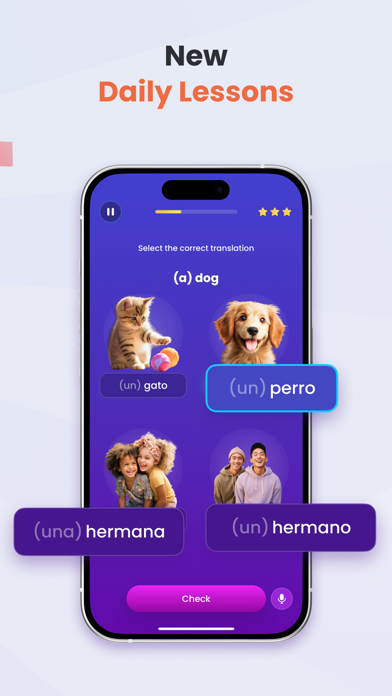
Mondly Kids is a vocabulary app where children tap through themed flash-card exercises in up to 33 languages. Kids see a word illustrated with a colorful picture, hear it spoken by a native speaker, then pick the matching image from four options or swipe to complete the match. Lessons are organized into topics like animals, food, and family, with each session lasting one to three minutes. A sentence-building activity shows how words combine into phrases.
We've reviewed Mondly Kids against our 9-literacy developmental framework. The main growth opportunity: Mondly Kids scores Limited across all assessed developmental capacities.
Strengths & gaps
Strengths
- ● Mondly Kids covers 33 languages, including less common ones like Bulgarian, Croatian, and Ukrainian. For families looking for vocabulary exposure in a specific language, the breadth is hard to beat.
- ● The visual design is genuinely appealing to young children. Bright illustrations, themed landscapes, and short sessions fit the attention span of 5-8 year olds.
Gaps
- ○ Mondly Kids scores Limited across all assessed developmental capacities. The flash-card format is passive: kids tap a picture that matches a word. No struggle, no creation, no decision-making.
- ○ Common Sense Media notes "kids could easily rely on" the native-language narration "without engaging target language." The app doesn't require active production or prevent passive consumption.
- ○ No speech recognition in the kids version (despite the adult Mondly platform having it). Kids hear words but never practice saying them with feedback.
Detailed scores
How Mondly Kids performs on each of the 9 literacies in our framework.
Doing
— 0 of 3 Strong
Mondly Kids prescribes everything: which words to learn, in what order, with what activity. The child's role is to select the correct picture from four options. Common Sense Media describes it as "essentially a collection of digital flash cards." No goal-setting, no initiation, no ownership.
Lessons last 1-3 minutes and provide constant positive feedback. Krioda notes "applause for correct responses" with "bright colors and cute characters." There's no real difficulty to push through. The design accommodates short attention spans rather than building longer ones.
The same picture-word matching format applies across all 33 languages and every topic. A lesson on French animals works identically to a lesson on Korean food. No strategy variation is ever needed.
Thinking
— 0 of 3 Strong
Mondly Kids presents word and image together as a complete package. Common Sense Media notes kids can "rely on native language narration without engaging target language." No information gaps are created and no exploration beyond the prescribed lessons is possible.
TalkReal explicitly states Mondly Kids has "no user input or creative expression options." Every activity is selection from predetermined choices. There's no drawing, speaking, building, or creating of any kind.
All activities are binary matching. Pick the picture that matches the word. No evaluation, no reasoning, no tradeoffs.
Being
— 0 of 3 Strong
Solo app. Connection is outside Mondly Kids' scope.
The combination of ultra-short sessions (1-3 minutes), constant praise, and zero difficulty means children never encounter frustration or delayed gratification. The design is optimized for enjoyment, not emotional challenge.
Vocabulary is organized by topic (animals, food, family) without any connection to cultural understanding, identity, or why learning another language matters. Purpose is outside the product's scope.
Based on 5 sources
Reviewed by New Literacies
Scored by our research-derived framework · AI-assisted analysis with editorial review · 5 sources reviewed · Our methodology →
Get the next guide before it goes live
One email when a new product review ships.
Free. No spam. Unsubscribe anytime.