
MMGuardian
All ages · paid · AI Product · mmguardian.com ↗
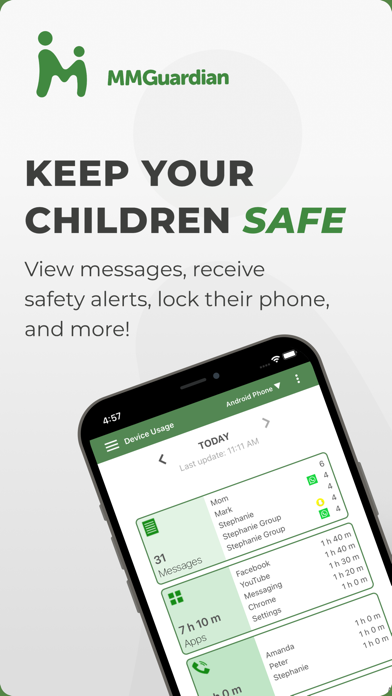
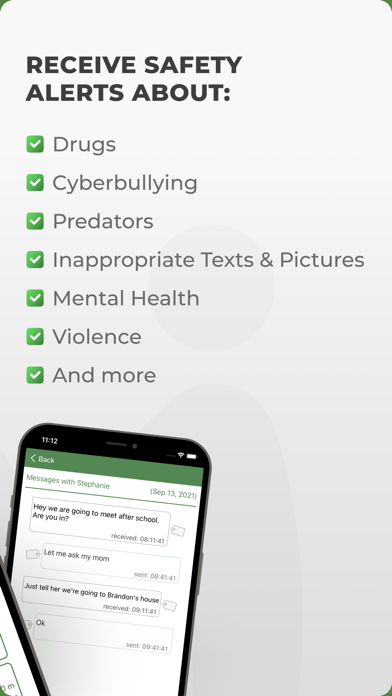
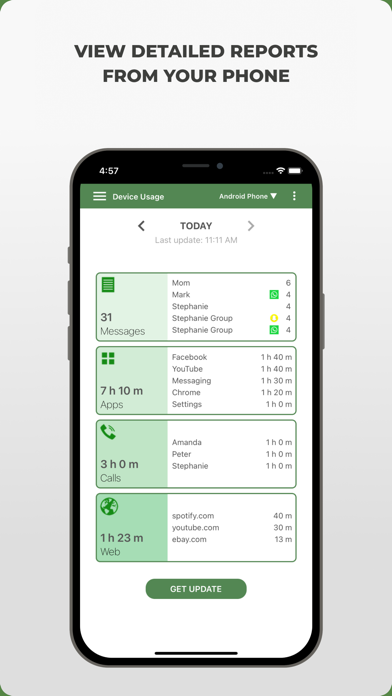
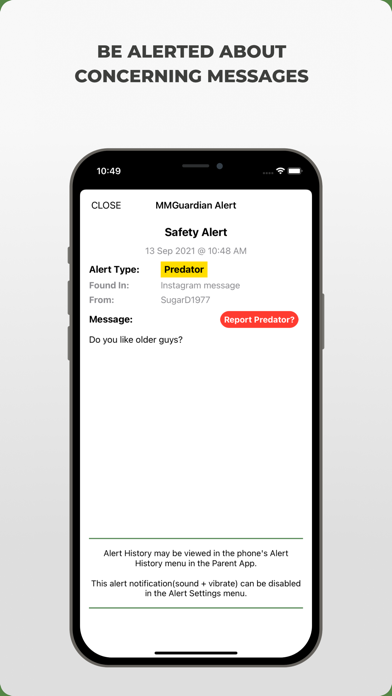
MMGuardian is a parental-control app focused on monitoring. Parents can review messages, manage apps, filter web access, track location, and receive AI alerts for risky content like grooming, cyberbullying, or suicidal language. From the child’s point of view, MMGuardian is the system watching the phone rather than a place where they build something.
We've reviewed MMGuardian against our 9-literacy developmental framework. The main growth opportunity: mMGuardian does little to build child-owned developmental capacity. Most of the action sits with the adult dashboard.
Strengths & gaps
Strengths
- ● MMGuardian’s clearest value is visibility. Parents who want detailed monitoring across messages, apps, and web use can get it, especially on Android.
- ● The AI alert layer also targets genuinely serious issues. Grooming, bullying, and crisis language are not trivial categories.
Gaps
- ○ MMGuardian does little to build child-owned developmental capacity. Most of the action sits with the adult dashboard.
- ○ The most defensible positive case is external self-regulation support through limits and routines. Beyond that, the product is more about control than growth.
Detailed scores
How MMGuardian performs on each of the 9 literacies in our framework.
Doing
— 0 of 3 Strong
MMGuardian is built around adult oversight. Parents see, block, and manage. The child has little meaningful control over the structure of the experience.
The retrieved evidence does not show productive struggle, mastery, or deep effort. MMGuardian is a management layer, not a practice environment. Persistence stays outside scope.
No harvested source shows the child reflecting on strategies or transferring learning across situations through MMGuardian itself. Adaptability is not demonstrated here.
Thinking
— 0 of 3 Strong
MMGuardian is not trying to spark questions or rabbit-hole exploration. It exists to narrow risk and improve supervision. Curiosity remains outside the product’s purpose.
Children do not make or design inside MMGuardian. It is an underlying control system. Creativity is not meaningfully engaged.
MMGuardian helps adults notice risky content sooner. But because the system routes so much judgment to the parent and the alert engine, the child gets less direct practice making digital choices independently.
Being
— 0 of 3 Strong
MMGuardian may help families respond to harmful interactions. But the tool itself is surveillance-heavy, so it does not directly build trust, empathy, or collaborative communication.
Schedules, blocks, and usage controls can support more stable device habits. But this is mostly externally enforced regulation. The public evidence does not show a strong transfer into self-owned restraint.
The product is framed around monitoring and protection. Nothing in the harvested evidence connects MMGuardian to identity, meaning, or contribution.
Based on 4 sources
Reviewed by New Literacies
Scored by our research-derived framework · AI-assisted analysis with editorial review · 4 sources reviewed · Our methodology →
Get the next guide before it goes live
One email when a new product review ships.
Free. No spam. Unsubscribe anytime.