Minecraft
Ages 6-14 · paid · Product · minecraft.net ↗
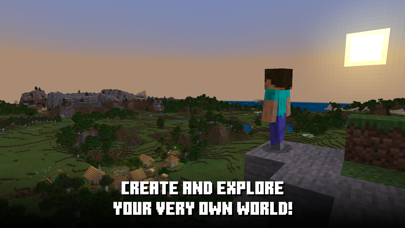
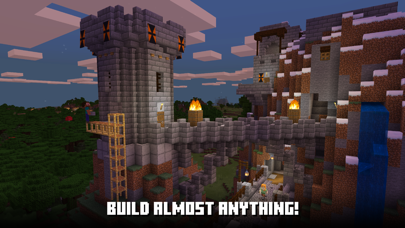
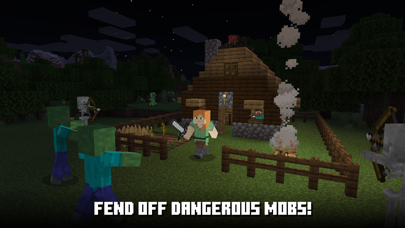
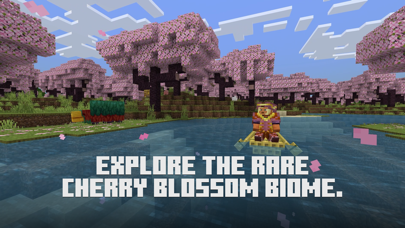
Minecraft is an open-world sandbox game where kids mine resources, craft tools, build structures, and survive in procedurally generated worlds. In Creative mode, they build anything with unlimited materials. In Survival mode, they manage resources, fight mobs, and explore while keeping their character alive. Multiplayer lets kids collaborate on builds, trade resources, and defend shared bases with friends.
Minecraft is one of the strongest developmental products we've reviewed. It builds action and persistence, curiosity and creative thinking, connection. The main growth opportunity: Doesn't teach emotion regulation.
Strengths & gaps
Strengths
- ● Exceptionally strong for Agency and Creativity. Survival mode puts the child in complete control of goals, methods, and outcomes with no prescribed path. Three academic studies confirm creativity gains from Minecraft play.
- ● Builds Persistence through genuine difficulty. Losing your inventory to lava is real frustration with real stakes, not a scripted lesson in resilience.
- ● Develops Curiosity through hidden systems (redstone, enchanting, biomes) that reward investigation over instruction. Procedurally generated worlds ensure genuine surprise.
- ● Builds Connection both in-game and beyond it. Research confirms social skill development through collaborative play, and Minecraft functions as shared social currency on the playground.
Gaps
- ○ Doesn't teach emotion regulation. Children who already self-regulate will practice it here. Children who don't may struggle with post-game irritability, especially those with ADHD.
- ○ Purpose is incidental. Minecraft doesn't connect effort to values or contribution unless a parent or community creates that context.
Detailed scores
How Minecraft performs on each of the 9 literacies in our framework.
Doing
— 3 of 3 Strong
Minecraft is the clearest example of Strong agency in our scoring. The child sets all goals, chooses all methods, and owns all outcomes. There's no quest log, no tutorial campaign, no prescribed path. From the first moments, the child decides what to build, where to explore, and what matters. Every session produces artifacts the child can point to and say "I made that."
Survival mode creates calibrated difficulty that demands sustained effort across sessions. A creeper explosion can destroy hours of building. These aren't punitive game-overs. They're informative failures that teach "what went wrong and how do I prevent it?" Complex builds take weeks. Worlds evolve over months, building persistence as a habit through genuine long-term investment.
Minecraft forces constant strategy-switching. A building technique that works on flat plains fails on a mountainside. Underground mining requires different approaches depending on lava, water, or cave systems. Redstone circuitry requires iterative debugging where children must recognize when their design isn't working and try a fundamentally different approach. A 2025 systematic review confirmed positive effects on spatial thinking and critical thinking.
Thinking
— 3 of 3 Strong
Minecraft's procedurally generated worlds are curiosity engines. Every new world is unique, creating constant "what's over that hill?" moments. The crafting system deliberately withholds complete information, requiring discovery through play. A child who starts building a house may discover redstone, which leads to machines, which leads to logic gates. Depth is essentially unlimited.
Minecraft provides tools, not blueprints. The child generates original ideas with no templates, and multiple approaches are always possible. The block constraint is itself a creativity driver: how do you build a curved roof with cubes? An Iowa State study found unrestricted Minecraft play produced higher creativity than directed play, and a 2025 systematic review identified three studies showing positive effects on creativity.
Survival mode is a continuous exercise in tradeoff evaluation. Should I explore deeper into this cave? Should I use limited iron for a sword or a pickaxe? Should I build near the village or in the mountains? These are genuine decisions under uncertainty with real consequences. Multiplayer adds social judgment: who to trust, when to trade, how to negotiate shared resources.
Being
— 1 of 3 Strong
Minecraft builds connection through two channels. In multiplayer, children collaborate on builds, defend bases, trade resources, and coordinate operations. Research confirms improvements in social initiations, cooperation, and conflict management. Beyond the game, Minecraft functions as shared social infrastructure. Children talk about builds at school, plan projects outside the game, and bond over shared knowledge.
Minecraft creates genuine emotional challenges. Losing an inventory to lava produces real frustration. Continuing after setbacks requires managing those emotions. But Minecraft doesn't teach regulation strategies. It doesn't help children label emotions or develop coping tools. Multiple parent reports note post-game irritability, particularly in children with ADHD.
Children frequently develop deep personal meaning through Minecraft worlds. Long-term projects become sources of pride, and some children discover real-world interests through the game: architecture, engineering, game design, electronics via redstone. But Minecraft doesn't connect effort to values or ethical questions. Purpose development is emergent, not designed.
Based on 9 sources
- Product bera-journals.onlinelibrary.wiley.com — rev3.
- Research unisa.edu.au — minecraft a gamechanger for childrens learning
- Review commonsensemedia.org — minecraft
- Product journals.sagepub.com —
- Product core.ac.uk — 77239875.pdf
- Product npr.org — minecraft brain psychology video game social learning
- Product interconnect-therapy.com — minecraft the modern playgroundwhen creativity connects and when it consumes
- Product additudemag.com — minecraft makes my son irritable what gives
- Product minecraftsocialskills.com
Reviewed by New Literacies
Scored by our research-derived framework · AI-assisted analysis with editorial review · 9 sources reviewed · Our methodology →
Get the next guide before it goes live
One email when a new product review ships.
Free. No spam. Unsubscribe anytime.
See other products strong in the same literacies: