MicroMacro: Crime City
Ages 8-12 · paid · Product · edition-spielwiese.de ↗
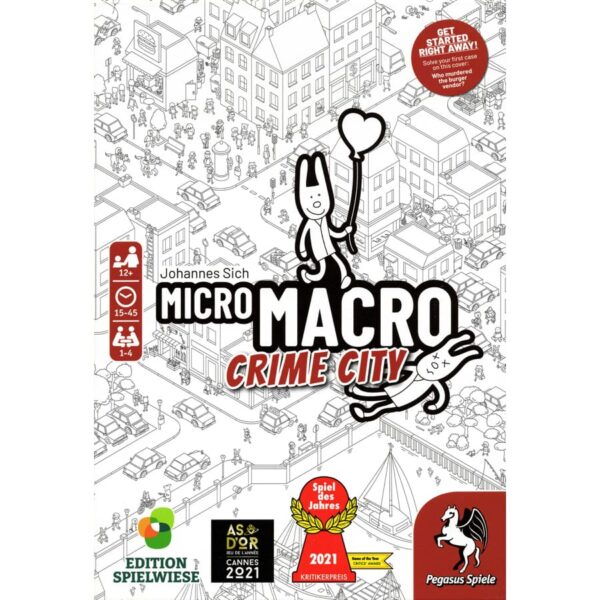
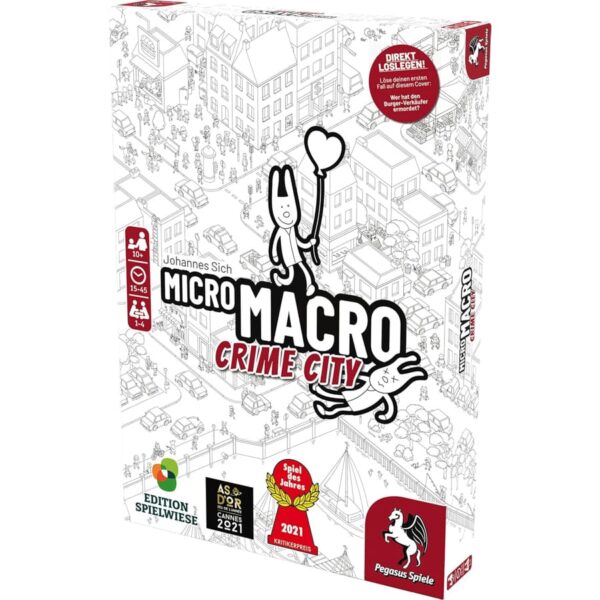
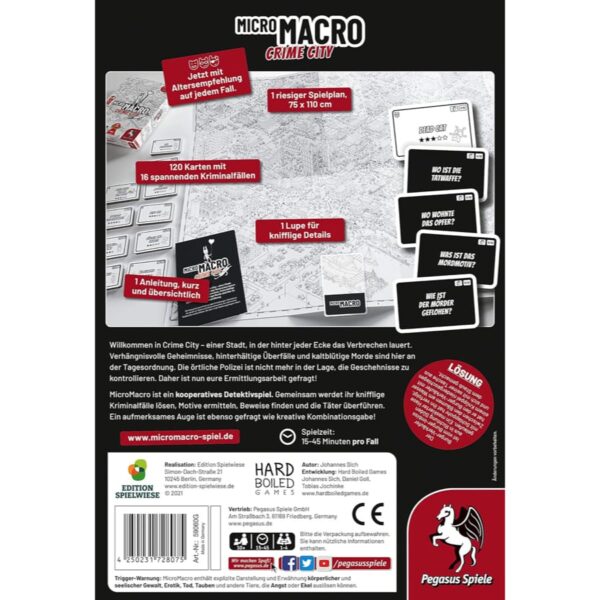
MicroMacro: Crime City is a detective game built around one huge illustrated city map. Kids search for clues, trace characters across time, and reconstruct what happened in each case by comparing tiny visual details.
MicroMacro: Crime City stands out for developmental impact across multiple literacies. It builds adaptability, cognitive skills. The main growth opportunity: creativity is limited. Kids are solving authored mysteries, not generating original work.
Strengths & gaps
Strengths
- ● MicroMacro is strongest for Judgment. The whole game is evidence and inference.
- ● Curiosity is also unusually strong because the giant map invites question after question.
Gaps
- ○ Creativity is limited. Kids are solving authored mysteries, not generating original work.
- ○ Some cases may be a better fit for older kids because the cognitive load can be high.
Detailed scores
How MicroMacro: Crime City performs on each of the 9 literacies in our framework.
Doing
— 1 of 3 Strong
Players decide how to search and what to test first. But the answer space is authored.
The game rewards slow careful work. Missing a tiny clue means going back and trying again.
Good players update their theory when new evidence appears. That makes adaptability central to success.
Thinking
— 2 of 3 Strong
The giant city map is a machine for generating questions. Kids keep spotting new scenes and wanting to connect them.
MicroMacro is interpretive, not generative. The child is reconstructing a case, not making something of their own.
This is the core developmental spike. Kids have to decide what counts as evidence and which explanation fits best.
Being
— 0 of 3 Strong
Shared detective work creates real conversation. It is social, but not deeply relational in the way a cooperative role-based game can be.
Patience matters. Kids who can tolerate uncertainty and keep scanning will get more from it.
Purpose sits outside the game's design.
Based on 3 sources
Reviewed by New Literacies
Scored by our research-derived framework · AI-assisted analysis with editorial review · 3 sources reviewed · Our methodology →
Personalization bridge
Not sure what your kid needs most?
Take the quiz to see which literacies matter most for your family, then get practical things to try at home.
Get your family profileExplore more
See other products strong in the same literacies: