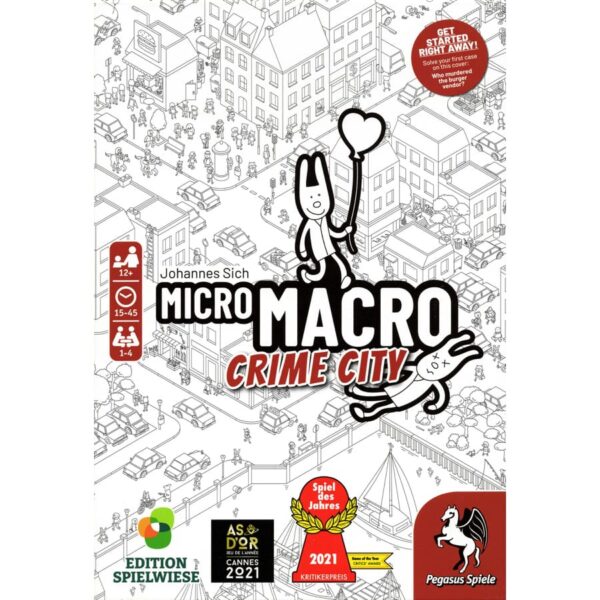
MicroMacro: Crime City
Ages 8-12 · paid · Product · edition-spielwiese.de ↗
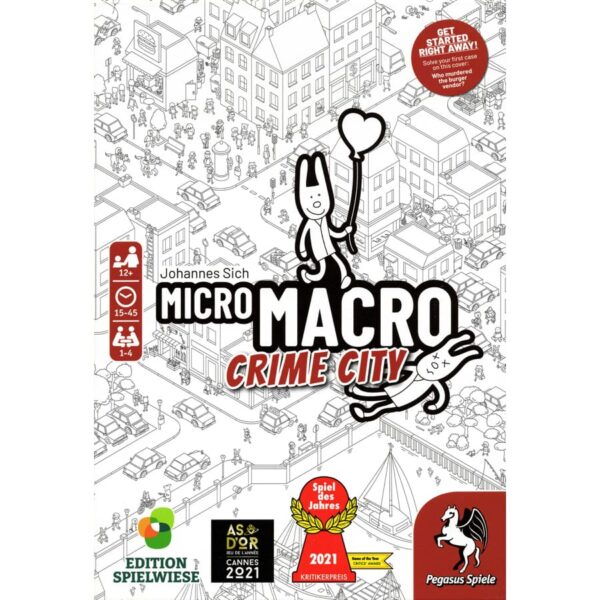
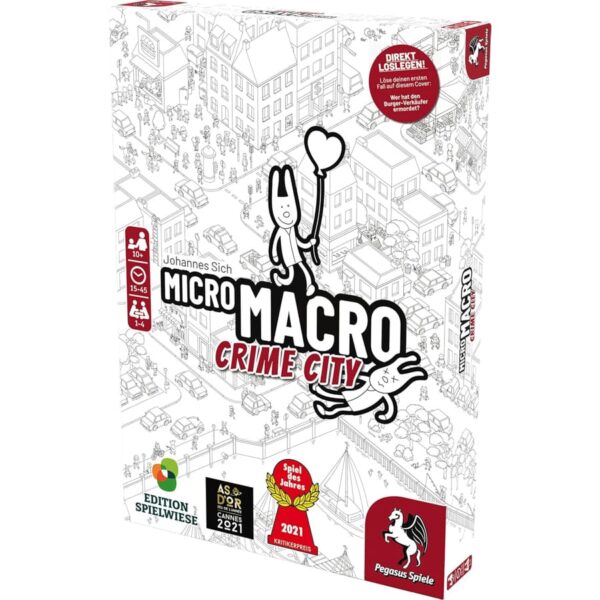
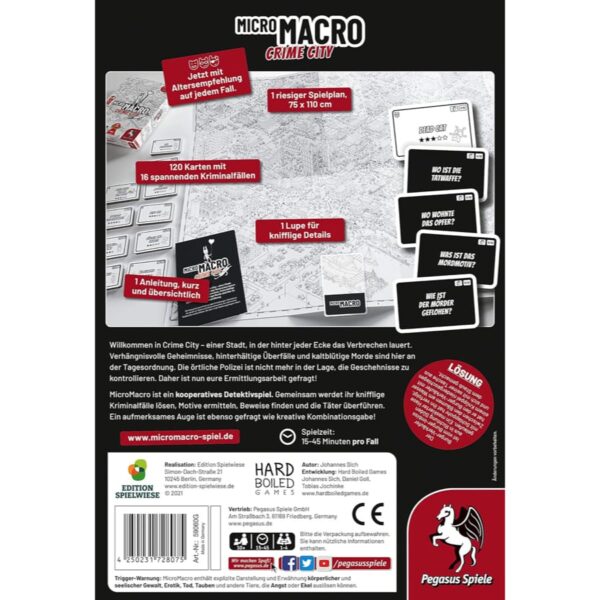
MicroMacro: Crime City is a detective game built around one huge illustrated city map. Kids search for clues, trace characters across time, and reconstruct what happened in each case by comparing tiny visual details.
MicroMacro: Crime City stands out for developmental impact across multiple literacies. It builds adaptability, cognitive skills. The main growth opportunity: creativity is limited. Kids are solving authored mysteries, not generating original work.
Strengths & gaps
Strengths
- ● MicroMacro is strongest for Judgment. The whole game is evidence and inference.
- ● Curiosity is also unusually strong because the giant map invites question after question.
Gaps
- ○ Creativity is limited. Kids are solving authored mysteries, not generating original work.
- ○ Some cases may be a better fit for older kids because the cognitive load can be high.
Detailed scores
How MicroMacro: Crime City performs on each of the 9 literacies in our framework.
Doing
— 1 of 3 Strong
Players decide how to search and what to test first. But the answer space is authored.
The game rewards slow careful work. Missing a tiny clue means going back and trying again.
Good players update their theory when new evidence appears. That makes adaptability central to success.
Thinking
— 2 of 3 Strong
The giant city map is a machine for generating questions. Kids keep spotting new scenes and wanting to connect them.
MicroMacro is interpretive, not generative. The child is reconstructing a case, not making something of their own.
This is the core developmental spike. Kids have to decide what counts as evidence and which explanation fits best.
Being
— 0 of 3 Strong
Shared detective work creates real conversation. It is social, but not deeply relational in the way a cooperative role-based game can be.
Patience matters. Kids who can tolerate uncertainty and keep scanning will get more from it.
Purpose sits outside the game's design.
Based on 3 sources
Reviewed by New Literacies
Scored by our research-derived framework · AI-assisted analysis with editorial review · 3 sources reviewed · Our methodology →
Get the next guide before it goes live
One email when a new product review ships.
Free. No spam. Unsubscribe anytime.
See other products strong in the same literacies: