Mango Languages
Ages 5-17 · freemium · Product · mangolanguages.com ↗
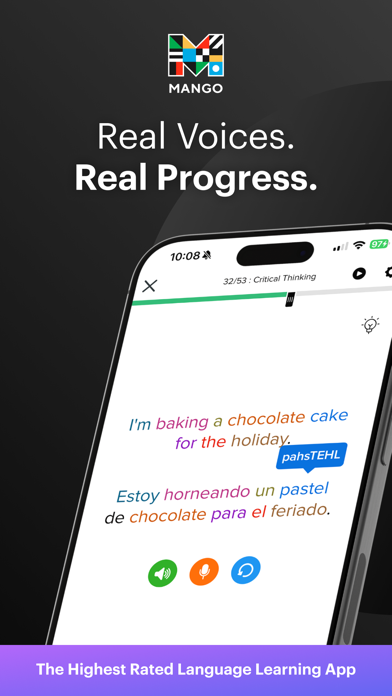
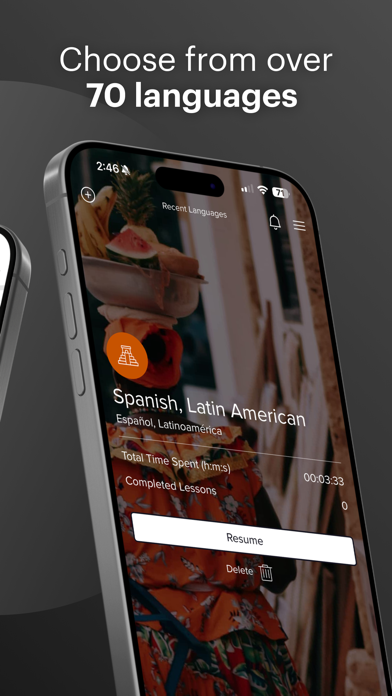
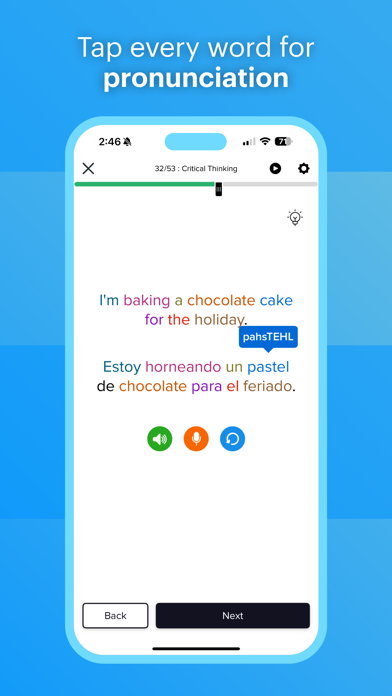
Mango Languages teaches conversational language skills across 70+ languages, including endangered and indigenous ones like Cherokee and Tuvan. Kids work through lessons where they hear a full conversation in the target language, then the app breaks it apart piece by piece and rebuilds it. Lessons run 10-25 minutes depending on the script system. Cultural notes woven into lessons explain context behind phrases. The K-12 version adds classroom management tools, and many public libraries offer free access.
We've reviewed Mango Languages against our 9-literacy developmental framework. The main growth opportunity: Mango doesn't reach Strong on any capacity.
Strengths & gaps
Strengths
- ● Mango's conversational methodology goes beyond vocabulary drill. Kids hear a real conversation, break it down, and rebuild it. This deconstruct-reconstruct approach requires more cognitive engagement than flash-card matching.
- ● Cultural notes within lessons add a "why" dimension. Kids don't just learn that "konnichiwa" means hello; they learn something about when and how Japanese speakers use it. For developmental curiosity, this context matters.
- ● The 70+ language catalog includes endangered and indigenous languages like Cherokee, Tuvan, and Dzongkha. Learning an endangered language connects vocabulary practice to real communities and cultural preservation in ways that mainstream language apps don't.
- ● Free through thousands of public libraries, making it one of the most accessible language learning platforms for families.
Gaps
- ○ Mango doesn't reach Strong on any capacity. The conversational methodology is better than flash cards but still prescribed. Kids follow the app's conversation sequence rather than constructing their own.
- ○ No creative or collaborative features. Language learning is inherently communicative, but Mango's core experience is solo and structured.
- ○ Advanced learners find it shallow. Language Throne notes it "shines brightest for beginners" but "advanced learners might find themselves wishing for more depth."
Detailed scores
How Mango Languages performs on each of the 9 literacies in our framework.
Doing
— 0 of 3 Strong
Mango lets kids choose languages and lessons, working through content at their own pace. The conversational methodology provides more context than pure vocabulary drill, giving kids a sense of building toward real communication. But lesson activities are prescribed and all conversations follow the app's sequence.
Mango's 10-25 minute lessons are substantially longer than most language apps for children. Completing a 20-minute lesson in a non-roman script language requires genuine sustained attention. The deconstruct-reconstruct conversation format means effort builds across the lesson. This is more persistence demand than 1-5 minute vocabulary apps, though difficulty isn't individually calibrated.
One conversational methodology applies across all 70+ languages. The format is consistent by design. No strategy variation is needed or possible.
Thinking
— 0 of 3 Strong
Cultural notes are Mango's curiosity differentiator. Kids encounter context about how languages are used in real communities, not just what words mean. The breadth of 70+ languages, including endangered ones, exposes children to linguistic diversity. LinguaSteps highlights cultural notes as a standout feature.
All activities follow prescribed conversation patterns. No open-ended creation, no original production, no creative expression.
Cultural notes provide informational context, but exercises are binary correct/incorrect. Kids don't evaluate competing information or weigh tradeoffs. The cultural notes inform without requiring analysis.
Being
— 0 of 3 Strong
Solo platform. Classroom use adds social context but isn't a product feature. Connection is outside Mango's scope as designed.
10-25 minute lessons require kids to manage their attention and resist distraction for substantially longer than typical app sessions. This is an indirect self-regulation exercise. Mango doesn't teach regulation strategies, but the lesson length creates practice in sustained focus.
Mango's endangered language courses connect vocabulary practice to cultural preservation. A child learning Cherokee through Mango is engaging with a living language community, not just memorizing words. Cultural notes throughout all courses add meaning to why languages matter. This purpose connection is implicit rather than explicit, but it's a real differentiator.
Based on 7 sources
- Review commonsense.org — mango languages
- Product modulo.app — mango languages curriculum review
- Product languagethrone.com — mango languages
- Product linguasteps.com — mango languages review 2025 is mango languages the most comprehensive language app
- Product mangolanguages.com — k
- Product mangolanguages.com
- Product mangolanguages.com — pricing
Reviewed by New Literacies
Scored by our research-derived framework · AI-assisted analysis with editorial review · 7 sources reviewed · Our methodology →
Get the next guide before it goes live
One email when a new product review ships.
Free. No spam. Unsubscribe anytime.