Makey Makey
Ages 6-14 · paid · Product · makeymakey.com ↗
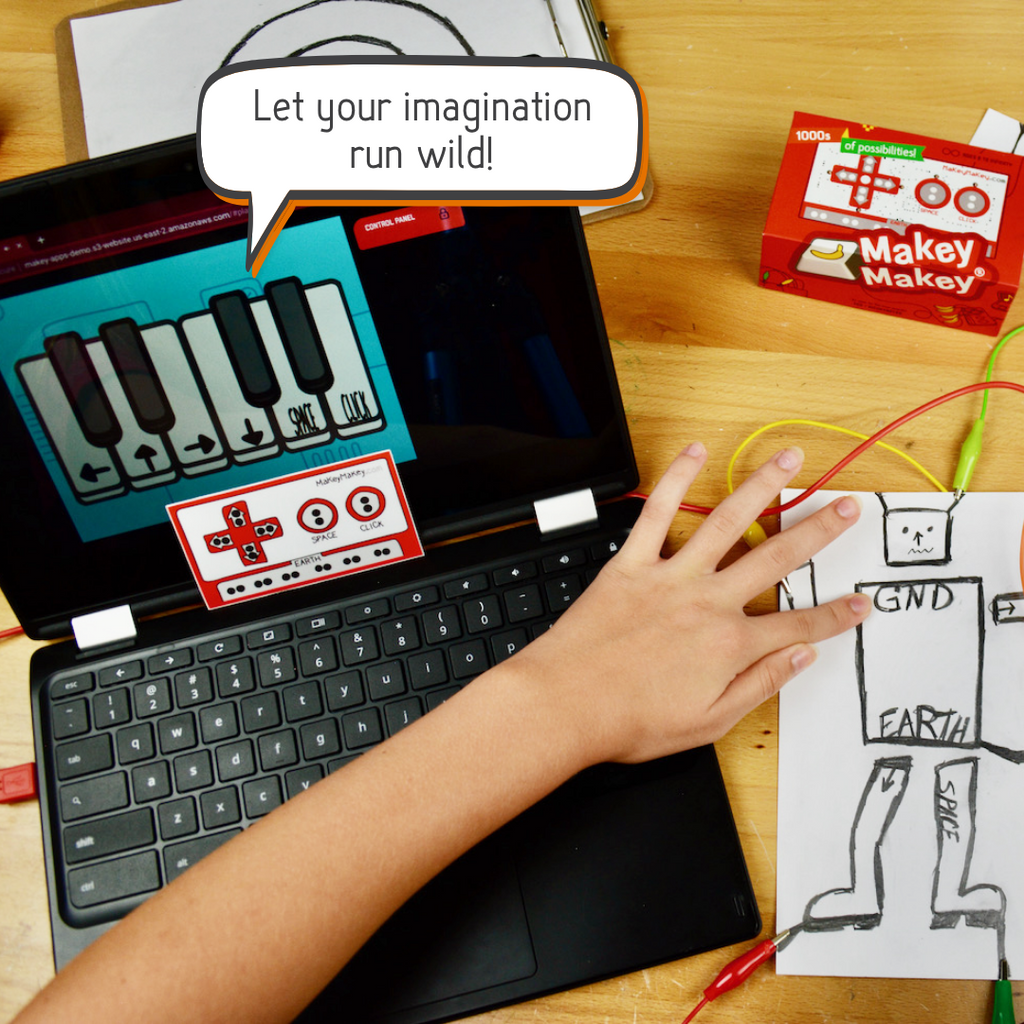
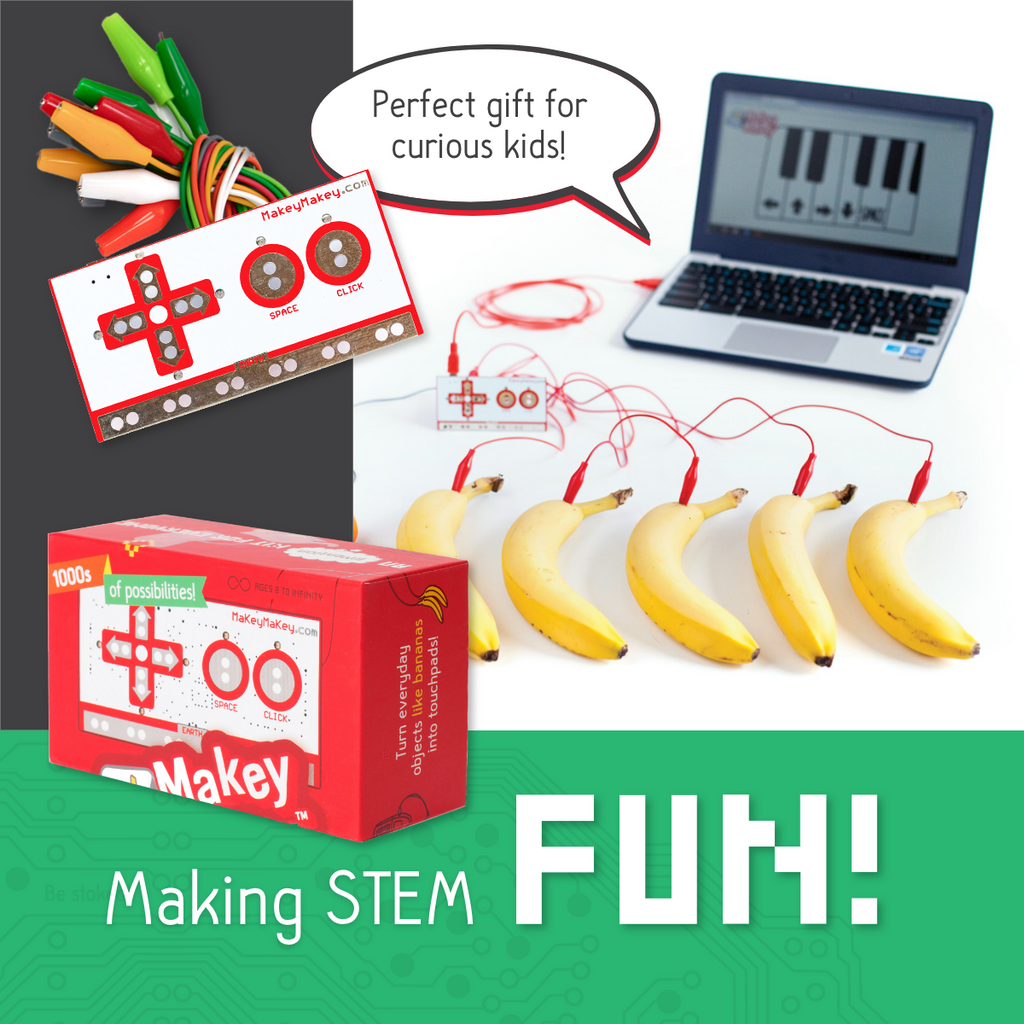
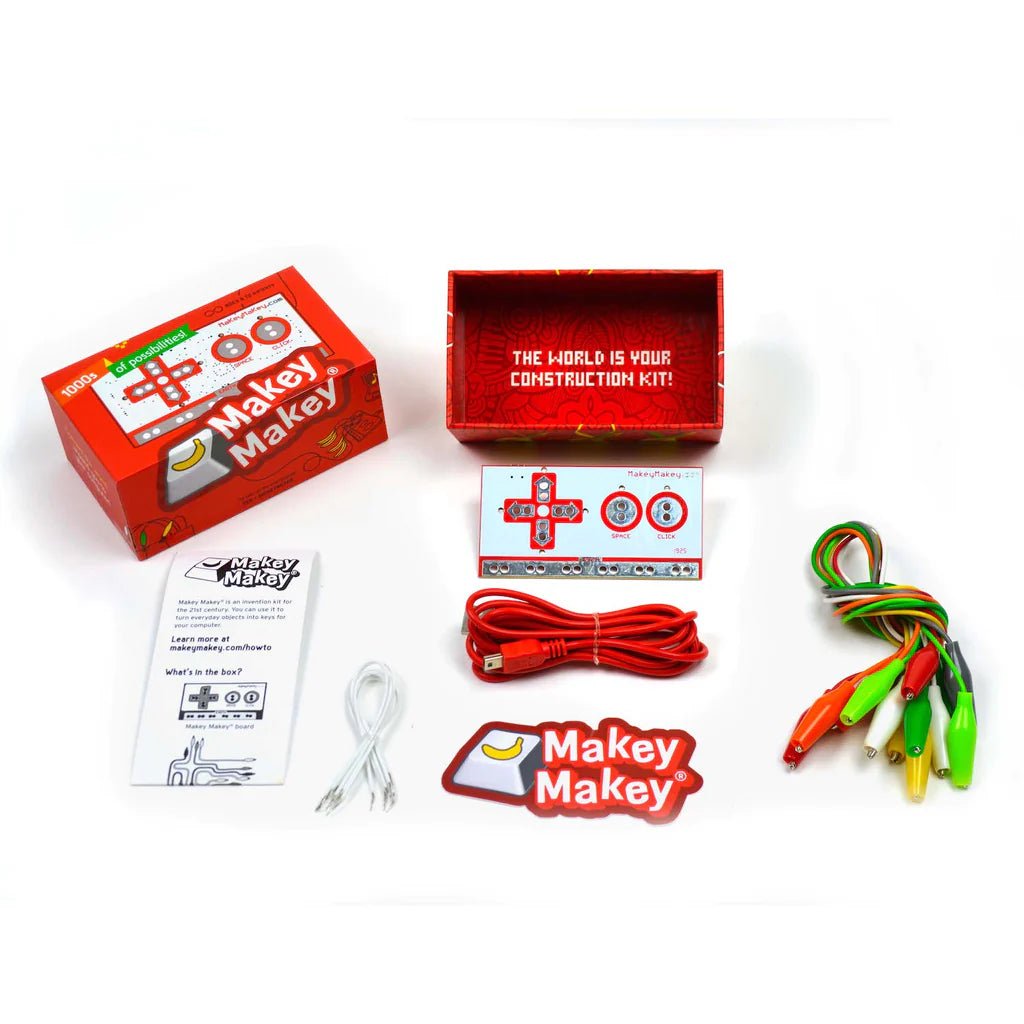
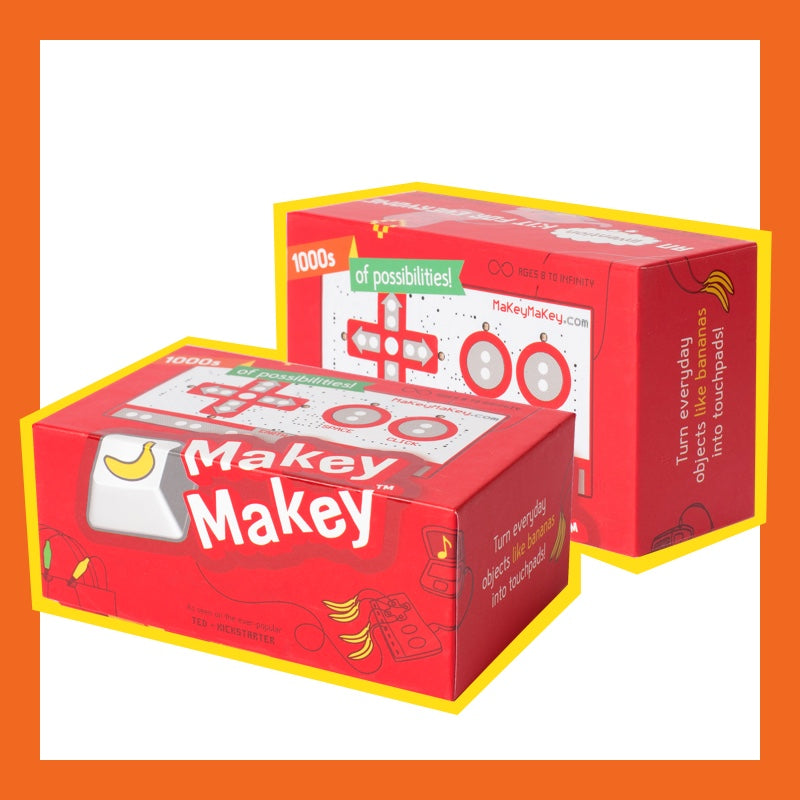
Makey Makey is a small circuit board that plugs into a computer via USB and turns everyday conductive objects -- bananas, Play-Doh, pencil drawings, foil, even a person -- into keyboard and mouse inputs. Kids clip alligator leads to whatever they want to use as a controller, then pair it with software like Scratch to make banana pianos, Play-Doh game pads, or interactive art installations. No software install or programming knowledge is required to start; the board works as a plug-and-play keyboard replacement out of the box.
Makey Makey stands out for developmental impact across multiple literacies. It builds action and persistence, cognitive skills. The main growth opportunity: Makey Makey doesn't teach coping skills.
Strengths & gaps
Strengths
- ● Makey Makey is a clean creativity tool. A banana, pencil drawing, or piece of foil can become a controller, and the child decides what it should do.
- ● The kit builds persistence through honest failure. If the circuit doesn't work, the child has to trace the problem and try again.
- ● It also pushes curiosity in a concrete way. The whole product revolves around one question: what conducts, and what happens if I wire it up?
Gaps
- ○ Makey Makey doesn't teach coping skills. It creates frustration, but the regulation work is left to the child and the adults around them.
- ○ Purpose stays optional. Kids can make useful or meaningful inventions, but the kit doesn't connect that making to identity or service.
Detailed scores
How Makey Makey performs on each of the 9 literacies in our framework.
Doing
— 3 of 3 Strong
Makey Makey puts the child in charge of the invention. The product page shows banana pianos, game controllers, and musical instruments, but it doesn't tell the child what to make. The child picks the object, the wiring, and the outcome. That is the core of agency here. The child is making choices that change what the invention becomes.
Makey Makey rewards the child for staying with a problem. A clip slips, a conductor dries out, or a grounding wire fails, and the invention stops working until the child fixes it. Wired's Maker Faire coverage showed kids testing different materials and making repairs as they built. That kind of trial and error is real persistence practice. The kit doesn't smooth the problem away.
Makey Makey asks the child to switch strategies constantly. A banana, a pencil, Playdoh, and foil all behave differently, so the wiring plan has to change with the material. When Makey Makey is paired with Scratch, the child also has to map physical inputs to digital actions. That is more than repetition. The child has to adapt the idea to the material and the code.
Thinking
— 2 of 3 Strong
Makey Makey keeps opening new questions. The home page and Scratch Foundation resource both make the same point: everyday objects can become controls if they conduct electricity. That turns the house, classroom, or kitchen into a test bench. The product creates a lot of "what if" moments. That's the right shape for curiosity.
Makey Makey is invention first. The HKBU study with 249 adolescents found significant gains in originality, flexibility, fluency, and elaboration in a Makey Makey-based STEAM project. The product itself backs that up by inviting children to make whatever the idea requires. There is no template to copy. The child has to generate the idea and make it work.
Makey Makey does build judgment around materials and design. The child has to decide which objects conduct, how to arrange the circuit, and whether the finished invention is reliable enough to use. Stanford's circuit lesson makes that design reasoning concrete. But the judgment stays local. The kit does not force the child to weigh evidence, compare perspectives, or reason through moral tradeoffs.
Being
— 0 of 3 Strong
Makey Makey works well with other people, especially in classrooms. Marin-Marin et al. found collaboration and teacher-student interaction improved in a Makey Makey-based instructional setting. In practice, one child can hold the ground while another tests the input. Still, collaboration is optional. The kit can be used alone, so connection is supported but not built into the product's core.
Makey Makey creates frustration in a useful way. When a circuit fails, the child has to keep calm long enough to inspect the setup and try another fix. That is real practice in staying with discomfort. What it doesn't do is teach coping. There is no built-in language for emotion or calm-down strategy.
Makey Makey can help kids make things for other people. The mission page talks about makers and agents of change, and the kit is often used for accessible controllers or public-facing inventions. That gives the work some meaning beyond the bench. But purpose is still incidental. The kit doesn't explicitly connect making to values, identity, or service.
Based on 11 sources
- Research scienceinthecity.stanford.edu — make makey introducing engineering through circuts
- Research scholars.hkbu.edu.hk — from teacher designer to student researcher a study of attitude c
- Product wired.com — makey makey
- Product makeymakey.com — makey makey kit
- Product makeymakey.com
- Product makeymakey.com — mission
- Product makeymakey.com — about us
- Product scratchfoundation.org — physical computing with scratch makey makey
- Product eric.ed.gov
- Product mdpi.com —
- Product mackincommunity.com — makey makey educator guide
Reviewed by New Literacies
Scored by our research-derived framework · AI-assisted analysis with editorial review · 11 sources reviewed · Our methodology →
Get the next guide before it goes live
One email when a new product review ships.
Free. No spam. Unsubscribe anytime.
See other products strong in the same literacies: