
littleBits
Ages 6-14 · paid · Product · sphero.com ↗
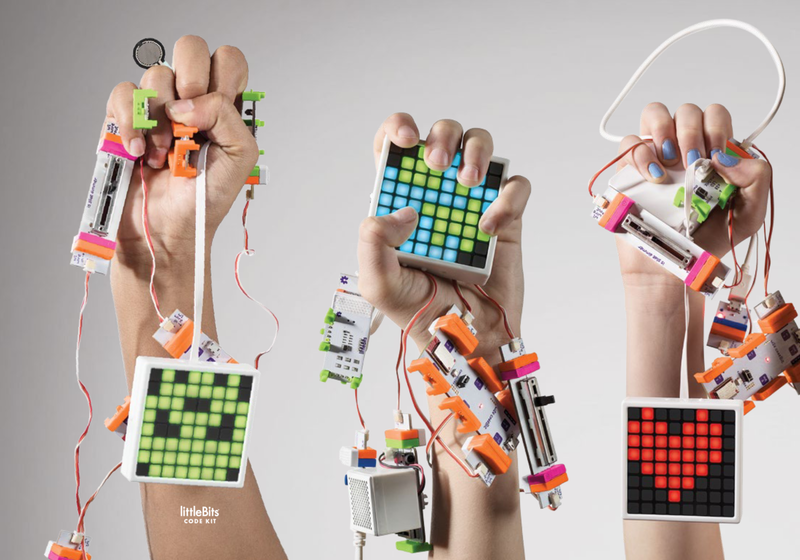
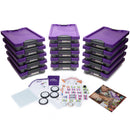
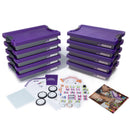

littleBits is a modular electronics kit system from Sphero. Kids snap together color-coded Bits with magnets, then build circuits that light up, move, sense input, or respond to code. The current ecosystem includes screen-free kits, classroom packs, a makerspace wall, and Fuse for older coding workflows. The age span is coherent because the same hardware loop repeats across the line. Younger kids use the snap-together Bits screen-free, while older kids add Fuse and classroom workflows, but the core action stays build, test, and revise.
littleBits stands out for developmental impact across multiple literacies. It builds hands-on skills, cognitive skills. The main growth opportunity: Persistence is supported, but not deeply stressed.
Strengths & gaps
Strengths
- ● littleBits is strongest for Agency, Adaptability, Curiosity, and Creativity. Kids make something, test it, and revise it.
- ● The classroom ecosystem is real, not decorative. Sphero's guides, classroom packs, and makerspace wall all support teamwork, storage, and shared problem solving.
- ● Fuse gives older kids a coding layer. They can move from blocks to JavaScript and see the circuit respond in real time.
Gaps
- ○ Persistence is supported, but not deeply stressed. The snap-together design helps kids succeed quickly, which is good for beginners and less useful for sustained struggle.
- ○ Purpose is thin. The marketing talks about changemakers, but the actual build loop is still mostly about making things work.
- ○ Connection depends on setting. The classroom version can be collaborative, but the core kit also works as a solo tinkering tool.
Detailed scores
How littleBits performs on each of the 9 literacies in our framework.
Doing
— 2 of 3 Strong
littleBits gives kids real ownership over the task. The Invention Kit and collection pages both frame the product around student-led discovery and inventing with the engineering design process. That means the child is not just executing instructions; they are deciding what to make and how to make it.
littleBits supports persistence, but it is not a hard-struggle product. Common Sense and the Sphero docs emphasize easy entry, quick iterations, troubleshooting, and clean-up routines, which help kids stay moving without much frustration. That makes it a good fit for beginners, but not a standout for sustained struggle.
littleBits forces kids to revise when a circuit or idea doesn't work. Fuse adds virtual circuit building and code, while the core kits use modular pieces that can be rearranged across projects and subjects. The child has to shift strategies, not just repeat the same move faster.
Thinking
— 2 of 3 Strong
littleBits is built to make kids ask, "what happens if?" The collection page says the system sparks student-led discovery, and the community review explicitly praises inquiry-based use where students and educators pose questions the Bits can answer. With 70+ Bits to explore, there is real room to investigate.
Creativity is central here. The Invention Kit page says the engineering design process is used to create their own inventions, and the modular pieces are reusable and versatile. Parent reviews describe kids extending LEGO builds and junk models with Bits, which is exactly the kind of recombination this rubric rewards.
The child has to make technical judgments all the time: which Bit to use, where a connection failed, and what change should come next. SLJ's review of the Code Kit frames coding as a way to apply computer code to inventions, which is more evaluative than rote. But the product stays inside technical problem solving rather than broader real-world judgment.
Being
— 0 of 3 Strong
Connection is present, but mostly through the classroom setup. The Invention Kit page explicitly calls out collaborative learning, and the Makerspace Invention Wall is built for collaborative problem solving. Outside that setting, though, littleBits can still be a solo maker tool.
The kit creates real moments where kids need to stay calm, troubleshoot, and keep their materials organized. Sphero's classroom tips push setup, clean-up, storage, labeling, and basic troubleshooting, which build habits of self-management. The product doesn't explicitly teach emotional regulation, so this stays Moderate.
littleBits uses language about changemakers and inventing for good, but the product behavior is still mostly about electronics and coding. The evidence here doesn't show a sustained link between the build process and identity, values, or contribution. That makes Purpose too thin to score confidently.
Based on 10 sources
- Review commonsense.org —
- Product sphero.com — littlebits
- Product sphero.com — littlebits invention kit
- Product sphero.com — makerspace invention wall
- Product help.sphero.com — getting started with fuse
- Product help.sphero.com — littlebits fuse and classroom it guide for schools
- Product help.sphero.com — littlebits classroom tips
- Product schoollibraryjournal.com — coding made inventive littlebits code kit slj review
- Product littledayout.com — littlebits review introducing kids to electronics and engineering without them even knowing about it
- Product techagekids.com — littlebits review.html
Reviewed by New Literacies
Scored by our research-derived framework · AI-assisted analysis with editorial review · 10 sources reviewed · Our methodology →
Get the next guide before it goes live
One email when a new product review ships.
Free. No spam. Unsubscribe anytime.
See other products strong in the same literacies: