
Lightbot
Ages 4-12 · paid · Curriculum · lightbot.com ↗
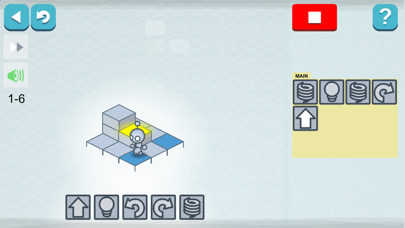
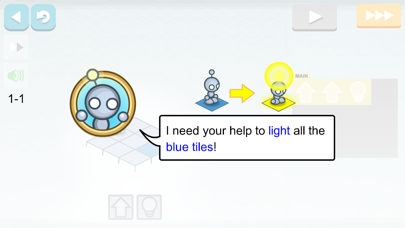
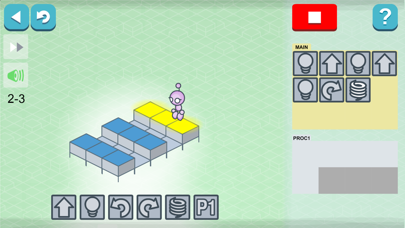
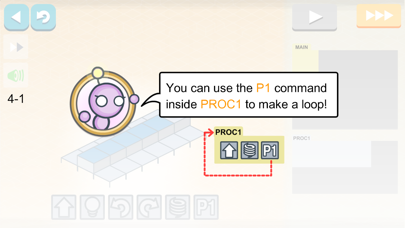
Lightbot is a coding puzzle game where the child guides a small robot across tile-based levels by arranging commands in the right order. As the levels get harder, the game introduces procedures, loops, and conditionals. It does not ask the child to make stories or apps. It asks them to solve logic problems cleanly.
Lightbot has focused developmental strength worth knowing about. It builds persistence. The main growth opportunity: agency is low because the child is solving fixed puzzles, not making something of their own.
Strengths & gaps
Strengths
- ● Lightbot is strongest for Persistence. The child has to keep trying until the logic works.
- ● The coding concepts are real. Procedures, loops, and conditionals are not just decorative labels here.
- ● The interface is clean. That keeps the developmental signal focused on problem-solving rather than distraction.
Gaps
- ○ Agency is low because the child is solving fixed puzzles, not making something of their own.
- ○ Creativity is also limited. Lightbot teaches how to think through a program, but not how to invent one.
- ○ Connection is absent unless an adult turns the app into a shared activity.
Detailed scores
How Lightbot performs on each of the 9 literacies in our framework.
Doing
— 1 of 3 Strong
Lightbot gives the child control over the route, but not the destination. Every level has a predefined goal and a correct way to get there. That is useful for learning logic, but it is not strong agency.
Lightbot’s biggest strength is productive struggle. A sequence fails, the robot stops short, and the child has to revise. That loop is constant. Because the difficulty ramps quickly, the child cannot coast on the first guess.
The product does make learners change strategy as it introduces procedures, loops, and conditionals. A level that once took a simple sequence now needs a more abstract solution. That flexibility is real, even if it stays inside one narrow puzzle frame.
Thinking
— 0 of 3 Strong
Lightbot can make coding feel intriguing because each new stage reveals another mechanic. There is a simple "what does this command do?" pull that keeps the child moving. But the curiosity stays tightly bounded by the level path.
Lightbot is not a creative tool. It is a puzzle tool. The child is planning and revising logic, which matters, but they are not building original worlds, stories, or games.
Lightbot builds technical judgment. The child has to predict outcomes, compare options, and decide whether a procedure or loop is the better answer. That reasoning is valuable. It just stays narrow and task-bound.
Being
— 0 of 3 Strong
Lightbot does not try to create social interaction. A teacher or parent can add discussion around it, but the product itself is single-player and self-contained. Connection sits outside its scope.
Lightbot asks the child to manage frustration and keep going after repeated failure. That is good practice. But the app does not coach regulation directly, so the skill is exercised more than taught.
Lightbot teaches how programming logic works. It does not connect that learning to service, values, or a larger personal mission. Purpose is not part of the design.
Based on 5 sources
Reviewed by New Literacies
Scored by our research-derived framework · AI-assisted analysis with editorial review · 5 sources reviewed · Our methodology →
Get the next guide before it goes live
One email when a new product review ships.
Free. No spam. Unsubscribe anytime.
See other products strong in the same literacies: