
LEGO Education
Ages 3-16 · paid · Product · education.lego.com ↗
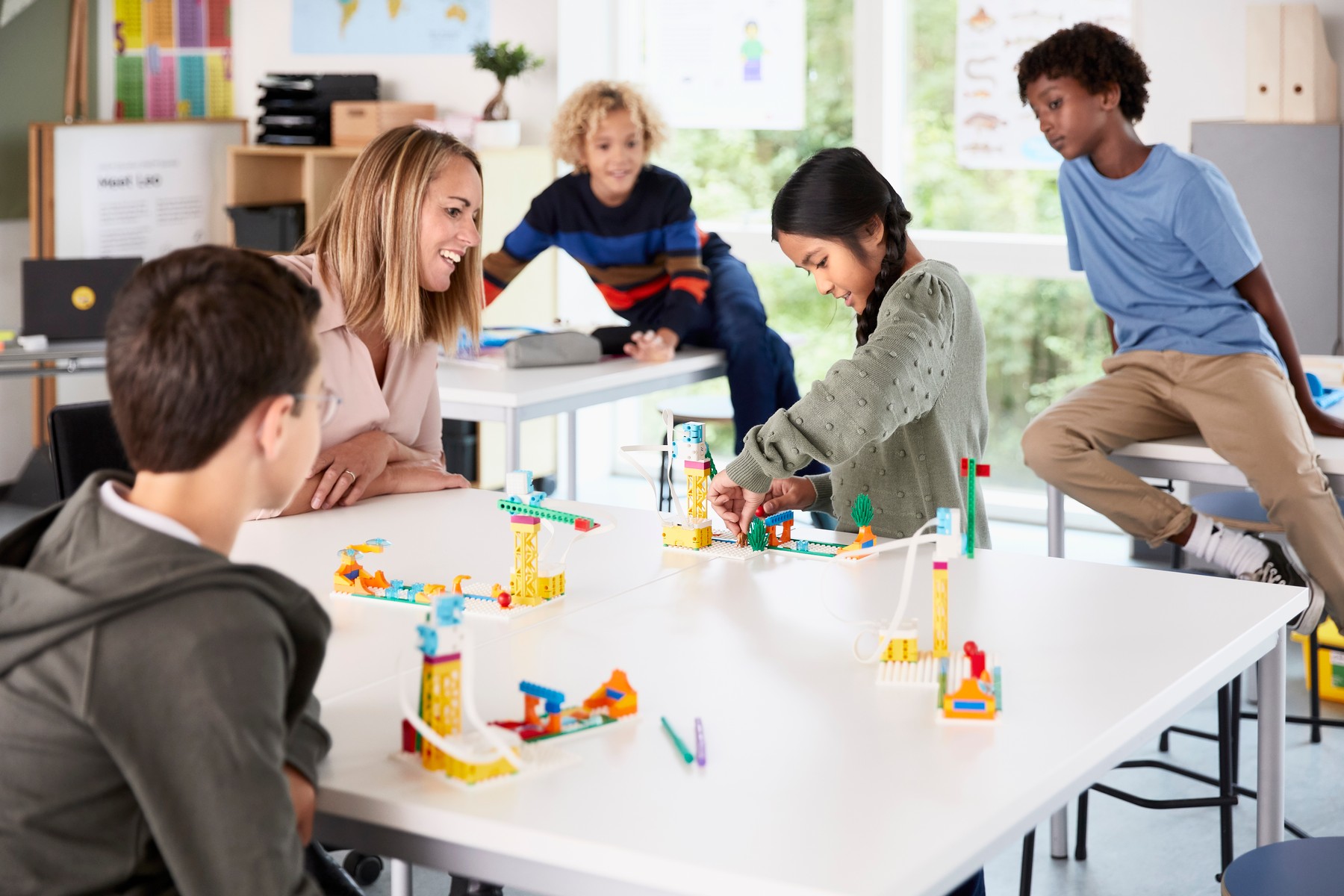
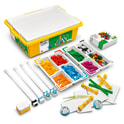
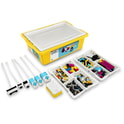
LEGO Education's SPIKE line is a classroom robotics kit where kids build physical machines with LEGO bricks, motors, and sensors, then program them using a block-based coding app that can scale up to Python. Each kit is designed for two students working together on open-ended engineering challenges -- build a robot that sorts objects, responds to sensor input, or navigates an obstacle. SPIKE Essential targets grades 1-4 with story-based projects; SPIKE Prime targets grades 5-8 with more complex builds and real-world problem framing.
LEGO Education is one of the strongest developmental products we've reviewed. It builds action and persistence, cognitive skills, connection. The main growth opportunity: Purpose is present but uneven.
Strengths & gaps
Strengths
- ● LEGO Education's core move is physical problem-solving with a coding layer on top. Kids have to build, test, and revise when the first version fails.
- ● Connection is not optional. The kits are sized for two students, and the lesson and competition structure assumes real collaboration.
- ● Creativity is not template-driven. The same challenge can produce very different machines because the parts, code, and build choices stay open.
Gaps
- ○ Purpose is present but uneven. Some lessons point at real-world problems, while others stay inside technical challenge mode.
- ○ Judgment stays mostly in engineering. Kids compare mechanisms and code paths, but the product does not push much broader decision-making.
- ○ Self-regulation is practiced, not taught. Frustration is part of the experience, but the kit does not explicitly scaffold coping.
Detailed scores
How LEGO Education performs on each of the 9 literacies in our framework.
Doing
— 3 of 3 Strong
LEGO Education puts the child in the role of builder and programmer, not follower. The product pages ask students to brainstorm solutions, choose how to solve them, and keep iterating until the robot works. That is meaningful control over process and outcome.
The product is built around productive failure. A robot that does not move, sense, or respond forces the child to try again, and the curriculum normalizes trial and error. The physical nature of the work makes failure visible, which is exactly why it builds persistence.
This line forces switching across domains. A problem can be mechanical, structural, or code-based, and the child has to recognize which one it is before fixing it. The app also moves from icon blocks to Scratch-based blocks to Python, which adds a real representational shift.
Thinking
— 2 of 3 Strong
The kit creates immediate questions: what happens if I move this sensor, change this gear ratio, or rewrite this block? LEGO Education explicitly frames the work around big questions, discoveries, and students' real-life observations. That is a strong curiosity signal because the child can experiment and learn from the result.
Creative output is built into the format. The same challenge can be solved in many ways, and the product itself says the design possibilities are limitless. Physical constraints do not block creativity here; they make it more interesting.
The child does make judgment calls. They decide which mechanism is more stable, which code path is more reliable, and which tradeoff fits the task. But the judgment stays mostly inside engineering, not broader evaluation of information, people, or ethics.
Being
— 1 of 3 Strong
The kits are sized for two students, and the classroom materials assume peers will collaborate. THE Journal describes Buddy Build as a structure that assigns specific responsibilities, and LEGO Education pushes team-based competition work too. That makes Connection a real product feature, not an optional add-on.
The work is frustrating by design, and students have to stay calm enough to keep iterating. The 2026 LEGO robotics study found SEL gains in a project-and-play setting, which supports that this environment can exercise regulation. But the product does not teach coping strategies directly, so Moderate is the right call.
LEGO Education often links the work to real-world questions, confidence, and making positive change. Some classroom uses clearly push toward service and contribution, especially when teachers frame the lessons that way. Even so, the base product is still mainly about engineering and coding, so the purpose signal stays moderate.
Based on 13 sources
- Product pubmed.ncbi.nlm.nih.gov —
- Product link.springer.com — s10643 025 02095
- Product link.springer.com — s10798 010 9130
- Research cirl.lcsr.jhu.edu — spatial cognition and block building
- Research education.lego.com —
- Research education.lego.com —
- Research education.lego.com — software
- Research education.lego.com — our story
- Review commonsense.org — lego education spike prime
- Product edsurge.com — 2022 10 24 how purposeful play opens the door to lifelong learning
- Product techlearning.com — product review lego educations spike prime
- Product thejournal.com — lego education spike prime brings coding and robotics to the middle school classroom.aspx
- Product blog.tcea.org — an a for lego education spike essential
Reviewed by New Literacies
Scored by our research-derived framework · AI-assisted analysis with editorial review · 13 sources reviewed · Our methodology →
Get the next guide before it goes live
One email when a new product review ships.
Free. No spam. Unsubscribe anytime.
See other products strong in the same literacies: