LeapFrog
Ages 2-8 · paid · Product · leapfrog.com ↗
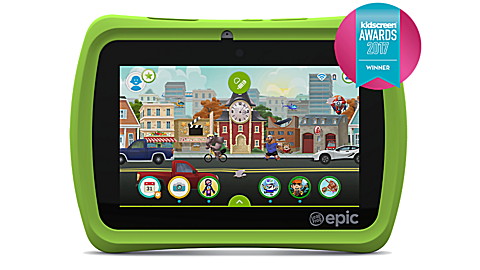
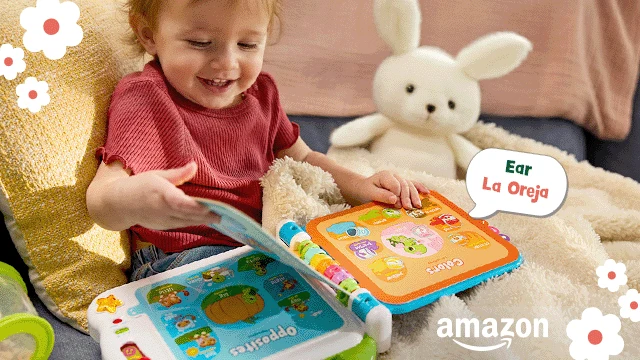
LeapFrog’s tablet line is a tightly curated kids-tech ecosystem for preschool and early elementary children. The child moves among learning games, storybooks, art tools, and approved web content while a parent controls profiles, limits, and purchases. It is much closer to a managed educational appliance than an open tablet.
We've reviewed LeapFrog against our 9-literacy developmental framework. The main growth opportunity: agency stays limited by curation. Adults and the platform do most of the shaping.
Strengths & gaps
Strengths
- ● LeapFrog is broader than a single-subject drill app. It gives young kids books, games, art, and some safe exploration in one place.
- ● The structure can support persistence and routine, especially for younger children who need guardrails.
- ● Creativity is present in a light way through drawing and story tools.
Gaps
- ○ Agency stays limited by curation. Adults and the platform do most of the shaping.
- ○ Judgment and connection are weak because the system is built to pre-filter and isolate.
- ○ This is a useful guided device, not a standout builder of higher-order literacies.
Detailed scores
How LeapFrog performs on each of the 9 literacies in our framework.
Doing
— 0 of 3 Strong
LeapFrog gives the child choices, but not wide-open ones. The child can pick among apps and activities, yet the entire environment is pre-shaped by adults. That makes the control real but narrow.
The platform can keep kids working through structured learning tasks. Personalization and progression help. But the difficulty is usually softened enough that persistence is supported rather than deeply trained.
Most LeapFrog activities ask the child to succeed inside a fixed format. There is not much need to change strategy across novel contexts. The ecosystem is built for guided success more than flexible transfer.
Thinking
— 0 of 3 Strong
There is real breadth here. A child can move from books to art to games to safe browsing. But the curiosity is still curated and fenced in.
Art and story apps give children room to express themselves. That matters. But the making stays inside preset tools and does not expand into more open creation.
LeapFrog’s filtering is the point. The child is not being asked to judge information quality or navigate messy tradeoffs. That makes the product safer, but weaker for judgment-building.
Being
— 0 of 3 Strong
This is mostly a solo device. Parent controls and oversight do not equal meaningful connection. Peer interaction is largely absent.
The device can help families build routines with time limits and controlled access. But those supports are external. The child is not doing much independent regulation work.
LeapFrog is built around educational content and child-safe access, not a deeper sense of mission or contribution. That is fine, but it does not surface purpose in this rubric.
Based on 5 sources
- Product leapfrog.com
- Product store.leapfrog.com — A prod
- Product leapfrog.com — leapfrog epic features
- Product leapfrog.com — about
- Product youtube.com — watch
Reviewed by New Literacies
Scored by our research-derived framework · AI-assisted analysis with editorial review · 5 sources reviewed · Our methodology →
Get the next guide before it goes live
One email when a new product review ships.
Free. No spam. Unsubscribe anytime.