
Labyrinth
Ages 7-14 · paid · Product · ravensburger.us ↗
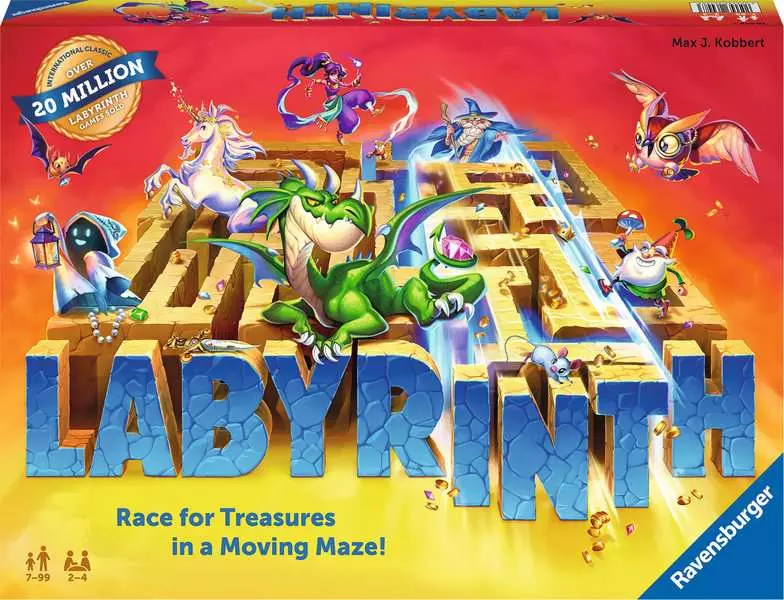
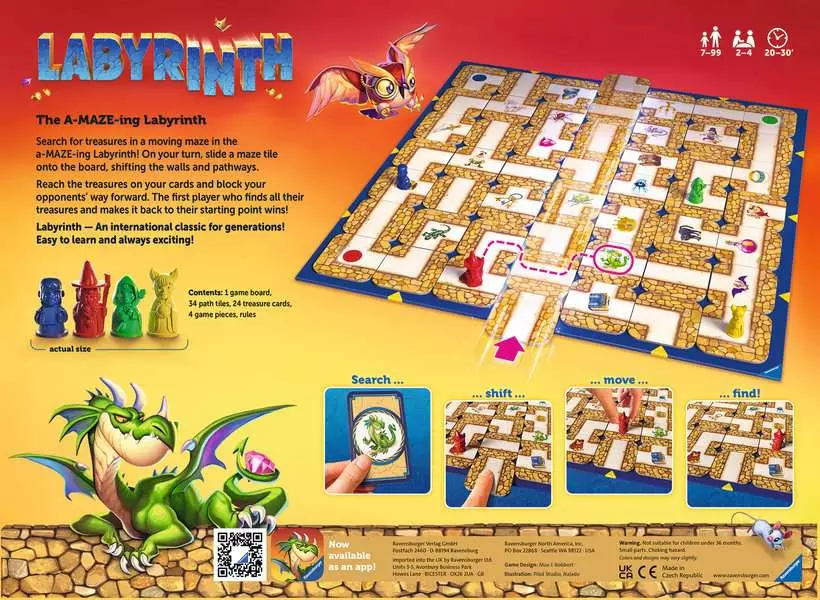
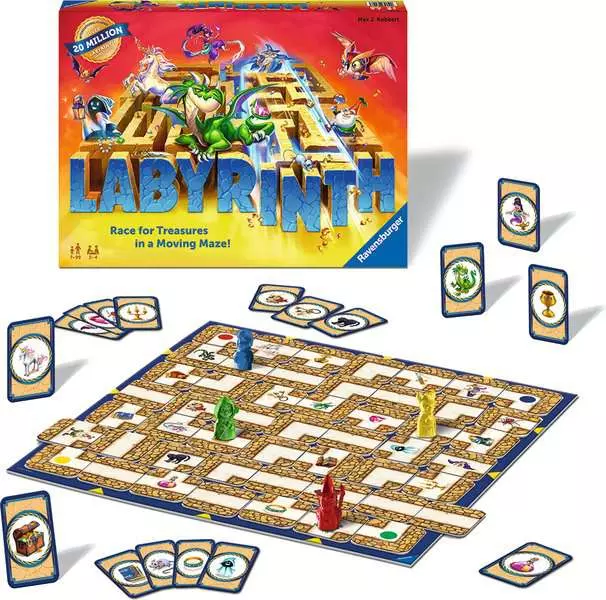
Labyrinth is a family board game where kids shift maze walls, chase hidden treasure cards, and try to block opponents while the board keeps changing. Each turn, they insert a tile, move a token, and re-plan around a new maze. It plays quickly, so the tension comes from short, repeated tactical decisions rather than long sessions.
Labyrinth has focused developmental strength worth knowing about. It builds adaptability, judgment. The main growth opportunity: labyrinth doesn’t build Purpose. The game stays on the table and doesn’t connect play to a larger meaning.
Strengths & gaps
Strengths
- ● Labyrinth is best for Adaptability and Judgment. The maze changes every turn, so kids have to revise plans and weigh tradeoffs constantly.
- ● It works as a real family game. The rules are easy to learn, but the board still keeps moving under your feet.
- ● The hidden treasure cards create a steady pull. Kids always have a clear target to chase.
Gaps
- ○ Labyrinth doesn’t build Purpose. The game stays on the table and doesn’t connect play to a larger meaning.
- ○ Connection is limited. Players interact a lot, but mostly by blocking each other.
- ○ Persistence is present but not deep. The game asks for recovery from small setbacks, not long struggle.
Detailed scores
How Labyrinth performs on each of the 9 literacies in our framework.
Doing
— 1 of 3 Strong
Labyrinth gives kids real control over each turn. They decide how to shift the maze and where to move next, and those decisions matter. But the treasure goal is still set by the game.
The game creates enough friction for kids to keep trying when a route closes. A blocked path or a bad draw means they have to recover and rework the plan. The short playtime keeps it from becoming a true endurance test.
Labyrinth is a moving target. The board changes every turn, so the child has to let go of the old plan and build a new one fast. That is the game’s main developmental lift.
Thinking
— 1 of 3 Strong
Each treasure card makes the child ask a simple question: how do I get there? That keeps attention engaged, but the curiosity stays inside the maze puzzle. The game doesn’t open a broader exploration loop.
Kids build their own routes and sometimes invent clever ways to block opponents. That gives the game some creative texture. Still, the fixed objective and fixed components keep it from becoming open-ended creation.
Labyrinth constantly asks the child to choose among imperfect options. A good move now can damage a future route, and a blocking move can change the whole table. The game rewards kids who can think a few steps ahead.
Being
— 0 of 3 Strong
This is a real table game, so the child is reading other people, reacting to them, and feeling the shared tension of the turn order. That matters. But the interaction is competitive, not collaborative, so it stays bounded.
The game creates useful little moments of disappointment. Kids have to wait, accept blocked routes, and stay calm long enough to try again. Labyrinth doesn’t teach coping, but it does create practice.
Labyrinth is about winning a maze race, not about identity, service, or values. The game is satisfying, but it doesn’t connect effort to anything larger than the table. Purpose sits outside its scope.
Based on 7 sources
- Product wired.com — amazing board g
- Product product-files.ravensburger.cloud — 663916.pdf
- Product boardgamegeek.com — Ravensburger_Labyrinth_Games
- Product ravensburger.us — labyrinth
- Product goodplayguide.com — labyrinth
- Product geekyhobbies.com — labyrinth board game review
- Product reddit.com — 1oi6lfs
Reviewed by New Literacies
Scored by our research-derived framework · AI-assisted analysis with editorial review · 7 sources reviewed · Our methodology →
Get the next guide before it goes live
One email when a new product review ships.
Free. No spam. Unsubscribe anytime.
See other products strong in the same literacies: